Hello, I am Dr. Hidenori Shimada of Grand Green Osaka Umekita Clinic in Osaka, Japan.
When facing a cancer diagnosis, understanding all available treatment avenues is crucial. Standard treatments like chemotherapy and radiation therapy are often the primary lines of defense. In recent years, immunotherapy, which harnesses the body’s own immune system, has emerged as a significant pillar of cancer care. Among these options is NK cell therapy, a type of immune cell therapy. This article explores how NK cell therapy may complement standard cancer treatments, offering a potential combined approach for patients to discuss with their healthcare providers.
The central idea is not to replace proven standard therapies but to potentially enhance their effects or support the immune system during treatment. This approach involves combining the direct cell-destroying power of chemotherapy and radiation with the targeted, natural function of Natural Killer (NK) cells. A thorough consultation with a physician is essential to determine if such a combination is suitable for an individual’s specific condition.
Understanding the Roles of Standard Cancer Treatments
Before examining how treatments can be combined, it’s important to understand the roles of chemotherapy and radiation therapy. These methods have long been the cornerstones of oncology and are effective for many types of cancer.
Chemotherapy uses powerful drugs to kill fast-growing cells, a hallmark of cancer cells. These drugs circulate throughout the body, making them effective for cancer that has spread (metastasized). However, they can also affect other fast-growing healthy cells, such as those in the hair follicles, bone marrow, and digestive tract, which can lead to side effects.
Radiation Therapy uses high-energy rays (like X-rays) to damage the DNA of cancer cells, destroying their ability to reproduce. This treatment is typically localized, targeting a specific tumor area. While it is precise, it can also affect nearby healthy tissues. A significant effect of both treatments can be the suppression of the immune system, including a reduction in the number of active immune cells.
What is NK Cell Therapy? A Brief Overview
NK cell therapy is a form of adoptive cell therapy that utilizes a specific type of immune cell called the Natural Killer (NK) cell. NK cells are part of the body’s innate immune system, our first line of defense. Their primary job is to patrol the body, identify, and eliminate abnormal cells, including cancer cells and virus-infected cells, without prior sensitization.
The therapy process generally involves collecting a patient’s own blood, from which NK cells are isolated. These cells are then activated and expanded in number in a specialized laboratory facility. Finally, this larger, more active population of NK cells is returned to the patient’s body via an intravenous (IV) infusion. The goal is to bolster the body’s natural cancer-fighting capabilities by increasing the number of these potent immune cells.
How NK Cell Therapy Can Complement Chemotherapy and Radiation
The concept of combining NK cell therapy with standard treatments is based on potential synergistic effects. Rather than working in isolation, the therapies may create a more challenging environment for cancer cells to survive and grow. The mechanisms are complex and are a subject of ongoing research, but several key ideas underpin this approach.
1. Supporting the Immune System:
Both chemotherapy and radiation can weaken the immune system (immunosuppression), reducing the number and function of immune cells, including NK cells. Administering a large number of activated NK cells may help to counteract this effect, supporting the immune system’s ability to continue surveillance against cancer cells during and after standard treatment.
2. Creating Vulnerabilities in Cancer Cells:
Some studies suggest that chemotherapy and radiation can make cancer cells more recognizable and vulnerable to immune attack. For example, radiation can cause tumor cells to release specific signals (antigens) that alert the immune system. Chemotherapy can induce stress on cancer cells, potentially making them easier targets for NK cells. In this scenario, NK cell therapy could capitalize on the vulnerabilities created by standard treatments.
3. Targeting Residual or Resistant Cells:
Standard treatments may not eliminate every cancer cell. Some cells may be resistant or remain in a dormant state, leading to a risk of recurrence. NK cells function through different mechanisms than chemotherapy or radiation. It is thought that combining these different modes of attack could provide a more comprehensive approach, potentially targeting cells that might survive standard treatment alone.
Key Considerations Before Combining Treatments
While the concept is promising, it is essential to approach it with a clear understanding of several key points. Combining therapies requires careful medical supervision and is not suitable for everyone.
- Not a Replacement for Standard Care: NK cell therapy is considered a complementary, not an alternative, treatment. It should not be used to replace standard, evidence-based treatments like surgery, chemotherapy, or radiation therapy prescribed by an oncologist.
- Individual Assessment is Crucial: The suitability of a combined approach depends heavily on the type and stage of cancer, the patient’s overall health, and their ongoing treatment plan. A decision can only be made after a comprehensive evaluation by a physician.
- Regulatory Framework in Japan: In Japan, treatments like NK cell therapy are provided under the Act on the Safety of Regenerative Medicine. This ensures that procedures for cell processing and treatment administration meet specific safety standards set by the government.
- Uninsured Medical Care: NK cell therapy is a form of treatment not covered by public health insurance in Japan (known as “jiyu-shinryo” or free-standing medical care). Patients are responsible for the full cost of the treatment.
What to Discuss with Your Doctor
If you are considering immune cell therapy as a complementary option, an open and detailed conversation with a medical professional is the most important step. At Grand Green Osaka Umekita Clinic, we encourage patients to ask questions to make informed decisions. Key topics to discuss include:
- Your specific diagnosis and complete treatment history.
- The potential benefits and risks of combining NK cell therapy with your current or planned standard treatments.
- The proposed treatment schedule, including timing in relation to chemotherapy or radiation cycles.
- Detailed information about costs, as this is a non-insured treatment.
- Potential side effects, which are generally reported to be mild, such as temporary fever or fatigue, but must be fully understood.
Conclusion: An Integrated Approach to Cancer Care
Combining NK cell therapy with standard treatments like chemotherapy and radiation represents a modern, integrated approach to cancer care. It is based on the idea of attacking cancer from multiple angles—using established methods to reduce tumor burden while simultaneously boosting the body’s own immune defenses to survey and control cancer cells. This is not a guaranteed cure, and its effectiveness can vary significantly among individuals.
The final decision must always be based on a personalized medical assessment. If you are exploring cancer treatment options in Japan, we invite you to learn more. For detailed information on NK Cell Therapy, including the treatment flow, potential risks, side effects, and associated costs, please visit our dedicated page. At our clinic in Osaka, Umeda, our team is available to provide consultations to help you understand if this approach is a suitable consideration for your healthcare journey.
Please note that any treatment decision should be made in consultation with a qualified physician based on your individual medical condition.
Learn more about NK Cell Therapy at Grand Green Osaka Umekita Clinic
References
- PubMed: Current and future immunotherapeutic approaches in pancreatic cancer treatment. (2024)
- PubMed: CAR-cell therapy in the era of solid tumor treatment: current challenges and emerging therapeutic advances. (2023)
- PubMed: An iPSC-derived CD19/BCMA CAR-NK therapy in a patient with systemic sclerosis. (2025)
- PubMed: Glioblastoma stem cell metabolism and immunity. (2024)
- PubMed: NK Cells Stimulate Recruitment of cDC1 into the Tumor Microenvironment Promoting Cancer Immune Control. (2018)
- PMC: Overcoming Resistance to Combination Radiation-Immunotherapy: A Focus on Contributing Pathways Within the Tumor Microenvironment. (2018)
- PMC: Overcoming cold tumors: a combination strategy of immune checkpoint inhibitors. (2024)
- PMC: Dual Regulation of Post-Translational Modification of Proteins: Bottlenecks and Breakthroughs in NK Cell Therapy for Glioblastoma. (2026)
- MHLW (Japan): Regenerative Medicine — Ministry of Health, Labour and Welfare, Japan
Supervising Physician
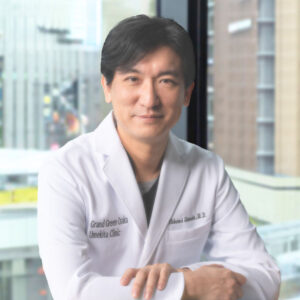
Director, Medical Corporation Shimada Clinic
Head of Clinical Practice, Grand Green Osaka Umekita Clinic
Hidenori Shimada
Graduated from the University of Tokushima Faculty of Medicine in 2005. After his initial residency, he obtained U.S. medical certification (ECFMG) and trained as a sub-intern in general surgery at the University of Washington. After completing the doctoral program at Kyoto University Graduate School of Medicine and working as a researcher at the Center for iPS Cell Research and Application (CiRA), Kyoto University, he founded Shimada Clinic in 2013. At Grand Green Osaka Umekita Clinic (https://umekitaclinic.org), he is engaged in a wide range of care, from internal medicine and pediatrics to cell therapy and aesthetic medicine.
* The physician supervision of this article covers its academic content only and does not constitute a recommendation of any specific treatment or product.