Hello, I am Dr. Hidenori Shimada of Grand Green Osaka Umekita Clinic in Osaka, Japan.
As interest in cancer immunotherapy grows worldwide, many patients and their families are exploring treatment options beyond their home countries. Japan has emerged as a significant destination for advanced medical care, particularly in the field of regenerative medicine. One such treatment drawing attention is NK (Natural Killer) cell therapy. But what makes Japan a notable choice for this therapy? The answer lies in its robust regulatory framework designed to prioritize patient safety.
This article explores the safety standards and regulations governing NK cell therapy in Japan, providing essential information for international patients considering this treatment option. The goal is to help you understand the landscape so you can make an informed decision based on a clear understanding of the system in place.
Japan’s High Standards for Regenerative Medicine
For international patients, the primary concern is often the safety and quality of medical treatments abroad. Japan addresses this through a specific legal framework: the Act on the Safety of Regenerative Medicine. Enforced by the Ministry of Health, Labour and Welfare (MHLW) since 2014, this law establishes a clear and strict system for providing regenerative therapies, including NK cell therapy.
This legislation ensures that treatments are not offered in an unregulated environment. Instead, medical institutions must adhere to stringent guidelines covering everything from cell processing to treatment administration and patient monitoring. This government oversight provides a layer of protection and quality control that is a key reason why patients consider Japan for advanced therapies.
What is NK Cell Therapy? A Brief Overview
Before diving deeper into regulations, it’s important to understand the treatment itself. NK cells are a type of immune lymphocyte that plays a vital role in our innate immunity. They patrol the body and have the ability to identify and attack abnormal cells, such as cancer cells or virus-infected cells, without prior sensitization.
However, the activity and number of NK cells can decline due to factors like aging, stress, or the progression of a disease. NK cell therapy is a form of immunotherapy that aims to bolster this natural defense mechanism. The process typically involves:
- A blood sample is taken from the patient.The patient’s own NK cells are isolated from the sample.These cells are activated and expanded in number in a specialized, highly controlled laboratory environment (a cell processing facility).The cultured, more numerous, and more active NK cells are then returned to the patient’s body via an intravenous (IV) infusion.
Because the therapy uses the patient’s own (autologous) cells, the risk of rejection is generally considered low. However, as with any medical procedure, it is not without potential side effects, such as temporary fever or fatigue. The suitability and potential outcomes of this therapy depend heavily on an individual’s condition and must be determined through a consultation with a physician.
The Act on the Safety of Regenerative Medicine Explained
Japan’s Act on the Safety of Regenerative Medicine is the cornerstone of patient safety for treatments like NK cell therapy. It mandates that any medical institution providing such therapies must first submit a detailed treatment plan to a certified committee and the MHLW. This plan must outline the entire process, including scientific rationale, cell processing methods, patient eligibility criteria, and safety management protocols.
Furthermore, the law requires that the culturing and processing of cells take place in a licensed Cell Processing Facility (CPF). These facilities are subject to strict standards regarding air quality, equipment, and operational procedures to prevent contamination and ensure the quality and safety of the final cell product. This separation of clinical practice and cell manufacturing adds another layer of specialized oversight.
This legal structure means that patients can verify whether a clinic is operating in compliance with national standards, offering a tangible measure of reliability and commitment to safety.
Key Considerations When Choosing a Clinic in Japan
When searching for a clinic for NK cell therapy in Japan, international patients should look for several key indicators of quality and compliance:
- MHLW Compliance: Verify that the clinic has an accepted treatment plan under the Act on the Safety of Regenerative Medicine. Compliant clinics are typically transparent about their regulatory status.Use of a Licensed CPF: Inquire about the cell processing facility they use. A reputable clinic will be partnered with a facility that meets the required government standards.Thorough Consultation: A reliable medical provider will insist on a comprehensive consultation with a doctor. They should explain the therapy in detail, discuss your specific medical condition, and clarify the potential benefits, limitations, risks, and side effects. They should not make guarantees of a cure.Clear Information on Costs: NK cell therapy is a private medical service not covered by Japanese public health insurance. The clinic should provide a clear breakdown of costs, the number of treatments, and the overall treatment period before you commit.
It is important to note that NK cell therapy is often considered as an option that can be used alongside standard cancer treatments like surgery, chemotherapy, and radiation therapy. It is not intended to be a replacement for these established treatments. A physician will assess your overall health and treatment history to determine if it is a suitable option for you.
Learn More at Grand Green Osaka Umekita Clinic
For patients exploring medical tourism in Japan’s Kansai region, Grand Green Osaka Umekita Clinic provides NK cell therapy in compliance with the national regulatory framework. Located conveniently in Osaka, our clinic is committed to providing clear and accessible information to international patients.
We believe that a patient’s journey should begin with understanding. A thorough consultation with our physicians is the first and most critical step to determine if NK cell therapy is an appropriate option for your individual situation. We prioritize explaining the entire process, from the initial blood draw to the final infusion, ensuring you are fully informed.
To understand the specifics of our approach, the treatment flow, and important considerations such as costs, potential risks, and side effects, we encourage you to review our detailed information page. It is available in multiple languages to better serve our international visitors.
Learn more about NK Cell Therapy at our clinic here.Summary: A Regulated Path to Immune Support
Choosing to undergo medical treatment in another country is a major decision. When it comes to NK cell therapy, Japan offers a structured and safety-conscious environment thanks to the Act on the Safety of Regenerative Medicine. This legal framework provides a level of assurance regarding the quality and management of the treatment.
The most crucial steps for any prospective patient are to conduct thorough research, choose a clinic that operates transparently within this regulatory system, and engage in a detailed consultation with a qualified physician. This ensures that any decision made is well-informed and tailored to your personal health needs.
References
- PubMed: Heterophile antibody interference associated with natural killer cell therapy. (2020)
- PubMed: Effectiveness of Amplified Natural Killer (ANK) Therapy for Adult T-cell Leukemia/Lymphoma (ATL) and Future Prospects of ANK Therapy. (2022)
- PubMed: Recent advances in chimeric antigen receptor natural killer cell therapy for overcoming intractable hematological malignancies. (2021)
- PubMed: Safety evaluation of immune-cell therapy for malignant tumor in the Cancer Immune-cell Therapy Evaluation Group (CITEG). (2023)
- PMC: Efficacy and safety of natural killer cell therapy in patients with solid tumors: a systematic review and meta-analysis. (2024)
- PMC: A Phase I Study of Locoregional High-Dose Autologous Natural Killer Cell Therapy With Hepatic Arterial Infusion Chemotherapy in Patients With Locally Advanced Hepatocellular Carcinoma. (2022)
- PMC: Immune checkpoint molecule DNAM-1/CD112 axis is a novel target for natural killer-cell therapy in acute myeloid leukemia. (2024)
- PMC: Unmasking the potential: mechanisms of neuroinflammatory modulation by oncolytic viruses in glioblastoma. (2025)
- MHLW (Japan): Regenerative Medicine — Ministry of Health, Labour and Welfare, Japan
Supervising Physician
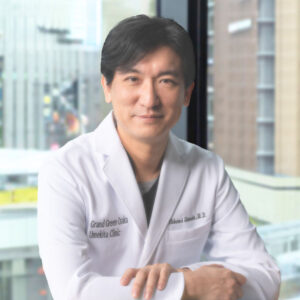
Director, Medical Corporation Shimada Clinic
Head of Clinical Practice, Grand Green Osaka Umekita Clinic
Hidenori Shimada
Graduated from the University of Tokushima Faculty of Medicine in 2005. After his initial residency, he obtained U.S. medical certification (ECFMG) and trained as a sub-intern in general surgery at the University of Washington. After completing the doctoral program at Kyoto University Graduate School of Medicine and working as a researcher at the Center for iPS Cell Research and Application (CiRA), Kyoto University, he founded Shimada Clinic in 2013. At Grand Green Osaka Umekita Clinic (https://umekitaclinic.org), he is engaged in a wide range of care, from internal medicine and pediatrics to cell therapy and aesthetic medicine.
* The physician supervision of this article covers its academic content only and does not constitute a recommendation of any specific treatment or product.