Hello, I am Dr. Hidenori Shimada of Grand Green Osaka Umekita Clinic in Osaka, Japan.
As cancer treatment options continue to evolve, immunotherapy has emerged as a significant approach that utilizes the body’s own immune system to fight disease. Among these options, NK (Natural Killer) cell therapy is gaining attention. But a common question arises: who is NK cell therapy for? This treatment, which involves enhancing your own immune cells, is considered in various contexts, from supporting standard cancer treatments to preventing recurrence and maintaining immune health. This article explores the potential candidates for NK cell therapy and its role in modern healthcare.
Who Might Consider NK Cell Therapy?
NK cell therapy is not a one-size-fits-all solution but rather a personalized medical option that may be suitable for individuals in specific situations. A consultation with a physician is essential to determine if it is an appropriate choice. Generally, people who explore this therapy fall into several categories.
- Patients Undergoing Standard Cancer Treatment: Individuals receiving conventional treatments like chemotherapy, radiation, or surgery may consider NK cell therapy as a complementary approach. The goal is often to support the immune system, which can be weakened by standard therapies, and potentially enhance the overall treatment strategy.
- Individuals Aiming to Prevent Recurrence: After completing a course of standard cancer treatment, some people focus on preventing the cancer from returning. NK cell therapy is sometimes considered in this context to help the body’s immune surveillance system find and eliminate any remaining abnormal cells that could lead to a recurrence.
- Those Seeking a Treatment with a Lighter Physical Burden: Because NK cell therapy uses a patient’s own cells (autologous), the risk of severe side effects is generally considered low. The process involves a blood draw and an IV infusion, which can be less physically demanding than some other treatments, allowing patients to maintain their daily routines.
- People with a Focus on Cancer Prevention and Immune Support: Some individuals with a strong family history of cancer or concerns about age-related decline in immune function may inquire about NK cell therapy. The therapy aims to bolster the number and activity of NK cells, which are crucial for immune defense.
Understanding NK Cells: The Body’s Natural Defenders
To understand the therapy, it’s important to know what NK cells are. Natural Killer cells are a type of white blood cell that plays a vital role in the innate immune system—the body’s first line of defense. Unlike other immune cells that need prior exposure to a threat, NK cells can identify and attack abnormal cells, such as cancer cells or virus-infected cells, on sight. This rapid-response capability is part of a mechanism called “immune surveillance,” which constantly patrols the body to eliminate threats before they can multiply.
However, factors like aging, chronic stress, and poor lifestyle habits can reduce the activity and number of NK cells. When the immune surveillance system weakens, abnormal cells may have a higher chance of evading detection and developing into a tumor. NK cell therapy aims to counteract this by collecting a patient’s own NK cells from a blood sample, activating and expanding them in a specialized facility, and then returning the strengthened cells to the body via an IV infusion.
How NK Cell Therapy Complements Standard Treatments
It is crucial to understand that NK cell therapy is not intended to replace standard cancer treatments such as surgery, chemotherapy, and radiation therapy. Instead, it is typically used in combination with them. When used as an adjunctive therapy, it may offer supportive benefits. For example, some standard treatments can suppress the immune system, making a patient more vulnerable. Reinforcing the immune system with activated NK cells may help maintain the body’s defense capabilities during this period. The specific timing and protocol for combining therapies must be carefully managed by medical professionals, often in coordination with the patient’s primary oncologist.
Important Considerations Before Choosing This Therapy
Before proceeding with NK cell therapy, several key points must be considered. First, this treatment is a form of regenerative medicine and is provided as a private, non-insured medical service. In Japan, it is regulated under the Act on the Safety of Regenerative Medicine, ensuring that treatments are provided according to plans reviewed by the government.
The effects and outcomes of the therapy can vary significantly among individuals, and no results can be guaranteed. While the use of one’s own cells means the risk of serious side effects is generally reported as low, some people may experience temporary side effects like fever or fatigue. A thorough discussion with a physician is necessary to understand the potential benefits, risks, expected number of treatments, duration, and associated costs. The suitability of this therapy can only be determined after a comprehensive medical evaluation.
Learn More at Grand Green Osaka Umekita Clinic
For those in the Osaka area or visiting Japan, Grand Green Osaka Umekita Clinic offers consultations on NK cell therapy. Our clinic provides care under Japan’s regulatory framework for regenerative medicine. We believe in empowering patients with clear and accurate information so they can make informed decisions about their health. Understanding who NK cell therapy is for starts with a professional medical consultation.
If you are exploring immunotherapy for recurrence prevention, immune support, or as a complement to your current cancer treatment, we invite you to learn more. For detailed information on the treatment process, features, and answers to frequently asked questions, please visit our NK Cell Therapy information page. Our website is available in multiple languages to assist international patients.
Conclusion: A Personalized Decision
NK cell therapy represents a promising option in the field of immunotherapy, offering a potential avenue for supporting cancer treatment, preventing recurrence, and maintaining immune health. The ideal candidates are those who have discussed the option thoroughly with a medical expert and understand its role as a complementary, not alternative, treatment. The decision to pursue this therapy is a personal one that should be based on your unique health situation, treatment history, and goals, all determined through a comprehensive physician consultation.
References
- PubMed: NK Cell Metabolism and Tumor Microenvironment. (2019)
- PubMed: Emerging trends in clinical allogeneic CAR cell therapy. (2025)
- PubMed: Efficacy and safety of natural killer cell therapy in patients with solid tumors: a systematic review and meta-analysis. (2024)
- PubMed: A nanobody-based tri-specific NK cell engager targeting CD5 triggers antitumor immunity. (2025)
- PubMed: Natural killer cell therapy for cancer: delivering on a promise. (2013)
- PMC: Natural Killer Immunotherapy for Minimal Residual Disease Eradication Following Allogeneic Hematopoietic Stem Cell Transplantation in Acute Myeloid Leukemia. (2019)
- PMC: Advances in immunotherapy for cytomegalovirus infection following allogeneic hematopoietic stem cell transplantation. (2026)
- PMC: Targeting natural killer cells and natural killer T cells in cancer. (2012)
- MHLW (Japan): Regenerative Medicine — Ministry of Health, Labour and Welfare, Japan
Supervising Physician
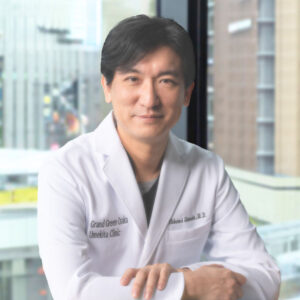
Director, Medical Corporation Shimada Clinic
Head of Clinical Practice, Grand Green Osaka Umekita Clinic
Hidenori Shimada
Graduated from the University of Tokushima Faculty of Medicine in 2005. After his initial residency, he obtained U.S. medical certification (ECFMG) and trained as a sub-intern in general surgery at the University of Washington. After completing the doctoral program at Kyoto University Graduate School of Medicine and working as a researcher at the Center for iPS Cell Research and Application (CiRA), Kyoto University, he founded Shimada Clinic in 2013. At Grand Green Osaka Umekita Clinic (https://umekitaclinic.org), he is engaged in a wide range of care, from internal medicine and pediatrics to cell therapy and aesthetic medicine.
* The physician supervision of this article covers its academic content only and does not constitute a recommendation of any specific treatment or product.