
Hello, I am Dr. Hidenori Shimada of Grand Green Osaka Umekita Clinic in Osaka, Japan.
Our immune system is a complex network that protects us from disease. A key player in this defense is a type of white blood cell called the Natural Killer (NK) cell. These cells are essential for our innate immunity, acting as first-responders against threats. However, their effectiveness isn’t constant throughout our lives. Various factors, including age, stress, and lifestyle, can influence their activity. This article explores the role of NK cells and how their function can change over time.
What Are Natural Killer (NK) Cells?
Natural Killer (NK) cells are a type of lymphocyte that constantly patrols our bodies. Their primary job is to identify and eliminate abnormal cells, such as cancer cells or cells infected with viruses. A defining feature of NK cells is their ability to act swiftly and independently, without needing prior instructions from other parts of the immune system. They are a critical component of a mechanism known as “immune surveillance,” which helps to prevent abnormal cells from multiplying.
Why Might NK Cell Activity Decline?
While NK cells are powerful, their ability to function optimally can be affected by several internal and external factors. Understanding these influences is the first step toward maintaining a well-functioning immune system.
- Aging: Research indicates that as we age, the immune system undergoes changes, a process sometimes called immunosenescence. While the total number of NK cells may not decrease (and can sometimes increase), their cytotoxic activity—their ability to destroy target cells—is often reported to decline. This age-related change is a significant area of study in immunology.
- Chronic Stress: The connection between the mind and the immune system is well-established. Prolonged psychological or physical stress can lead to the release of hormones, such as glucocorticoids, which can modulate immune responses. Studies suggest that these stress-related signals can suppress the activity of NK cells, potentially weakening the body’s first line of defense.
- Lifestyle Factors: Daily habits play a substantial role in immune health. Factors such as poor sleep, an unbalanced diet, and even excessive physical exertion without adequate recovery (as seen in some over-trained athletes) have been linked to a temporary reduction in NK cell function. A balanced lifestyle is therefore considered important for supporting robust immune activity.
The Concept of Immune Surveillance
Even in healthy individuals, it is thought that cells with the potential to become cancerous can arise daily. The reason most people do not develop cancer is largely due to the effectiveness of immune surveillance. NK cells are at the forefront of this process, identifying and eliminating these aberrant cells before they can establish themselves. When NK cell activity is compromised, this surveillance network may become less effective, potentially allowing abnormal cells a greater chance to evade detection and proliferate.
Exploring Your Options: Supporting Immune Function
For individuals concerned about declining immune function or those seeking to support their body’s natural defenses, medical science offers various approaches. One such option is NK Cell Therapy. This treatment involves collecting a patient’s own NK cells from a blood sample. These cells are then activated and expanded in number in a specialized cell processing facility before being returned to the body via an intravenous (IV) infusion. The goal is to reinforce the body’s immune system by increasing the number of active, vigilant NK cells.
It is important to understand that NK Cell Therapy is a form of private (non-insured) medical care. In Japan, it is provided under the regulations of the Act on the Safety of Regenerative Medicine. As with any medical treatment, its suitability and potential outcomes can vary from person to person. A comprehensive consultation with a physician is essential to discuss the potential benefits, risks, side effects, treatment duration, and associated costs.
What to Consider Before a Consultation
If you are considering discussing your immune health with a doctor, it can be helpful to prepare beforehand. Think about your specific health concerns, your lifestyle, and any family medical history that might be relevant. Preparing a list of questions can ensure you have a productive conversation. During a consultation, a doctor will assess your individual health status and help you understand whether a particular treatment is an appropriate option for you. This discussion should cover all aspects of the therapy, including what to expect during the process and any potential side effects, such as temporary fever or fatigue.
Learn More at Our Osaka Clinic
Understanding the factors that affect your NK cell activity is a proactive step toward managing your health. While maintaining a healthy lifestyle is fundamental, advanced therapies may offer additional support for your body’s immune system. Making an informed decision based on a professional medical diagnosis is crucial.
At Grand Green Osaka Umekita Clinic, we provide consultations for those interested in learning more about their immune function and treatment options like NK Cell Therapy. For more details on the treatment process, features, and other considerations, please visit our NK Cell Therapy information page. Our team in Umeda, Osaka, is available to provide you with the information you need to make a decision that is right for you.
References
- PubMed: Aging of the Immune System: Focus on Natural Killer Cells Phenotype and Functions. (2022)
- PubMed: Immunity in athletes. (1997)
- PubMed: Natural Killer Cells, Aging, and Vaccination. (2020)
- PubMed: Natural Killer Cell Immunotherapy for Osteosarcoma. (2020)
- PubMed: Regulation of natural killer cell activity by glucocorticoids, serotonin, dopamine, and epinephrine. (2020)
- PMC: Effects of butyltins on mitogen-activated-protein kinase kinase kinase and Ras activity in human natural killer cells. (2014)
- PMC: Natural killer cell-based senotherapy: a promising strategy for healthy aging. (2025)
- PMC: Expression of ligands for activating natural killer cell receptors on cell lines commonly used to assess natural killer cell function. (2019)
- MHLW (Japan): Regenerative Medicine — Ministry of Health, Labour and Welfare, Japan
Supervising Physician
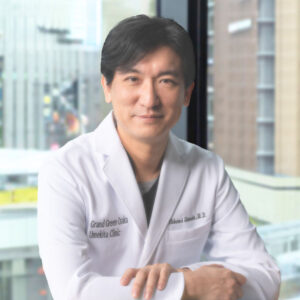
Director, Medical Corporation Shimada Clinic
Head of Clinical Practice, Grand Green Osaka Umekita Clinic
Hidenori Shimada
Graduated from the University of Tokushima Faculty of Medicine in 2005. After his initial residency, he obtained U.S. medical certification (ECFMG) and trained as a sub-intern in general surgery at the University of Washington. After completing the doctoral program at Kyoto University Graduate School of Medicine and working as a researcher at the Center for iPS Cell Research and Application (CiRA), Kyoto University, he founded Shimada Clinic in 2013. At Grand Green Osaka Umekita Clinic (https://umekitaclinic.org), he is engaged in a wide range of care, from internal medicine and pediatrics to cell therapy and aesthetic medicine.
* The physician supervision of this article covers its academic content only and does not constitute a recommendation of any specific treatment or product.