Hello, I am Dr. Hidenori Shimada of Grand Green Osaka Umekita Clinic in Osaka, Japan.
Traveling abroad for medical care is a significant decision. For those considering advanced treatments like Natural Killer (NK) cell therapy, Japan has become a notable destination, offering innovative therapies within a robust regulatory framework. This guide is designed for international patients interested in NK cell therapy, providing a step-by-step timeline and checklist to help you navigate your medical journey to Japan with clarity and confidence.
The process, from your initial contact with a clinic to completing your treatment and returning home, involves several key phases. Understanding this timeline can help you plan effectively. This article will walk you through each stage, outlining what to expect and how to prepare for your trip to our clinic, Grand Green Osaka Umekita Clinic, for this specialized immunotherapy.
Understanding the Patient Journey: A Timeline Overview
The journey for an international patient seeking NK cell therapy in Japan follows a structured path. While individual timelines can vary based on your medical condition and personal schedule, the overall process can be broken down into distinct stages. Here is a general overview of the timeline:
- Phase 1: Pre-Travel (Several weeks to months): This includes initial research, contacting the clinic, submitting medical records, and holding an online consultation with a physician.
- Phase 2: Travel and Initial Visit (1-2 days): Arriving in Japan, attending your first in-person consultation, undergoing final assessments, and having your blood drawn for cell collection.
- Phase 3: Cell Culturing (Approx. 2-3 weeks): Your collected NK cells are sent to a specialized facility to be activated and expanded. During this time, you may choose to stay in Japan or return home.
- Phase 4: Treatment Administration (1 day per infusion): Returning to the clinic to receive the cultured NK cells via an intravenous (IV) drip. A treatment course may involve multiple infusions.
- Phase 5: Post-Treatment and Departure: A final consultation to discuss the treatment and any follow-up care before you travel back to your home country.
Phase 1: Preparation and Remote Consultation
The first and most critical phase of your journey begins from your home country. Proper preparation ensures a smooth process and helps determine if NK cell therapy is a suitable option for you.
Step 1: Initial Inquiry and Medical Record Submission
Your journey starts by contacting the clinic, typically through a web form or email. At Grand Green Osaka Umekita Clinic, we provide information for international patients. You will be asked to provide your medical records, including diagnosis, treatment history, and recent test results. This information is essential for our physicians to make a preliminary assessment.
Step 2: Online Consultation with a Physician
Once your records are reviewed, an online consultation will be scheduled. This is a crucial opportunity to speak directly with a doctor. You can discuss your condition, ask questions about NK cell therapy, and understand the potential approach, expected outcomes, and limitations. The physician will evaluate whether you are a suitable candidate for the therapy based on the information provided.
Step 3: Treatment Plan and Cost Estimate
If the physician determines that you may be a candidate, a provisional treatment plan and a cost estimate will be provided. It is important to note that NK cell therapy is a private medical service not covered by public health insurance in Japan (jiyu-shinryo). The estimate will outline the costs associated with the treatment itself, but you should also budget for travel, accommodation, and personal expenses.
Phase 2: Your Medical Trip to Osaka, Japan
After completing the remote preparations and deciding to proceed, the next phase involves traveling to Japan for your in-person appointments and treatment.
Step 4: Arrival and In-Person Consultation
Upon arriving in Osaka, you will visit Grand Green Osaka Umekita Clinic for your first face-to-face consultation. The doctor will conduct a final examination, review your condition in person, and confirm the details of your treatment plan. This is the final step in confirming your eligibility for the therapy. All treatments are provided only after a physician’s comprehensive judgment.
Step 5: Blood Collection
The treatment process begins with a simple blood draw. A small sample of your blood is collected, from which your NK cells will be isolated. This procedure is similar to a standard blood test and is minimally invasive.
Step 6: The Cell Culturing Period
The collected blood sample is transported to a specialized, government-licensed cell processing center. Over the next few weeks, your NK cells are cultured in a highly controlled environment to increase their number and enhance their cell-attacking activity. During this incubation period, patients have the flexibility to either stay and explore Japan or return to their home country and travel back for the infusion.
Phase 3: Treatment and Post-Treatment Care
This final phase involves receiving the therapy and arranging for your return home.
Step 7: Administering the NK Cell Infusion
Once your NK cells are ready, you will return to the clinic. The expanded and activated cells are administered back into your body through a simple IV drip. The procedure is typically completed within an hour, and hospitalization is not required. You can rest at the clinic for a short period before leaving.
Step 8: Follow-up and Departure
After your treatment course is complete, you will have a final consultation with your doctor. They will discuss the treatment, provide any necessary follow-up instructions, and answer your remaining questions. You will then be cleared for your journey back home.
Important Considerations for Your Medical Travel
Planning a cancer treatment abroad requires careful thought. NK cell therapy is an approach that aims to support the body’s own immune system. It can be used alongside standard treatments like chemotherapy and radiation but is not a replacement for them. It’s essential to discuss this with your primary oncologist.
In Japan, regenerative treatments like NK cell therapy are regulated under the Act on the Safety of Regenerative Medicine. This ensures that treatments are provided according to strict safety and quality standards. As this therapy uses your own cells, the risk of severe side effects is generally considered low, though temporary symptoms like fever or fatigue may occur. A thorough explanation of all potential risks and side effects will be provided by your physician during the consultation.
Begin Your Journey with a Consultation
Embarking on a medical journey to another country is a complex process, but with careful planning, it can be managed effectively. The first step is always to gather accurate information and consult with medical professionals. At Grand Green Osaka Umekita Clinic, we are committed to providing international patients with the information needed to make an informed decision.
For more detailed information about NK Cell Therapy, including its features and the treatment flow at our clinic in Osaka, please visit our dedicated page. The decision to undergo any medical treatment should be made after a thorough consultation with a qualified physician who can assess your specific health condition.
Learn more about NK Cell Therapy at Grand Green Osaka Umekita Clinic.
References
- PMC: Advances in Non-Small Cell Lung Cancer Cellular Immunotherapy: A Progress in Dendritic Cell, T-Cell, and NK Cell Vaccines. (2025)
- PMC: Natural killer cells in clinical development as non-engineered, engineered, and combination therapies. (2022)
- PMC: Research Hotspots and Trends of NK Cell Immunotherapy for Acute Myeloid Leukemia: A Bibliometric Analysis From 2000 to 2023. (2024)
- PMC: A bibliometric and scientific knowledge-map study of the chimeric antigen receptor (CAR) natural killer (NK) cell-related research from 2010 to 2022. (2022)
- MHLW (Japan): Regenerative Medicine — Ministry of Health, Labour and Welfare, Japan
Supervising Physician
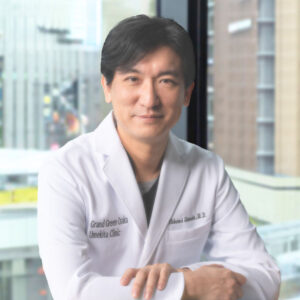
Director, Medical Corporation Shimada Clinic
Head of Clinical Practice, Grand Green Osaka Umekita Clinic
Hidenori Shimada
Graduated from the University of Tokushima Faculty of Medicine in 2005. After his initial residency, he obtained U.S. medical certification (ECFMG) and trained as a sub-intern in general surgery at the University of Washington. After completing the doctoral program at Kyoto University Graduate School of Medicine and working as a researcher at the Center for iPS Cell Research and Application (CiRA), Kyoto University, he founded Shimada Clinic in 2013. At Grand Green Osaka Umekita Clinic (https://umekitaclinic.org), he is engaged in a wide range of care, from internal medicine and pediatrics to cell therapy and aesthetic medicine.
* The physician supervision of this article covers its academic content only and does not constitute a recommendation of any specific treatment or product.