Hello, I am Dr. Hidenori Shimada of Grand Green Osaka Umekita Clinic in Osaka, Japan.
For international patients considering advanced cancer treatments, Japan has become a notable destination for medical tourism. Therapies like NK cell therapy offer a different approach to supporting the body’s own immune system. However, a common and valid concern is how to manage this treatment abroad while maintaining a relationship with your primary oncologist back home. Effective coordination is not just possible; it is a crucial component of a comprehensive care plan. This article explains how you can bridge the distance and ensure your medical teams work together for your well-being.
Why Coordination Between Your Medical Teams is Essential
Receiving treatment in another country should not mean discontinuing care with your trusted oncologist. On the contrary, the goal is to create a collaborative environment. Open communication between your Japanese medical team and your home doctor ensures continuity of care. It allows for the sharing of vital information, such as your medical history, current treatment status, progress reports, and any test results. This partnership helps in making well-informed decisions, managing any potential side effects, and integrating NK cell therapy effectively with any standard treatments you may be undergoing, such as chemotherapy or radiation. A coordinated approach ensures that all aspects of your health are considered, providing a more holistic and supportive treatment journey.
Understanding NK Cell Therapy in a Collaborative Context
NK (Natural Killer) cell therapy is a form of cancer immune cell therapy. It involves collecting a patient’s own NK cells from a blood sample, activating and expanding them in a specialized facility, and then returning them to the body via an intravenous (IV) infusion. The aim is to bolster the body’s natural immune surveillance mechanism, which can become weakened by cancer or other factors. Because this therapy utilizes the patient’s own cells, it is generally considered to have a low physical burden.
It is important to understand that NK cell therapy is often positioned as a treatment that can be used alongside standard cancer therapies. It does not typically interfere with surgery, chemotherapy, or radiation therapy. This complementary nature makes communication with your primary oncologist even more important, as they can help determine the optimal timing and integration of treatments. In Japan, this therapy is provided as a private medical service (not covered by public health insurance) under the regulations of the Act on the Safety of Regenerative Medicine, which ensures specific standards for cell processing and patient safety are met.
Practical Steps for Effective Care Coordination
To facilitate a smooth collaboration between your medical teams, proactive steps are key. Here is a checklist to guide your preparation and communication efforts:
- Initiate an Early Conversation: Discuss your interest in exploring NK cell therapy in Japan with your home oncologist before you begin. Share your reasons and ask for their professional perspective and willingness to collaborate.Gather Comprehensive Medical Records: Prepare a complete set of your medical records, including diagnosis, pathology reports, imaging results (CT, MRI, PET), and a history of past and current treatments. Having these documents translated into English is highly recommended.Authorize Communication: You will need to provide formal consent to both the clinic in Japan and your home physician to allow them to communicate directly about your medical information.Share the Proposed Treatment Plan: Once you receive a treatment plan from the Japanese clinic, share it with your home oncologist. This allows them to understand the approach and provide input based on their long-term knowledge of your condition.Plan for Follow-Up Care: Discuss how your progress will be monitored once you return home. This may involve specific blood tests or imaging scans that your home oncologist can oversee.
How Our Clinic Supports International Patient Coordination
At Grand Green Osaka Umekita Clinic, we understand the unique needs of our international patients. We are committed to a model of collaborative care and have systems in place to facilitate communication with your overseas medical team. With your consent, we can provide treatment summaries, progress reports, and other necessary medical documentation in English. Our team in Osaka is experienced in working with patients from around the world and believes that a partnership with your primary oncologist is in your best interest. The final determination of whether NK cell therapy is a suitable option for you can only be made after a thorough consultation with one of our physicians, who will review your medical history and current health status. During this consultation, we can also discuss the specific costs, treatment schedule, and potential risks or side effects.
For more detailed information on the treatment process itself, please see our dedicated page on NK Cell Therapy.
Key Questions to Discuss with Your Medical Teams
To ensure everyone is aligned, consider asking the following questions to both your home oncologist and our team at the clinic.
For Your Home Oncologist:- What is your opinion on integrating immune cell therapy with my current treatment plan?Are you open to communicating with the clinic in Japan to coordinate my care?What specific information would you need from the Japanese team?How will we manage my follow-up care and monitoring when I return?
- What is your standard procedure for collaborating with a patient’s international doctor?What medical records and information do you require from my home oncologist?What kind of reports and updates can you provide to my doctor back home?How do you handle communication across different time zones?
Summary: A Collaborative Approach to Your Care
Pursuing NK cell therapy in Japan does not mean leaving your trusted medical support system behind. Through proactive planning, open communication, and a commitment to collaboration from all parties—you, your home oncologist, and your Japanese medical team—a seamless and integrated care experience is entirely achievable. This partnership ensures that your treatment journey is comprehensive, well-managed, and centered on your long-term health. The suitability of any treatment must be determined by a physician based on an individual’s condition. We encourage you to start the conversation and explore your options with a solid plan for coordination.
References
- PubMed: Integrative spatial analysis reveals tumor heterogeneity and immune colony niche related to clinical outcomes in small cell lung cancer. (2025)
- PubMed: STING inhibits the reactivation of dormant metastasis in lung adenocarcinoma. (2023)
- PubMed: Inhibitory CD161 receptor identified in glioma-infiltrating T cells by single-cell analysis. (2021)
- PubMed: Integrative analysis of neuroblastoma by single-cell RNA sequencing identifies the NECTIN2-TIGIT axis as a target for immunotherapy. (2024)
- PubMed: Late complications and long-term care of adult CAR T-cell patients. (2024)
- PMC: Advances in natural killer cell immunotherapy for hematologic malignancies. (2026)
- PMC: Recent advances in bispecific natural killer cell engagers for cancer immunotherapy. (2026)
- PMC: Natural killer cell-based immunotherapies for colorectal cancer: Current strategies, challenges, and future perspectives. (2025)
- MHLW (Japan): Regenerative Medicine — Ministry of Health, Labour and Welfare, Japan
Supervising Physician
Director, Medical Corporation Shimada Clinic
Head of Clinical Practice, Grand Green Osaka Umekita Clinic
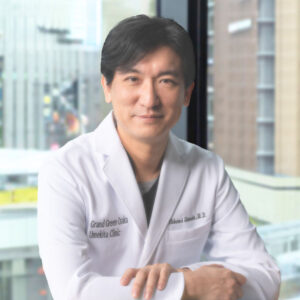
Hidenori Shimada
Graduated from the University of Tokushima Faculty of Medicine in 2005. After his initial residency, he obtained U.S. medical certification (ECFMG) and trained as a sub-intern in general surgery at the University of Washington. After completing the doctoral program at Kyoto University Graduate School of Medicine and working as a researcher at the Center for iPS Cell Research and Application (CiRA), Kyoto University, he founded Shimada Clinic in 2013. At Grand Green Osaka Umekita Clinic (https://umekitaclinic.org), he is engaged in a wide range of care, from internal medicine and pediatrics to cell therapy and aesthetic medicine.
* The physician supervision of this article covers its academic content only and does not constitute a recommendation of any specific treatment or product.