
Hello, I am Dr. Hidenori Shimada of Grand Green Osaka Umekita Clinic in Osaka, Japan.
Completing standard cancer treatments such as surgery, chemotherapy, or radiation therapy is a major milestone. However, this sense of relief is often accompanied by a persistent concern: the possibility of the cancer returning. This article explores how NK cell therapy, a type of immunotherapy, is considered as an approach to help manage the risk of cancer recurrence after primary treatments are finished.
Understanding Recurrence Risk and Minimal Residual Disease
Even when treatment results in remission—a state where cancer is no longer detectable by standard imaging—a risk of recurrence can remain. This is often attributed to what is known as Minimal Residual Disease (MRD). MRD consists of a small number of cancer cells that survive initial therapy. These cells are too few to cause symptoms or be detected by routine scans, but they hold the potential to multiply over time, leading to a relapse.
The objective of post-remission strategies is often to eliminate these remaining cells. Adjuvant therapies, which are treatments administered after the primary treatment, are intended to lower the chance of the cancer coming back. Immunotherapy, which utilizes the body’s own immune system, is a key area of research and application in this context.
How NK Cell Therapy Aims to Reduce Recurrence Risk
Natural Killer (NK) cells are a crucial component of the innate immune system, acting as the body’s first line of defense. They patrol the body to identify and destroy abnormal cells, including cancerous ones, without needing prior sensitization. However, the effectiveness of NK cells can be compromised by the cancer itself, the side effects of treatment, aging, or stress.
NK cell therapy is a treatment designed to reinforce this natural defense mechanism. The process generally involves:
- Collection: A standard blood draw is performed to obtain your cells.
- Activation & Expansion: In a specialized cell processing facility, your NK cells are isolated, activated, and cultured to create a large, highly active population.
- Infusion: These enhanced NK cells are returned to your body through an intravenous (IV) drip.
In the context of preventing recurrence, the primary goal is to strengthen the body’s immune surveillance. By reintroducing a larger and more potent force of NK cells, the therapy aims to target and eliminate any lingering cancer cells (MRD) that may have survived initial treatment, thereby potentially reducing the risk of the cancer returning.
A Complementary Approach to Standard Cancer Care
It is essential to understand that NK cell therapy is not a substitute for standard cancer treatments like surgery, chemotherapy, or radiation. It is positioned as a complementary or adjuvant therapy. It may be considered after primary treatments are completed, with the goal of preventing a relapse. Because the therapy uses the patient’s own (autologous) cells, it is generally associated with a low risk of severe side effects, though temporary reactions like fever or fatigue can occur. The suitability of this therapy must be determined through a comprehensive consultation with a physician.
This treatment is provided as private, uninsured medical care. In Japan, such therapies are offered under the Act on the Safety of Regenerative Medicine, which provides a regulatory framework to ensure safety and proper conduct. The decision to undertake this therapy requires careful consideration of its potential role, limitations, and the patient’s specific clinical situation.
Key Questions for Your Doctor Before Considering Treatment
If you are in remission and exploring options to manage the risk of recurrence, a thorough discussion with a medical professional is the essential first step. Here are some important questions to guide your conversation:
- Is NK cell therapy a potential option for my specific type of cancer and treatment history?
- What is the objective of this therapy in my case, and what are its limitations?
- What does the treatment process involve, including the schedule, duration, and number of sessions?
- What are the potential risks, side effects, and the total estimated cost of the treatment?
A physician’s assessment is necessary to determine if you are a suitable candidate. At Grand Green Osaka Umekita Clinic in Osaka, we provide detailed consultations for individuals interested in learning how cell therapies might fit into their long-term health management plan. You can inquire about scheduling an initial consultation to discuss your case with our medical team.
Learn More About NK Cell Therapy in Osaka
Navigating the journey after cancer treatment can be complex. Understanding all available options is a key part of feeling empowered and proactive about your health. If you wish to explore NK cell therapy further, we encourage you to review our detailed information page. It provides comprehensive details on the features, treatment flow, fees, and potential risks and side effects. The information is available in multiple languages to support our international patients.
For more details, please visit the Grand Green Osaka Umekita Clinic’s NK Cell Therapy information page.
Summary: A Proactive Approach to Post-Treatment Care
The fear of cancer recurrence is a valid and widely shared concern for those in remission. While no treatment can guarantee prevention, NK cell therapy represents a proactive approach that aims to leverage the body’s immune system against minimal residual disease. It is not a standalone cure but a complementary strategy considered after standard treatments. Any decision to pursue this therapy must be made in close consultation with a qualified physician who can evaluate your individual health status and provide personalized guidance based on a thorough assessment of the potential benefits and risks.
References
- PubMed: Efficacy of natural killer cell therapy combined with chemoradiotherapy in murine models of head and neck squamous cell carcinoma. (2024)
- PubMed: Hepatocellular carcinoma and liver transplant: What about neo- and adjuvant immunotherapy. (2026)
- PubMed: Autologous natural killer cell therapy for human recurrent malignant glioma. (2004)
- PubMed: Safety evaluation of immune-cell therapy for malignant tumor in the Cancer Immune-cell Therapy Evaluation Group (CITEG). (2023)
- PubMed: Allogeneic transplantation for pediatric acute lymphoblastic leukemia: the emerging role of peritransplantation minimal residual disease/chimerism monitoring and novel chemotherapeutic, molecular, and immune approaches aimed at preventing relapse. (2009)
- PMC: Natural killer cell therapy in children with relapsed leukemia. (2015)
- PMC: Current status and future perspective of natural killer cell therapy for cancer. (2023)
- PMC: Current and future immunotherapeutic approaches in pancreatic cancer treatment. (2024)
- MHLW (Japan): Regenerative Medicine — Ministry of Health, Labour and Welfare, Japan
Supervising Physician
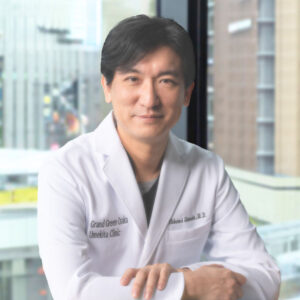
Director, Medical Corporation Shimada Clinic
Head of Clinical Practice, Grand Green Osaka Umekita Clinic
Hidenori Shimada
Graduated from the University of Tokushima Faculty of Medicine in 2005. After his initial residency, he obtained U.S. medical certification (ECFMG) and trained as a sub-intern in general surgery at the University of Washington. After completing the doctoral program at Kyoto University Graduate School of Medicine and working as a researcher at the Center for iPS Cell Research and Application (CiRA), Kyoto University, he founded Shimada Clinic in 2013. At Grand Green Osaka Umekita Clinic (https://umekitaclinic.org), he is engaged in a wide range of care, from internal medicine and pediatrics to cell therapy and aesthetic medicine.
* The physician supervision of this article covers its academic content only and does not constitute a recommendation of any specific treatment or product.