
Hello, I am Dr. Hidenori Shimada of Grand Green Osaka Umekita Clinic in Osaka, Japan.
Considering Natural Killer (NK) cell therapy as part of your cancer treatment plan is a significant step. This innovative immunotherapy, which uses your body’s own immune cells, presents a unique set of considerations. Making an informed choice requires a thorough conversation with your physician. This process, often called shared decision-making, ensures that the chosen path aligns with your health status, treatment goals, and personal values.
The purpose of this article is not to provide medical advice, but to empower you with a structured list of questions. Preparing for your consultation will help you and your doctor work together to determine if NK cell therapy is a suitable option for you.
What is NK Cell Therapy? A Brief Overview
NK cell therapy is a type of cancer immune cell therapy. It involves collecting your own NK cells—a type of white blood cell that acts as a first line of defense against abnormal cells—from a simple blood draw. These cells are then activated and multiplied in a specialized facility before being returned to your body through an IV infusion. The goal is to reinforce your immune system’s natural ability to find and attack cancer cells. Because it uses your own cells, it is generally considered to have a low risk of major side effects, though temporary fever or fatigue can occur. It can often be used alongside standard cancer treatments like chemotherapy or radiation.
Key Questions to Ask Your Oncologist or Specialist
A productive consultation is a two-way conversation. Use these questions as a starting point to explore the details of NK cell therapy as it relates to your specific situation. It’s helpful to group your questions by topic.
1. Questions About Suitability and Treatment Goals
- Based on my specific diagnosis, cancer stage, and overall health, am I a suitable candidate for NK cell therapy?
- What are the potential goals of this therapy in my case? Is it intended to complement my standard treatments, help prevent recurrence, or for another purpose?
- How would this therapy integrate with my current or planned treatments, such as surgery, chemotherapy, or radiation? Are there any potential interactions I should be aware of?
- Are there any conditions or factors that would make this therapy not recommended for me?
2. Questions About the Treatment Process and Logistics
- Could you walk me through the entire process, from the initial blood draw to the final infusion?
- What is the typical duration of a single treatment cycle? How many cycles are generally considered, and what is the frequency of the infusions?
- Where does the cell processing take place, and what standards does the facility adhere to?
- What kind of monitoring or follow-up is required during and after the treatment period?
3. Questions About Risks, Side Effects, and Costs
- What are the potential risks and side effects associated with NK cell therapy? How common are they, and how are they managed?
- As this is a private medical treatment (not covered by public insurance), what is the estimated total cost for the recommended treatment plan? What does this cost include?
- How are the potential outcomes of the therapy evaluated?
Preparing for Your Medical Consultation
To make the most of your appointment, consider taking these steps:
- Write Down Your Questions: Bring a printed list of your questions to ensure you cover all your concerns.
- Bring Medical Records: Have relevant medical records, imaging results, and a list of your current medications and supplements available.
- Take Notes: Write down the answers and information provided by your doctor. It can be helpful to bring a family member or friend to help listen and take notes.
Understanding Treatment in Japan
In Japan, advanced treatments like NK cell therapy are provided under a legal framework, specifically the Act on the Safety of Regenerative Medicine. This ensures that treatments are conducted according to plans reviewed by certified committees and reported to the Ministry of Health, Labour and Welfare, with a focus on safety and proper procedures. It is important to confirm that any treatment you consider is provided in compliance with these national standards. The final decision on whether a treatment is appropriate must always be based on a physician’s diagnosis.
For more detailed information about the NK cell therapy offered at Grand Green Osaka Umekita Clinic, including the treatment flow and features, please visit our dedicated information page.
Learn more about NK Cell Therapy at our clinic.Summary: Your Path to an Informed Decision
Choosing a path for cancer care is a deeply personal journey. NK cell therapy may be a valuable component for some patients, but it is not a one-size-fits-all solution. The most crucial step is a comprehensive discussion with a qualified physician who understands your unique medical history and goals. By asking targeted questions, you can gain the clarity and confidence needed to make a decision that is right for you. If you are considering treatment options in the Osaka area, we welcome you to schedule a consultation to discuss your case in detail.
References
- PubMed: A three-talk model for shared decision making: multistage consultation process. (2017)
- PubMed: [Shared decision making]. (2025)
- PubMed: Shared decision-making for vitiligo. (2021)
- PubMed: Using Shared Decision-Making Tools and Patient-Clinician Conversations About Costs. (2020)
- PubMed: Patient experience and satisfaction with shared decision-making: A cross-sectional study among outpatients. (2024)
- PMC: Abstracts From the 49th Congress of the International Society of Paediatric Oncology (SIOP) Washington, DC, USA October 12-15, 2017. (2017)
- PMC: Informing patients on planned consultation time – a randomised controlled intervention study of consultation time in primary care. (2019)
- PMC: Patient-Centeredness during In-Depth Consultation in the Outpatient Clinic of a Tertiary Hospital in Korea: Paradigm Shift from Disease to Patient. (2019)
- MHLW (Japan): Regenerative Medicine — Ministry of Health, Labour and Welfare, Japan
Supervising Physician
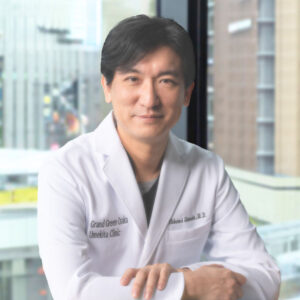
Director, Medical Corporation Shimada Clinic
Head of Clinical Practice, Grand Green Osaka Umekita Clinic
Hidenori Shimada
Graduated from the University of Tokushima Faculty of Medicine in 2005. After his initial residency, he obtained U.S. medical certification (ECFMG) and trained as a sub-intern in general surgery at the University of Washington. After completing the doctoral program at Kyoto University Graduate School of Medicine and working as a researcher at the Center for iPS Cell Research and Application (CiRA), Kyoto University, he founded Shimada Clinic in 2013. At Grand Green Osaka Umekita Clinic (https://umekitaclinic.org), he is engaged in a wide range of care, from internal medicine and pediatrics to cell therapy and aesthetic medicine.
* The physician supervision of this article covers its academic content only and does not constitute a recommendation of any specific treatment or product.