
Hello, I am Dr. Hidenori Shimada of Grand Green Osaka Umekita Clinic in Osaka, Japan.
NK cell therapy is an immunotherapy option that harnesses the body’s own immune system. For those considering this treatment, especially international patients planning for medical tourism in Japan, understanding the schedule is a crucial first step. This article explains the typical NK cell therapy timeline, covering how long a single treatment cycle takes and the general frequency of infusions, to help you plan your visit.
Key Points on the NK Cell Therapy Timeline
To help you plan, here are the essential timeframes involved in NK cell therapy. It’s important to remember that these are general estimates, and your personal treatment plan will be determined after a consultation with a physician.
- One Treatment Cycle: A single cycle, from the initial blood draw to the final cell infusion, typically takes approximately 2 to 3 weeks. The majority of this time is dedicated to the cell culturing process.
- Treatment Frequency: The frequency of treatments varies based on individual health conditions, treatment goals, and the physician’s assessment. It may range from every few weeks to every few months.
Understanding Your Concerns as a Patient
When considering treatment abroad, many questions arise about logistics and scheduling. You might be wondering:
- How long do I need to stay in Japan for one treatment cycle?
- Can I continue my daily routine or work during the treatment period?
- Is one infusion enough, or will I need multiple sessions?
This article aims to provide clarity on these points by breaking down the immunotherapy schedule, helping you make informed decisions in consultation with your medical team.
The NK Cell Infusion Cycle: A Step-by-Step Guide
An NK cell infusion cycle involves several distinct steps. The entire process is carefully managed to ensure the quality and viability of your cells.
Step 1: Medical Consultation and Blood Draw
Your journey begins with a consultation with a physician. During this session, your health status will be evaluated, and the doctor will determine if NK cell therapy is a suitable option for you. If you decide to proceed, a blood sample (typically around 20-50 mL) is collected. This procedure is similar to a standard blood test.
Step 2: Cell Culturing and Expansion (Approx. 2-3 weeks)
The collected blood is sent to a specialized cell processing center (CPC). Here, the NK cells are isolated, activated, and multiplied under sterile, controlled conditions. This culturing phase is the most time-consuming part of the process, as it takes time to grow a large, highly active population of NK cells. This step is critical for preparing a sufficient number of cells for the therapy.
Step 3: Quality Control
Before the cells are cleared for infusion, they undergo rigorous quality and safety checks. This ensures that the final cell product meets all required standards for purity, activity, and cell count.
Step 4: IV Infusion
Once the cultured NK cells pass quality control, they are returned to your body through a simple intravenous (IV) drip. The infusion process itself is relatively short, usually taking about 30 to 60 minutes, and is performed at the clinic. Since it does not typically require hospitalization, you can usually return to your daily activities shortly after.
How is the Treatment Frequency Determined?
The optimal cell therapy frequency and overall cancer treatment duration are not one-size-fits-all. A physician will create a personalized immunotherapy schedule based on several factors:
- Treatment Goals: The plan may differ depending on whether the therapy is used alongside standard cancer treatments (like chemotherapy or radiation), for preventing recurrence after standard treatment, or for maintaining immune health.
- Individual Health Status: Your overall health, the type and stage of a condition, and your body’s response to the therapy all influence the schedule.
- Combination with Other Therapies: NK cell therapy can often be combined with standard cancer treatments. The timing of infusions may be coordinated with other treatment schedules to maximize potential synergistic effects.
A common approach might involve an initial series of infusions spaced a few weeks apart, followed by maintenance infusions at longer intervals. However, this is just an example. The final plan must be determined through a comprehensive medical assessment.
Important Considerations Before Your Visit
Before traveling for treatment, it’s essential to be aware of several key aspects. This therapy is provided as a non-insured, private medical service. The costs, potential risks, and side effects (such as temporary fever or fatigue) must be thoroughly discussed and understood during your consultation. A physician’s diagnosis is required to determine your eligibility for this treatment.
In Japan, regenerative medicine therapies like NK cell therapy are regulated under the Act on the Safety of Regenerative Medicine. This ensures that treatments are provided according to plans submitted to and accepted by the Ministry of Health, Labour and Welfare, and that cell processing is conducted at licensed facilities.
Learn More About NK Cell Therapy in Osaka
Understanding the NK cell therapy timeline is key to planning your treatment journey. While this article provides a general overview, a personalized consultation is necessary to establish a specific schedule tailored to your needs.
At Grand Green Osaka Umekita Clinic, located conveniently in the Umeda area of Osaka, we offer consultations to discuss if this therapy is right for you. For more detailed information on the features, process, and other aspects of NK cell therapy, please visit our comprehensive service page.
→ Learn more about NK Cell Therapy at Grand Green Osaka Umekita Clinic
Summary
The typical timeline for one cycle of NK cell therapy is about two to three weeks, primarily for cell culturing. The frequency of subsequent treatments is highly individualized and determined by a physician. For anyone considering this option, especially those traveling from abroad, the first step is a thorough consultation with a medical professional to develop a safe and appropriate treatment plan. This ensures you have a clear understanding of the schedule, costs, and what to expect.
References
- PubMed: NK cell-mediated cytotoxicity contributes to tumor control by a cytostatic drug combination. (2018)
- PubMed: Induced pluripotent stem-cell-derived CD19-directed chimeric antigen receptor natural killer cells in B-cell lymphoma: a phase 1, first-in-human trial. (2025)
- PubMed: The cancer-natural killer cell immunity cycle. (2020)
- PubMed: Dynamic transcriptional immune landscape in response to NK-cell therapy combined with gemcitabine plus S-1 in advanced pancreatic cancer: a phase 1b/2 trial. (2025)
- PubMed: Dasatinib Remodels the Tumor Microenvironment and Sensitizes Small Cell Lung Cancer to Immunotherapy. (2025)
- PMC: Advances in natural killer cell immunotherapy for hematologic malignancies. (2026)
- PMC: Potential therapeutic roles of natural killer cells in acute myeloid leukemia: a systematic review study. (2025)
- PMC: CAR-NK cell therapy: promise and challenges in solid tumors. (2025)
- MHLW (Japan): Regenerative Medicine — Ministry of Health, Labour and Welfare, Japan
Supervising Physician
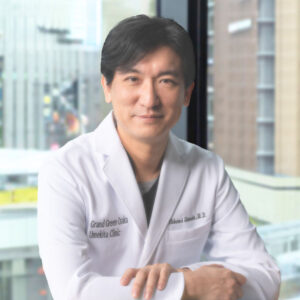
Director, Medical Corporation Shimada Clinic
Head of Clinical Practice, Grand Green Osaka Umekita Clinic
Hidenori Shimada
Graduated from the University of Tokushima Faculty of Medicine in 2005. After his initial residency, he obtained U.S. medical certification (ECFMG) and trained as a sub-intern in general surgery at the University of Washington. After completing the doctoral program at Kyoto University Graduate School of Medicine and working as a researcher at the Center for iPS Cell Research and Application (CiRA), Kyoto University, he founded Shimada Clinic in 2013. At Grand Green Osaka Umekita Clinic (https://umekitaclinic.org), he is engaged in a wide range of care, from internal medicine and pediatrics to cell therapy and aesthetic medicine.
* The physician supervision of this article covers its academic content only and does not constitute a recommendation of any specific treatment or product.