Hello, I am Dr. Hidenori Shimada of Grand Green Osaka Umekita Clinic in Osaka, Japan.
Considering NK cell therapy in Japan is a significant step in exploring your treatment options. To make your initial consultation as meaningful and efficient as possible, thorough preparation is key. Whether you are visiting our clinic in Osaka or consulting online, having your medical information organized allows the physician to gain a clear understanding of your health status and treatment history. This article provides a comprehensive guide for patients, particularly those from overseas, on what to prepare for an NK cell therapy consultation.
The primary goal of this preparation is to facilitate a detailed, personalized discussion with your doctor. By having all relevant information ready, you can help the medical team accurately assess whether NK cell therapy is a suitable option for your specific circumstances.
Why a Prepared Consultation is So Important
A medical consultation for an advanced treatment like immunotherapy is a crucial dialogue. Proper preparation helps overcome potential language barriers, maximizes the limited time available, and ensures all your critical questions are addressed. It empowers you to have a more productive conversation and helps the medical team provide a well-informed perspective on your case. An unprepared meeting can lead to misunderstandings or an incomplete assessment, potentially requiring follow-up appointments to gather missing details.
Essential Medical Information to Organize
To facilitate a thorough assessment, please gather and organize the following medical records. If the original documents are not in English or Japanese, providing a summary translation can be extremely helpful for the clinical team.
- Detailed Diagnosis and Pathology Reports: These should include the specific type of cancer, the date of diagnosis, the stage of the disease, and any reports from biopsies. Information on genetic mutations or specific tumor markers, if available, is also very valuable.
- Complete Treatment History: A chronological list of all cancer treatments you have received. This includes surgeries (dates and procedures), chemotherapy (drug names, doses, cycles, start/end dates), radiation therapy (location, dose, dates), and any other immunotherapies or targeted therapies. Please also note the outcomes and any significant side effects experienced for each treatment.
- Recent Imaging Scans and Reports: Digital copies (e.g., DICOM files) of recent CT, MRI, or PET scans and their corresponding radiological reports are crucial for understanding the current status of the disease.
- Recent Blood Test Results: Please provide results from the last few months, including complete blood counts (CBC), comprehensive metabolic panels, and any relevant tumor marker tests.
- List of Current Medications and Allergies: A comprehensive list of all prescription medications, over-the-counter drugs, and supplements you are currently taking, along with any known drug or food allergies.
- Summary of Your General Health: Information about any other existing medical conditions (e.g., heart disease, diabetes, autoimmune disorders) and your current physical condition, often referred to as performance status (e.g., your ability to perform daily activities).
Key Questions to Ask During Your Consultation
Preparing a list of questions ensures you don’t forget anything important during the discussion. Your questions help you understand the therapy better and manage your expectations. Consider asking the following:
- Based on my medical history and cancer type, is NK cell therapy a potential option for me?
- How might this therapy be combined with standard treatments I am receiving or may receive in the future?
- What does the treatment process involve, from the initial blood draw to the final infusion?
- What is the typical treatment schedule, including the frequency of infusions and the overall duration?
- What are the potential side effects or risks associated with this therapy? While it uses one’s own cells, are there any reactions to be aware of, such as temporary fever?
- How is the response to the treatment monitored and evaluated?
- As this treatment is not covered by public health insurance, what are the estimated costs and payment procedures?
Understanding NK Cell Therapy in the Context of Japanese Medicine
It is important to understand the framework for this therapy in Japan. NK cell therapy is a form of immunotherapy that aims to enhance the body’s natural ability to fight cancer by using the patient’s own immune cells. In Japan, treatments like this are provided under the Act on the Safety of Regenerative Medicine. This legal framework ensures that cell processing and treatment administration are conducted according to strict safety and quality standards at registered facilities.
This therapy is an elective treatment and is not covered by Japanese public health insurance. The effects and outcomes can vary significantly among individuals, and it is not presented as a guaranteed cure. It is often considered as an option that can be used alongside standard treatments like chemotherapy or radiation, not as a replacement for them. A final decision on your suitability for the therapy can only be made by a physician after a thorough evaluation of your medical information.
Your Next Steps with Grand Green Osaka Umekita Clinic
At Grand Green Osaka Umekita Clinic, located in the Umeda area of Osaka, we are experienced in assisting international patients who are exploring advanced treatment options. We offer both in-person and online consultations to accommodate your needs. By preparing the information and questions outlined above, you can help our medical team provide you with a more personalized and relevant discussion.
For more detailed information about how NK cell therapy works, its features, and the typical treatment flow, we encourage you to review our official page on the topic. This resource can help you formulate more specific questions ahead of your consultation. Please refer to our NK Cell Therapy information page for further details on the treatment, potential risks, side effects, and fees.
Summary: Empowering Your Treatment Journey
A well-prepared consultation is the first step toward making an informed decision about your health. Organizing your medical records and thinking through your questions transforms the consultation into a collaborative partnership between you and your doctor. It allows for a deeper discussion focused on your unique circumstances, helping you to understand the potential role this therapy may play in your overall treatment plan. Taking the time to prepare is an investment in your own care.
References
- PubMed: Neoadjuvant immunotherapy for non-small cell lung cancer: right drugs, right patient, right time? (2021)
- PubMed: Artificial Intelligence in Oncology: Current Landscape, Challenges, and Future Directions. (2024)
- PubMed: [Not Available]. (2021)
- PubMed: Neurologic complications of immune checkpoint inhibitors. (2020)
- PubMed: [Thoracic oncology]. (2026)
- PMC: Caring for cancer patients in the Covid pandemic: choosing between the devil and deep sea. (2020)
- PMC: Unlocking ovarian cancer heterogeneity: advancing immunotherapy through single-cell transcriptomics. (2024)
- PMC: Standard-of-care systemic therapy with or without stereotactic body radiotherapy in patients with oligoprogressive breast cancer or non-small-cell lung cancer (Consolidative Use of Radiotherapy to Block [CURB] oligoprogression): an open-label, randomised, controlled, phase 2 study. (2024)
- MHLW (Japan): Regenerative Medicine — Ministry of Health, Labour and Welfare, Japan
Supervising Physician
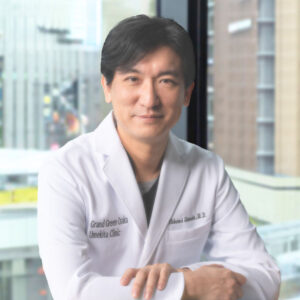
Director, Medical Corporation Shimada Clinic
Head of Clinical Practice, Grand Green Osaka Umekita Clinic
Hidenori Shimada
Graduated from the University of Tokushima Faculty of Medicine in 2005. After his initial residency, he obtained U.S. medical certification (ECFMG) and trained as a sub-intern in general surgery at the University of Washington. After completing the doctoral program at Kyoto University Graduate School of Medicine and working as a researcher at the Center for iPS Cell Research and Application (CiRA), Kyoto University, he founded Shimada Clinic in 2013. At Grand Green Osaka Umekita Clinic (https://umekitaclinic.org), he is engaged in a wide range of care, from internal medicine and pediatrics to cell therapy and aesthetic medicine.
* The physician supervision of this article covers its academic content only and does not constitute a recommendation of any specific treatment or product.