Hello, I am Dr. Hidenori Shimada of Grand Green Osaka Umekita Clinic in Osaka, Japan.
When exploring cancer immunotherapy, especially treatments involving Natural Killer (NK) cells, you will frequently encounter the term “NK cell activity.” While the concept of having more immune cells seems straightforward, the term “activity” points to a deeper, more critical aspect of our body’s defense system. This article will explain what NK cell activity scientifically means and why it is a pivotal factor in understanding cancer immunity and related therapeutic approaches.
What is NK Cell Activity? A Quick Overview
In simple terms, NK cell activity refers to the potency or functional strength of your Natural Killer cells. It’s a measure of how effectively these specialized immune cells can recognize and eliminate abnormal cells, such as cancer cells or virus-infected cells. This is also often referred to as natural killer cell function or cytotoxicity. High activity indicates that your NK cells are proficient at their job, while low activity suggests their surveillance and attack capabilities may be compromised. Therefore, in the context of cancer immunotherapy, focusing on activity is just as important, if not more so, than focusing on the sheer number of NK cells.
Why ‘Activity’ Matters More Than Just Numbers
Imagine an army. Having a large number of soldiers is an advantage, but if those soldiers are not well-equipped, well-trained, or motivated to fight, their numbers mean little. The same principle applies to your immune system. You can have a normal count of NK cells, but if their activity is low, their ability to police the body and remove threats is diminished. Cancer cells are known to develop mechanisms to evade the immune system. A highly active NK cell can overcome these evasive strategies, whereas a low-activity cell might fail to recognize or destroy the target. This is why immune monitoring often involves assessing not just cell counts but also their functional capacity. The goal of certain immunotherapies is to enhance this very activity, essentially turning the existing soldiers into a more elite fighting force.
The Science of Cytotoxicity: How NK Cells Attack
The core of NK cell activity is its cytotoxic function—the ability to kill other cells directly. This is not a random process but a highly sophisticated biological mechanism. Here’s how it generally works:
- Recognition: NK cells are part of the innate immune system, meaning they can act quickly without prior sensitization. They patrol the body and are adept at identifying cells that appear abnormal. One way they do this is by detecting cells that have lost their “self” identification markers (MHC class I molecules), a common tactic used by cancer cells to hide from other immune cells like T-cells.
- Attack: Once an NK cell identifies a target, it latches on and releases cytotoxic granules. These granules contain powerful proteins like perforin and granzymes. Perforin punches holes in the target cell’s membrane, creating a channel for granzymes to enter.
- Inducing Cell Death: Inside the target cell, granzymes trigger a cascade of events that lead to apoptosis, or programmed cell death. This is a clean and controlled way of eliminating the threat without causing widespread inflammation.
- Rallying Other Immune Cells: Active NK cells also secrete signaling proteins called cytokines (like interferon-gamma), which can recruit and activate other parts of the immune system, enhancing the overall anti-tumor response.
The efficiency and speed of this entire process—from recognition to kill—is what constitutes high “NK cell activity.”
Factors Influencing NK Cell Activity and Therapeutic Approaches
NK cell activity is not static; it can be influenced by various factors. It is known to decline with age, and can also be negatively affected by chronic stress, poor sleep, and nutritional deficiencies. Furthermore, cancer itself can create a tumor microenvironment that actively suppresses immune function, including NK cell activity.
This is where therapeutic interventions like NK Cell Therapy come into consideration. This approach aims to counteract low activity and numbers. The process typically involves collecting a patient’s own NK cells from a blood sample. These cells are then taken to a specialized facility where they are activated and expanded in number in a controlled environment. The resulting population of a large number of highly active NK cells is then returned to the patient’s body via an intravenous infusion. The goal is to bolster the body’s natural cancer-fighting abilities by reinforcing the immune system with a stronger, more active fleet of NK cells.
Considering NK Cell Therapy? Key Points to Discuss with Your Doctor
If you are considering NK Cell Therapy, it is essential to have a thorough discussion with a physician to understand if it is a suitable option for your specific situation. This treatment is not a guaranteed cure and its effectiveness can vary. Here are some key points to clarify:
- Treatment Goals: Discuss what the potential role of NK cell therapy would be in your overall treatment plan. It can be used in conjunction with standard treatments like chemotherapy or radiation, or for purposes such as preventing recurrence.
- Medical Eligibility: A doctor must determine your eligibility based on your health condition, cancer type, and treatment history. It is not a one-size-fits-all therapy.
- Regulatory Framework and Costs: In Japan, treatments like NK Cell Therapy are provided under the Act on the Safety of Regenerative Medicine. This therapy is a form of private medical treatment, meaning it is not covered by public health insurance. It is crucial to receive a full explanation of the treatment plan, expected duration, number of sessions, total costs, and any potential risks or side effects before proceeding.
At Grand Green Osaka Umekita Clinic, we provide NK Cell Therapy under a plan compliant with Japanese regulations. For more detailed information on the treatment process, potential risks, and fees, we encourage you to review our dedicated page and schedule a consultation with our medical team. Our website also offers multilingual information for international visitors.
Learn more about NK Cell Therapy at our clinic.
Conclusion: Understanding NK Cell Activity is Key to Informed Decisions
“NK cell activity” is more than just a technical term; it is a fundamental concept in cancer immunity that represents the functional power of your body’s innate defense line. It highlights that the quality of your immune cells is as critical as their quantity. Therapies that aim to enhance this activity, such as NK Cell Therapy, offer an approach focused on reinforcing the body’s own defense mechanisms. Making an informed decision about your health requires understanding these concepts. We recommend consulting with a qualified physician to discuss your individual circumstances and explore all available options. If you are in the Osaka or Umeda area, our team at Grand Green Osaka Umekita Clinic is available for consultations.
References
- PubMed: AKR1D1 suppresses liver cancer progression by promoting bile acid metabolism-mediated NK cell cytotoxicity. (2025)
- PubMed: Single-cell functional genomics reveals determinants of sensitivity and resistance to natural killer cells in blood cancers. (2023)
- PubMed: Cancer-Associated Fibroblasts Serve as Decoys to Suppress NK Cell Anticancer Cytotoxicity in Breast Cancer. (2025)
- PubMed: Anti-CD47 tri-specific killer engager enhances NK cell cytotoxicity against lung cancer. (2025)
- PubMed: Cetuximab-mediated antibody-dependent cell-mediated cytotoxicity enhances anti-tumor efficacy of patient-derived natural killer cells in pancreatic cancer. (2025)
- PMC: Natural killer cell activity in workers exposed to benzidine and beta-naphthylamine. (1990)
- PMC: Reduced natural killer cell activity and IL-2 production in malnourished cancer patients. (1991)
- PMC: Interleukin-2-inducible killer activity and its regulation by blood monocytes from autologous lymphocytes of lung cancer patients. (1991)
- MHLW (Japan): Regenerative Medicine — Ministry of Health, Labour and Welfare, Japan
Supervising Physician
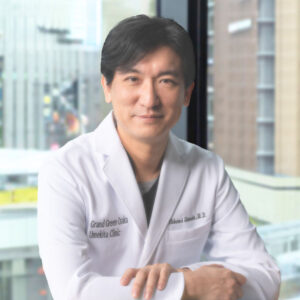
Director, Medical Corporation Shimada Clinic
Head of Clinical Practice, Grand Green Osaka Umekita Clinic
Hidenori Shimada
Graduated from the University of Tokushima Faculty of Medicine in 2005. After his initial residency, he obtained U.S. medical certification (ECFMG) and trained as a sub-intern in general surgery at the University of Washington. After completing the doctoral program at Kyoto University Graduate School of Medicine and working as a researcher at the Center for iPS Cell Research and Application (CiRA), Kyoto University, he founded Shimada Clinic in 2013. At Grand Green Osaka Umekita Clinic (https://umekitaclinic.org), he is engaged in a wide range of care, from internal medicine and pediatrics to cell therapy and aesthetic medicine.
* The physician supervision of this article covers its academic content only and does not constitute a recommendation of any specific treatment or product.