Hello, I am Dr. Hidenori Shimada of Grand Green Osaka Umekita Clinic in Osaka, Japan.
If you are researching NK cell therapy in Japan, you will probably come across the phrase “regenerative medicine law.” For many international patients, this raises a practical question: what does this legal framework actually mean for the treatment you are considering? This article explains the basics in plain language, including what the framework can tell you and what it cannot.
In short, Japan regulates cell-based treatments of this kind under the Act on the Safety of Regenerative Medicine, and clinics must follow a defined procedure before offering them. This structure is meaningful, but it is not a guarantee of any particular outcome. Decisions should always be made together with a doctor after an individual consultation.
What is NK cell therapy, briefly?
Natural killer (NK) cells are a type of lymphocyte that belongs to the innate immune system. They circulate in the blood and are thought to help detect and attack abnormal cells, including cancer cells and virus-infected cells, as part of a process often described as immune surveillance. Their activity is thought to change with age, stress, and the presence of cancer itself.
In NK cell therapy, a small amount of your own blood is collected. NK cells are then activated and expanded at a specialized cell processing facility and returned to you by intravenous infusion. The aim is to support immune function. Because the cells come from your own body, this is described as an autologous therapy. Research on NK cell approaches continues, and results vary between studies and between individuals, so it should be understood as one option to discuss rather than a proven solution for every situation.
How Japan’s regenerative medicine law applies
Under Japan’s Act on the Safety of Regenerative Medicine, medical institutions that provide certain cell therapies must prepare a treatment plan, have it reviewed by a certified committee, and submit it to the Ministry of Health, Labour and Welfare. Cell culture and processing must take place at a facility that meets the required standards. Clinics also need to explain the treatment to patients and obtain informed consent.
At Grand Green Osaka Umekita Clinic, NK cell therapy is provided under a regenerative medicine provision plan that has been submitted to and accepted by the relevant authority, as described on the clinic’s NK cell therapy page. For an international patient, this means there is a formal framework governing how the treatment is planned, reviewed, and delivered in Japan.
What the framework does not tell you
It is important to read this framework correctly. Acceptance of a provision plan is about procedure and oversight. It does not mean that a treatment has been approved as a standard therapy for a specific cancer, and it does not predict how well an individual will respond. Many patients assume that any legally provided treatment must be established medicine, but that is not what this law is designed to confirm.
NK cell therapy in Japan is also a self-pay treatment, which means it is not covered by public health insurance. Your overseas insurance may or may not reimburse any part of it, so this is worth checking with your insurer before you plan a trip.
How it fits alongside standard cancer treatment
NK cell therapy is not a replacement for surgery, chemotherapy, or radiation therapy. Standard treatment recommended by your oncologist remains the foundation of cancer care. According to the clinic’s information, NK cell therapy can be considered alongside these treatments, with timing agreed with your care team, and the clinic can coordinate with the institution providing your standard care.
If you are currently in treatment, a sensible first step is to tell your oncologist that you are exploring this option. Bringing your medical records, recent test results, and a list of current medications helps the consulting doctor judge whether the therapy is appropriate for you, and whether the timing makes sense with your existing plan.
Understanding risks and side effects
Because the therapy uses your own cells, the risk of rejection is considered low, and serious side effects have rarely been reported according to the clinic. However, low risk is not the same as no risk. Temporary fever or fatigue can occur after infusion, and individual reactions differ. Procedures such as blood collection and intravenous infusion also carry the ordinary, small risks that come with any needle-based procedure.
Your doctor should be able to explain possible side effects, what to watch for after treatment, and whom to contact if something concerns you once you return home. This is an especially important point for medical travelers, so ask about follow-up arrangements before you commit to any schedule.
Questions to ask before you travel to Osaka
Preparing questions in advance makes a consultation far more productive. You may want to ask about the following points.
- Whether your type and stage of cancer, and your current treatment, make you a suitable candidate.
- What the goals of treatment are, and what the realistic limits are.
- How many infusions are usually planned, over what period, and what each step costs.
- What risks, side effects, and alternatives apply to your situation.
- How language support, interpretation, and follow-up after you return home will be handled.
Grand Green Osaka Umekita Clinic is located in the Umeda area of Osaka and offers an information page for international patients, so you can begin by reviewing the details in your own language and then arrange an initial consultation. Fees, treatment frequency, and suitability are confirmed by the doctor during that consultation, rather than decided in advance.
Key takeaways
Japan’s regenerative medicine law gives NK cell therapy a defined framework of planning, review, notification, and facility standards. That is helpful context for international patients, but it is only one piece of the picture. It does not establish effectiveness, it does not replace standard cancer treatment, and it does not remove the need for an honest conversation about costs, risks, and limitations.
If you would like to learn more, consider speaking with your own oncologist first and then arranging a consultation with a doctor at the clinic in Osaka. Together, you can decide whether this option fits your circumstances and goals.
- Legal framework in JapanPlan, review and notification
- Alongside standard careNot a replacement
- Risks and side effectsConfirm with your doctor
- Self-pay treatmentFees confirmed at consultation
This diagram is a conceptual summary of the article content
References
- PubMed: CAR-NK cells: A promising cellular immunotherapy for cancer. (2020)
- PubMed: Anti-GD2 CAR-NKT cells in relapsed or refractory neuroblastoma: updated phase 1 trial interim results. (2023)
- PubMed: Engineering Natural Killer Cells for Cancer Immunotherapy. (2017)
- PubMed: The effect of low-dose IL-2 and Treg adoptive cell therapy in patients with type 1 diabetes. (2021)
- PubMed: NK cell-based cancer immunotherapy: from basic biology to clinical application. (2015)
- PMC: Adoptive immunotherapy against ovarian cancer. (2016)
- PMC: Current progress in NK cell biology and NK cell-based cancer immunotherapy. (2020)
- PMC: Advances in natural killer cell immunotherapy for hematologic malignancies. (2026)
- MHLW (Japan): Regenerative Medicine — Ministry of Health, Labour and Welfare, Japan
Supervising Physician
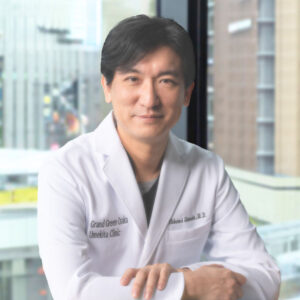
Director, Medical Corporation Shimada Clinic
Head of Clinical Practice, Grand Green Osaka Umekita Clinic
Hidenori Shimada
Graduated from the University of Tokushima Faculty of Medicine in 2005. After his initial residency, he obtained U.S. medical certification (ECFMG) and trained as a sub-intern in general surgery at the University of Washington. After completing the doctoral program at Kyoto University Graduate School of Medicine and working as a researcher at the Center for iPS Cell Research and Application (CiRA), Kyoto University, he founded Shimada Clinic in 2013. At Grand Green Osaka Umekita Clinic (https://umekitaclinic.org), he is engaged in a wide range of care, from internal medicine and pediatrics to cell therapy and aesthetic medicine.
* The physician supervision of this article covers its academic content only and does not constitute a recommendation of any specific treatment or product.