Hello, I am Dr. Hidenori Shimada of Grand Green Osaka Umekita Clinic in Osaka, Japan.
When you are considering a cancer treatment in another country, the medical details are only part of the challenge. Understanding what is being explained to you, in a language you are comfortable with, is just as important. For international patients exploring NK cell therapy at Grand Green Osaka Umekita Clinic in Osaka, clear communication is the foundation of making a decision that fits your own situation.
This article explains why informed consent matters, what information you can expect to review, and how to prepare so that your consultation is productive. It is general information and not a substitute for a doctor’s assessment.
Why clear communication matters in cell therapy
NK cell therapy is a cancer immune cell therapy in which your own natural killer cells are collected from a standard blood draw, activated and expanded at a specialized cell processing facility, and then returned to your body by intravenous infusion. Although the procedure itself involves a blood draw and an infusion, the surrounding decisions are not simple. They involve how the therapy relates to your current standard treatment, what the goals of treatment are, what risks and side effects may occur, and what the costs will be.
Misunderstandings often arise not from a lack of information but from small gaps in translation or from assumptions that differ between countries. A term such as “immunotherapy” can describe very different treatments depending on where you live. Taking the time to confirm exactly what is meant helps you avoid expectations that the treatment cannot realistically meet.
What informed consent means in Japan
Informed consent means that you receive an explanation of a proposed treatment, understand it, and agree to it voluntarily. In Japan, NK cell therapy is provided as a self-pay (non-insured) treatment under a framework based on the Act on the Safety of Regenerative Medicine. Providers submit a treatment plan that is reviewed under this system, and patients are expected to receive an explanation of the treatment before they agree to proceed.
Because the therapy is not covered by national health insurance, it is especially important to understand the full picture before you decide. Typical topics that your doctor should be able to explain include the purpose of the therapy, how the cells are collected and prepared, what is known and not yet known about its effectiveness, possible side effects such as temporary fever or fatigue, alternatives including standard treatment, and the fees involved.
Preparing before your consultation
Good preparation shortens the time needed to clarify misunderstandings and helps the doctor give advice based on your actual medical history. The Grand Green Osaka Umekita Clinic website offers information pages for international patients, and reading them before you contact the clinic can help you form your questions in advance.
Consider gathering the following before your appointment:
- A summary of your diagnosis and treatment history from your current doctors, ideally in English or accompanied by a translation
- A list of your current medications and any known allergies
- Recent test results and imaging reports that you are able to share
- The name and contact details of the medical team providing your standard treatment
- A written list of your questions, ordered by priority
Writing your questions down in your own language and, if possible, in simple English as well can help you stay focused during the conversation. If you need an interpreter or translated documents, ask the clinic in advance what support is available rather than assuming it will be arranged.
Questions worth asking during the consultation
A consultation is your opportunity to understand both the potential value and the limits of NK cell therapy. The therapy is designed to work with your own immune system, and it is generally described as being used alongside standard treatment such as surgery, chemotherapy, or radiation therapy rather than in place of it. Your doctor can explain how this applies to your case, and may coordinate with the institution providing your standard care.
Helpful questions include the following:
- Based on my diagnosis, is NK cell therapy something that may be considered for me, and what is the intended goal?
- What do we know, and what do we not yet know, about how well this therapy works for my type of cancer?
- What side effects may occur, and whom should I contact if I feel unwell after returning home?
- How many treatments are usually proposed, and what is the expected schedule?
- What exactly is included in the fee, and are there any costs that are charged separately?
- What happens if the cells cannot be prepared as planned?
If an answer is unclear, it is perfectly reasonable to ask the doctor to explain it again in different words, or to put the key points in writing.
Reviewing the consent documents carefully
Before treatment begins, you will normally be asked to review and sign consent documents. Do not feel pressured to sign on the spot. Take the time to read each section, and ask for clarification on any term that you do not fully understand. If the documents are provided only in Japanese, ask whether a translated version or an explanation by a qualified interpreter is available so that you can understand what you are agreeing to.
You also have the right to take time to think, to discuss the plan with family members, or to seek a second opinion from your home doctors. Consent is an ongoing process, not a single signature, and you may raise questions at any stage of treatment.
Planning for communication after you return home
Communication does not end when you leave Osaka. Before you travel, clarify how you can reach the clinic with questions, how follow-up will be handled, and how information will be shared with your doctors at home. Ask which symptoms should prompt you to seek medical attention locally, and consider carrying a short summary of your treatment that your home physicians can read.
Clear arrangements for follow-up reduce anxiety and help ensure that any concerns are handled promptly by the appropriate team.
Summary
For international patients, understanding NK cell therapy means more than reading about the procedure. It means knowing the purpose, the uncertainties, the self-pay nature of the treatment, the regulatory framework in Japan, and the plan for follow-up, all in words you can truly follow. Prepare your medical records and questions, ask about language support early, and take your time with the consent documents.
Whether NK cell therapy is appropriate for you, as well as its costs, risks, side effects, and suitability, can only be determined through a consultation with a doctor. If you would like to learn more, you can review the multilingual information pages of Grand Green Osaka Umekita Clinic and arrange a consultation to discuss your situation.
- Understand the plan
- Ask your questions
- Bring your records
- Plan follow-up
This diagram is a conceptual summary of the article content
References
- PMC: Key challenges in communication across milestones of cancer care continuum: a systematic review. (2026)
- PMC: Patient-physician communication about cancer-related fatigue: a survey of patient-perceived barriers. (2024)
- PMC: Newcomer knowledge, attitudes, and beliefs about human papillomavirus (HPV) vaccination. (2021)
- PMC: "Along for the Ride": A Qualitative Study Exploring Patient and Caregiver Perceptions of Decision Making in Cancer Care. (2020)
- MHLW (Japan): Regenerative Medicine — Ministry of Health, Labour and Welfare, Japan
Supervising Physician
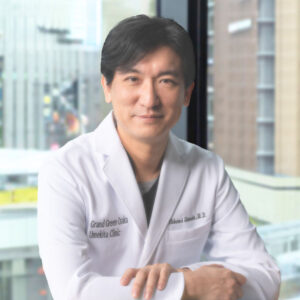
Director, Medical Corporation Shimada Clinic
Head of Clinical Practice, Grand Green Osaka Umekita Clinic
Hidenori Shimada
Graduated from the University of Tokushima Faculty of Medicine in 2005. After his initial residency, he obtained U.S. medical certification (ECFMG) and trained as a sub-intern in general surgery at the University of Washington. After completing the doctoral program at Kyoto University Graduate School of Medicine and working as a researcher at the Center for iPS Cell Research and Application (CiRA), Kyoto University, he founded Shimada Clinic in 2013. At Grand Green Osaka Umekita Clinic (https://umekitaclinic.org), he is engaged in a wide range of care, from internal medicine and pediatrics to cell therapy and aesthetic medicine.
* The physician supervision of this article covers its academic content only and does not constitute a recommendation of any specific treatment or product.