
Hello, I am Dr. Hidenori Shimada of Grand Green Osaka Umekita Clinic in Osaka, Japan.
Regenerative medicine, particularly stem cell therapy, is gaining global attention as a potential approach for various health concerns. As medical tourism grows, patients are looking for safe and reliable treatment options abroad. Among the many destinations, Japan stands out due to its rigorous legal framework designed to ensure patient safety and treatment quality. This article explores why Japan is considered a trusted destination for stem cell therapy, focusing on its unique regulatory landscape.
Japan’s Commitment to Safety: The Act on the Safety of Regenerative Medicine
The cornerstone of Japan’s leadership in this field is the “Act on the Safety of Regenerative Medicine,” which was enacted in 2014. This legislation creates a clear and strict framework for providing regenerative therapies, including those using stem cells. Unlike in some countries where regulations can be ambiguous, Japan’s law requires all medical institutions to submit a detailed treatment plan to the Ministry of Health, Labour and Welfare (MHLW) for review and approval before offering any therapy. This system ensures a high level of oversight and accountability.
Key aspects of this regulation include:
- Mandatory Treatment Plans: Clinics must provide comprehensive documentation detailing the scientific basis, cell processing methods, treatment protocol, and risk management procedures.
- Certified Cell Processing: The culturing and processing of cells must be conducted in facilities that meet specific safety and quality standards set by the MHLW.
- Patient Protection: The law prioritizes patient safety, requiring thorough informed consent and establishing a system for tracking and reporting any adverse events.
This robust regulatory environment provides a level of assurance for patients, particularly those traveling from overseas, that the treatments offered are subject to strict governmental supervision.
Focus on Adipose-Derived Stem Cell (ASC) Therapy
One of the prominent treatments provided under this framework is Adipose-Derived Stem Cell (ASC) Therapy. This involves collecting a small amount of a patient’s own fat tissue, isolating the mesenchymal stem cells (MSCs) it contains, expanding them in a specialized facility, and then administering them back into the patient’s body, typically via an IV infusion.
Using a patient’s own cells (autologous use) is considered to lower risks such as rejection or allergic reactions compared to using donor cells. Scientific research has reported that MSCs may have several functions, including secreting substances that help calm inflammation and support tissue repair. These cells have been observed to migrate toward areas of inflammation or damage in the body, a phenomenon known as the “homing effect.” However, the effects and outcomes can vary significantly among individuals, and this therapy is not a guaranteed cure for any condition.
What to Consider Before Seeking Treatment in Japan
While Japan’s regulations provide a strong safety net, it is crucial for patients to be well-informed. Here are some essential points to consider before pursuing stem cell therapy:
- Treatment Is Investigational: Many stem cell therapies are still considered investigational and are not standard treatments for most diseases. They should not be seen as a replacement for proven conventional therapies.
- It is Private Medical Care: Adipose-derived stem cell therapy is not covered by Japanese public health insurance. All costs are the patient’s responsibility.
- Individual Results Vary: The potential benefits and therapeutic responses are not guaranteed. A physician must evaluate your specific health condition to determine if you might be a suitable candidate.
- Potential Risks and Side Effects: As with any medical procedure, there are potential risks and side effects. These should be discussed in detail with your doctor during the consultation.
How to Verify a Clinic’s Compliance
For international patients, verifying a clinic’s legitimacy is a critical step. A trustworthy clinic in Japan will be transparent about its compliance with the Act on the Safety of Regenerative Medicine. You should be able to confirm that their treatment plan has been officially accepted by the MHLW. Reputable clinics will prioritize a thorough consultation process, ensuring you understand the procedure, potential outcomes, and associated risks before you make any commitment. Avoid any institution that promises a cure or guarantees specific results.
Consulting at Grand Green Osaka Umekita Clinic
Located in the accessible Umeda area of Osaka, Grand Green Osaka Umekita Clinic provides adipose-derived stem cell therapy in compliance with Japan’s Act on the Safety of Regenerative Medicine. We are committed to providing clear information to help patients make informed decisions about their health.
The final determination of whether this therapy is appropriate for you can only be made after a comprehensive medical evaluation by our physicians. We encourage you to review detailed information about the treatment process, costs, potential risks, and side effects on our official Adipose-Derived Stem Cell Therapy page. This resource is available in multiple languages to assist international patients in their research.
For more details, please visit our page: Adipose-Derived Stem Cell Therapy Information.
Conclusion: Making an Informed Decision
Japan’s stringent regulatory framework makes it a compelling destination for individuals considering stem cell therapy. The Act on the Safety of Regenerative Medicine ensures that treatments are provided under a system that prioritizes quality control and patient protection. However, it is essential for patients to approach this option with realistic expectations. The key is to engage with a compliant and transparent medical institution, ask critical questions, and have a thorough consultation with a qualified physician. By doing so, you can make a well-informed decision that aligns with your personal health goals.
References
- PubMed: Regenerative medicine strategies for hair growth and regeneration: A narrative review of literature. (2022)
- PubMed: Mesenchymal Stem Cell Migration and Tissue Repair. (2019)
- PubMed: RNA Helicase DDX5 Maintains Cardiac Function by Regulating CamkIIδ Alternative Splicing. (2024)
- PubMed: Allogeneic Stem Cell Therapy for Acute Ischemic Stroke: The Phase 2/3 TREASURE Randomized Clinical Trial. (2024)
- PubMed: Axon guidance cue SLIT2 regulates the murine skeletal stem cell niche through sympathetic innervation. (2025)
- PMC: Reflection on the enactment and impact of safety laws for regenerative medicine in Japan. (2021)
- PMC: Japan's challenges of translational regenerative medicine: Act on the safety of regenerative medicine. (2016)
- PMC: Amendment of the Act on the Safety of Regenerative Medicine: A new voyage of regenerative medicine in Japan and the dawn of a new era for young investigators. (2025)
- MHLW (Japan): Regenerative Medicine — Ministry of Health, Labour and Welfare, Japan
Supervising Physician
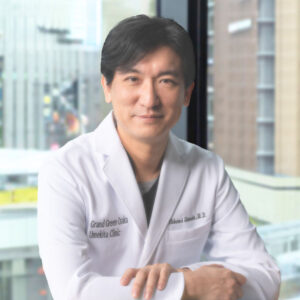
Director, Medical Corporation Shimada Clinic
Head of Clinical Practice, Grand Green Osaka Umekita Clinic
Hidenori Shimada
Graduated from the University of Tokushima Faculty of Medicine in 2005. After his initial residency, he obtained U.S. medical certification (ECFMG) and trained as a sub-intern in general surgery at the University of Washington. After completing the doctoral program at Kyoto University Graduate School of Medicine and working as a researcher at the Center for iPS Cell Research and Application (CiRA), Kyoto University, he founded Shimada Clinic in 2013. At Grand Green Osaka Umekita Clinic (https://umekitaclinic.org), he is engaged in a wide range of care, from internal medicine and pediatrics to cell therapy and aesthetic medicine.
* The physician supervision of this article covers its academic content only and does not constitute a recommendation of any specific treatment or product.