
Hello, I am Dr. Hidenori Shimada of Grand Green Osaka Umekita Clinic in Osaka, Japan.
As interest in regenerative medicine grows worldwide, Japan has become a notable destination for advanced treatments like adipose-derived stem cell therapy. For international patients considering this option, understanding the entire process is a crucial first step. This article provides a clear, step-by-step guide to the patient journey, from the first consultation to post-treatment care, helping you navigate your options with clarity.
The Adipose Stem Cell Therapy Process at a Glance
Adipose-derived stem cell therapy is a multi-stage process that utilizes your body’s own cells. The journey typically involves an initial medical consultation, a minor procedure to collect fat tissue, a period for cell culturing and expansion in a specialized facility, the administration of the cells via intravenous (IV) infusion, and subsequent follow-up care. Each step is carefully managed to align with your health condition and treatment goals, based on a physician’s assessment.
Understanding Your Journey: A Step-by-Step Guide
Navigating medical care in another country can seem complex, but a structured process ensures a clear path forward. Here are the typical steps for autologous adipose stem cell therapy in a Japanese clinic.
- Step 1: Initial Consultation
Your journey begins with a thorough consultation with a physician. During this session, the doctor will review your medical history, current health status, and any ongoing treatments. This is an opportunity to discuss your concerns and expectations. The physician will explain the principles of the therapy, its potential applications, and what it may involve for you. Based on this comprehensive assessment, they will determine if you are a suitable candidate for the treatment. - Step 2: Fat Tissue Collection
If you and your doctor decide to proceed, the next step is collecting a small amount of your adipose (fat) tissue. This is a minimally invasive procedure performed under local anesthesia on an outpatient basis. Typically, a few rice-grain-sized pieces of fat are collected from an area like the abdomen or thigh through a small incision. The procedure is designed to have a minimal impact on your daily life. - Step 3: Cell Culturing and Expansion
The collected fat tissue is sent to a specialized cell processing facility. Here, mesenchymal stem cells (MSCs) are isolated from the tissue. These cells are then cultured and expanded in a highly controlled environment over several weeks to achieve the necessary number for therapeutic use. In Japan, these facilities operate under strict regulations to ensure quality and safety. - Step 4: Stem Cell Administration
Once the cells are ready, you will return to the clinic for administration. The cultured stem cells are returned to your body through a simple IV infusion. This process is also performed on an outpatient basis. Once infused, MSCs are reported to travel through the bloodstream and may accumulate at sites of inflammation or damage, a phenomenon known as the “homing effect.” - Step 5: Follow-up and Aftercare
Post-treatment care is an important part of the process. Your clinic will schedule follow-up appointments to monitor your progress and manage your condition. The follow-up plan is tailored to your individual needs and treatment plan.
Key Considerations for International Patients
When considering regenerative medicine in Japan, it’s important to be aware of several key points. Adipose-derived stem cell therapy is provided as private medical care and is not covered by Japanese public health insurance. The outcomes of this therapy are not guaranteed and can vary depending on the individual’s condition and other factors.
In Japan, regenerative medicine is regulated under the Act on the Safety of Regenerative Medicine. This means that treatments must be provided based on a plan submitted to and accepted by the Ministry of Health, Labour and Welfare. This framework ensures that treatments are conducted with a focus on safety management.
A physician’s diagnosis is essential to determine if this therapy is appropriate for you. During your consultation, you should receive a full explanation of the expected effects, as well as the potential risks and side effects. All decisions should be made after you have a complete understanding of the information provided.
Consulting at Grand Green Osaka Umekita Clinic
Located in Osaka, Grand Green Osaka Umekita Clinic offers consultations for patients interested in adipose-derived stem cell therapy. We provide information and support for international patients considering medical travel to Japan. The treatment uses your own (autologous) cells, which lowers the risk of rejection compared to using cells from a donor. Our approach is to work with you to create a realistic treatment plan, taking into account any current medical care you are receiving.
For more detailed information about the features, potential risks, and fees associated with this treatment, we encourage you to review our official service page. A thorough consultation with our physician is necessary to determine if this treatment is a suitable option for you.
→ Learn more about Adipose-Derived Stem Cell Therapy at our clinic.
Summary: Navigating Your Path with Confidence
Embarking on a medical journey abroad requires careful planning and access to reliable information. Understanding the adipose stem cell therapy process—from initial consultation and cell collection to administration and follow-up—is the first step toward making an informed decision. This structured approach, conducted under Japan’s regulatory framework, is designed to guide patients through their treatment journey. To explore if this is a viable option for your health goals, we recommend consulting with a medical professional.
References
- PubMed: Mesenchymal Stem Cell Secretome: Toward Cell-Free Therapeutic Strategies in Regenerative Medicine. (2017)
- PubMed: Stem cell therapy in systemic sclerosis. (2025)
- PubMed: The Efficacy of Stem Cells in Wound Healing: A Systematic Review. (2024)
- PubMed: Genetically engineered myeloid cells rebalance the core immune suppression program in metastasis. (2021)
- PubMed: Advances in Regenerative Stem Cell Therapy in Androgenic Alopecia and Hair Loss: Wnt pathway, Growth-Factor, and Mesenchymal Stem Cell Signaling Impact Analysis on Cell Growth and Hair Follicle Development. (2019)
- PMC: Safety and efficacy of autologous adipose-derived stem cells for knee osteoarthritis in the elderly population: A systematic review. (2024)
- PMC: Adipose-derived stem cells applied to ankle pathologies: a systematic review. (2024)
- PMC: Interrogating erectile dysfunction and evaluating novel therapeutic frontiers, with emphasis on stem cell strategies. (2024)
- MHLW (Japan): Regenerative Medicine — Ministry of Health, Labour and Welfare, Japan
Supervising Physician
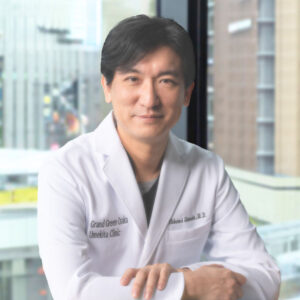
Director, Medical Corporation Shimada Clinic
Head of Clinical Practice, Grand Green Osaka Umekita Clinic
Hidenori Shimada
Graduated from the University of Tokushima Faculty of Medicine in 2005. After his initial residency, he obtained U.S. medical certification (ECFMG) and trained as a sub-intern in general surgery at the University of Washington. After completing the doctoral program at Kyoto University Graduate School of Medicine and working as a researcher at the Center for iPS Cell Research and Application (CiRA), Kyoto University, he founded Shimada Clinic in 2013. At Grand Green Osaka Umekita Clinic (https://umekitaclinic.org), he is engaged in a wide range of care, from internal medicine and pediatrics to cell therapy and aesthetic medicine.
* The physician supervision of this article covers its academic content only and does not constitute a recommendation of any specific treatment or product.