
Hello, I am Dr. Hidenori Shimada of Grand Green Osaka Umekita Clinic in Osaka, Japan.
Regenerative medicine, particularly treatments involving stem cells, is a rapidly advancing field. One of the key questions many people have is how stem cells, when administered intravenously (IV), know where to go in the body to be effective. The answer lies in a remarkable biological process known as the ‘homing effect.’ This article explores the scientific mechanism behind how IV stem cell therapy works, focusing on the journey of adipose-derived stem cells (ADSCs) through the body.
The Homing Effect: How Stem Cells Find Their Target
The homing effect is the inherent ability of stem cells to navigate through the bloodstream and migrate toward sites of injury, inflammation, or damage. Think of it as a natural GPS system. When tissues are damaged, they release specific chemical signals, like an SOS call. Mesenchymal stem cells (MSCs) circulating in the blood can detect these signals, adhere to the blood vessel walls near the injury, and then travel into the surrounding tissue to exert their effects. This targeted migration is the scientific foundation for using systemic, whole-body administration methods like IV infusions in regenerative medicine.
Why a Whole-Body Approach? The Role of Systemic Administration
Many health concerns, especially those associated with aging or chronic conditions, are not confined to a single, isolated location. Issues like systemic inflammation, widespread joint discomfort, or a general decline in recovery capacity affect the body as a whole. A localized injection might address one specific point of concern, but it may not be suitable for these broader issues. Intravenous (IV) administration allows the stem cells to circulate throughout the entire body. This systemic approach provides an opportunity for the cells to reach multiple areas that are sending out distress signals, potentially offering a more comprehensive way to support the body’s natural repair processes.
The Scientific Mechanism of the Stem Cell Homing Effect
The journey of a stem cell from the IV bag to a target tissue is a multi-step process guided by complex molecular interactions. While research is ongoing, the mechanism is generally understood to involve the following phases:
- Step 1: Injury Signals (Chemokines): Damaged or inflamed tissues release signaling molecules called chemokines. These molecules enter the bloodstream and act as a chemical trail, signaling that help is needed.
- Step 2: Circulation and Tethering: After being infused, stem cells travel passively through the circulatory system. As they pass by the inflamed area, receptors on the stem cell surface recognize and loosely bind to corresponding molecules on the surface of the blood vessel lining (endothelium). This slows them down, causing them to ‘roll’ along the vessel wall.
- Step 3: Adhesion and Migration: Stronger bonds then form, firmly anchoring the stem cells to the vessel wall. Finally, the stem cells squeeze through the gaps in the blood vessel wall and migrate into the surrounding damaged tissue, a process called extravasation.
Once at the target site, mesenchymal stem cells are reported to exert their influence not just by transforming into new cells, but largely through paracrine effects—secreting anti-inflammatory factors, growth factors, and other signaling molecules that help calm inflammation and support the local cellular environment’s repair activities.
Why Use Adipose-Derived Stem Cells (ADSCs)?
Mesenchymal stem cells can be sourced from various tissues, including bone marrow and fat (adipose) tissue. At our clinic, we use stem cells derived from the patient’s own fat. There are several reasons for this choice:
- Abundance: Adipose tissue is considered a rich source of MSCs, containing a higher concentration than an equivalent amount of bone marrow.
- Accessibility: Fat tissue can be collected through a minimally invasive procedure under local anesthesia, which generally involves less discomfort and a quicker recovery compared to bone marrow aspiration.
- Autologous Use: The treatment uses your own cells (autologous), which minimizes the risk of rejection or allergic reactions that can be associated with donor cells.
These adipose-derived stem cells (ADSCs) possess the same homing capabilities and are known to secrete a wide range of beneficial molecules that contribute to their potential therapeutic effects, including anti-inflammatory and immunomodulatory actions.
Important Considerations for IV Stem Cell Therapy in Japan
When considering adipose-derived stem cell therapy, it is crucial to have a clear understanding of the treatment context. The effects and outcomes of this therapy are not guaranteed and can vary between individuals. It is essential to consult with a physician to determine if this approach is suitable for your specific health condition.
In Japan, regenerative medicine treatments like this are provided under the Act on the Safety of Regenerative Medicine. This legal framework requires medical institutions to submit their treatment plans to the government for review, ensuring that procedures are conducted with appropriate safety management. This therapy is considered a form of private medical care and is not covered by Japanese public health insurance. All aspects of the treatment, including the expected benefits, potential risks, side effects, number of sessions, and total cost, must be thoroughly discussed and understood during a medical consultation.
Learn More at Grand Green Osaka Umekita Clinic
Understanding the science behind the homing effect provides insight into the rationale for IV stem cell therapy as a systemic approach to support the body’s wellness. It is a sophisticated process that leverages the body’s own signaling and repair pathways.
If you are interested in learning more about the potential of adipose-derived stem cell therapy, we invite you to consult with our physicians at Grand Green Osaka Umekita Clinic. Located in the heart of Osaka’s Umeda district, our clinic provides comprehensive information and personalized consultations. We can discuss your health goals and determine if this treatment is an appropriate option for you. For more detailed information, please visit our Adipose-Derived Stem Cell Therapy page.
→ Learn more about our Adipose-Derived Stem Cell Therapy
References
- PubMed: Intravenous injection of BMSCs modulate tsRNA expression and ameliorate lung remodeling in COPD mice. (2024)
- PubMed: Extracellular Vesicles and Biomaterial Design: New Therapies for Cardiac Repair. (2021)
- PubMed: Mesenchymal Stem Cells Home to Sites of Injury and Inflammation. (2012)
- PubMed: Systemic and local delivery of mesenchymal stem cells for heart renovation: Challenges and innovations. (2020)
- PubMed: Efficient delivery of mesenchymal stem/stromal cells to injured liver by surface PEGylation. (2023)
- PMC: Efficient delivery of mesenchymal stem/stromal cells to injured liver by surface PEGylation. (2023)
- PMC: Bispecific Antibody Inhalation Therapy for Redirecting Stem Cells from the Lungs to Repair Heart Injury. (2020)
- PMC: Advancing mesenchymal stem cell therapy for kidney diseases in companion animals: from mechanisms to clinical application. (2026)
- MHLW (Japan): Regenerative Medicine — Ministry of Health, Labour and Welfare, Japan
Supervising Physician
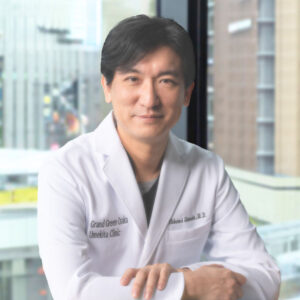
Director, Medical Corporation Shimada Clinic
Head of Clinical Practice, Grand Green Osaka Umekita Clinic
Hidenori Shimada
Graduated from the University of Tokushima Faculty of Medicine in 2005. After his initial residency, he obtained U.S. medical certification (ECFMG) and trained as a sub-intern in general surgery at the University of Washington. After completing the doctoral program at Kyoto University Graduate School of Medicine and working as a researcher at the Center for iPS Cell Research and Application (CiRA), Kyoto University, he founded Shimada Clinic in 2013. At Grand Green Osaka Umekita Clinic (https://umekitaclinic.org), he is engaged in a wide range of care, from internal medicine and pediatrics to cell therapy and aesthetic medicine.
* The physician supervision of this article covers its academic content only and does not constitute a recommendation of any specific treatment or product.