
Hello, I am Dr. Hidenori Shimada of Grand Green Osaka Umekita Clinic in Osaka, Japan.
When considering advanced medical treatments like stem cell therapy, especially in another country, your primary concern is likely safety and quality. Japan has established a clear and robust legal framework to oversee these innovative therapies, offering a structured and regulated environment for patients. For those exploring medical tourism, understanding this system is key to making an informed decision. This article explains how Japan’s regulations, particularly the Act on the Safety of Regenerative Medicine, work to ensure the quality and safety of adipose-derived stem cell treatments.
Why Japan’s Legal Framework Matters for Your Treatment
The cornerstone of Japan’s approach is the “Act on the Safety of Regenerative Medicine,” enforced by the Ministry of Health, Labour and Welfare (MHLW) since 2014. This law is not a mere guideline; it is a mandatory legal requirement. It stipulates that any medical institution providing regenerative medicine, including autologous (using one’s own cells) adipose-derived stem cell therapy, must adhere to strict protocols. The system is designed to ensure that treatments are based on scientific rationale and are delivered with close attention to patient safety. This national oversight provides a level of quality management that is a crucial consideration for anyone seeking treatment in Japan.
Key Safeguards of the Regenerative Medicine Act
The Act establishes several critical requirements for medical institutions. Understanding these can help you appreciate the level of quality control involved in treatments offered in Japan. These measures address common concerns about the safety and ethics of advanced medical procedures.
- Mandatory Review of Treatment Plans: Before a clinic can offer a treatment, it must submit a detailed plan to a government-certified committee. This plan must outline the scientific basis, cell processing procedures, safety management protocols, and patient protection measures. Only plans that pass this rigorous external evaluation are permitted by the MHLW.
- Strict Standards for Cell Processing Facilities (CPFs): The quality of the stem cells is paramount. The law requires that all cell culturing and processing occur in a licensed Cell Processing Facility (CPF). These facilities must meet high standards for sterility, quality assurance, and record-keeping, which helps minimize risks such as contamination or processing errors.
- Thorough Informed Consent: Physicians are legally obligated to provide a detailed explanation of the proposed treatment. This includes potential benefits, known risks, possible side effects, expected duration, and costs. Information on alternative treatments must also be provided, ensuring you can make a well-informed decision based on comprehensive information.
How Autologous Adipose-Derived Stem Cell Therapy is Regulated
Adipose-derived stem cell therapy uses autologous cells, meaning the cells are collected from your own body. While using your own cells generally lowers risks such as rejection or allergic reactions compared to donor cells, the safety of the collection, processing, and administration stages remains critical. The Act on the Safety of Regenerative Medicine governs this entire process. It ensures that the small amount of fat tissue taken is handled correctly, the stem cells are isolated and cultured in a controlled environment at a licensed CPF, and the final cell product is administered according to strict safety protocols. This comprehensive oversight is what distinguishes Japan’s regulated approach.
What This Means for International Patients
For those traveling to Japan for medical care, this robust regulatory framework provides a crucial layer of reliability. It signifies that the quality of care is not left to the discretion of individual clinics but is upheld by a national standard. When you choose a clinic operating under an MHLW-accepted plan, you are selecting a facility that has been vetted for compliance with national safety and ethical standards. This transparency helps you differentiate between clinics that meet these high standards and those that may not, which is a vital factor in medical tourism.
Questions to Ask Before Your Consultation
When considering stem cell therapy in Japan, it is wise to be proactive. A reputable clinic will welcome your questions. Here are some key points to confirm during your research or initial consultation:
- Is the treatment provided under a plan submitted to and accepted by Japan’s Ministry of Health, Labour and Welfare?
- Where are the stem cells processed? Can the clinic confirm it uses a licensed Cell Processing Facility (CPF)?
- What are the potential risks and side effects associated with the procedure for my specific health condition?
- What is the estimated cost, number of treatments, and total duration of the therapy?
It is essential to remember that adipose-derived stem cell therapy is provided as a private medical service (not covered by public health insurance). The suitability of this treatment for any individual can only be determined by a physician after a comprehensive medical examination and discussion. No treatment can guarantee a specific outcome, and results may vary.
Our Approach to Regenerative Medicine in Osaka
At Grand Green Osaka Umekita Clinic, we provide adipose-derived stem cell therapy in full compliance with the Act on the Safety of Regenerative Medicine. Our treatment plans are officially submitted and accepted, and we partner with a licensed Cell Processing Facility in Japan to ensure high standards of cell quality and safety. We are committed to providing clear, transparent information to all our patients, including those visiting from overseas. If you are in the Osaka or Umeda area and wish to learn more, we encourage you to schedule a consultation. For more details on our process, potential risks, and fees, please review our dedicated information page.
Learn more about Adipose-Derived Stem Cell Therapy
Summary: A Framework of Trust for Your Health
Choosing to undergo stem cell therapy is a significant decision. Japan’s Act on the Safety of Regenerative Medicine provides a comprehensive regulatory environment that prioritizes patient safety and treatment quality. By ensuring that all providers adhere to strict, government-mandated standards, the system creates a foundation of trust. Before making any decisions, a direct consultation with a physician is crucial to understand if the treatment is appropriate for your individual health needs and goals.
References
- PubMed: Regenerative medicine strategies for hair growth and regeneration: A narrative review of literature. (2022)
- PubMed: Intracerebral transplantation of MRI-trackable autologous bone marrow stromal cells for patients with subacute ischemic stroke. (2024)
- PubMed: Mesenchymal stem cells for restoring endometrial function: An infertility perspective. (2021)
- PubMed: Systematic Intravenous Administration of Autologous Mesenchymal Stem Cells Is Safe. (2024)
- PubMed: Repeated infusion of autologous adipose tissue-derived stem cells for Parkinson's disease. (2022)
- PMC: Regulatory brokerage: Competitive advantage and regulation in the field of regenerative medicine. (2019)
- PMC: Post-marketing surveillance framework of cell and gene therapy products in the European Union, the United States, Japan, South Korea and China: a comparative study. (2024)
- PMC: The global regulatory landscape of stem cell medical aesthetics: challenges, comparisons, and pathways to coordination. (2026)
- MHLW (Japan): Regenerative Medicine — Ministry of Health, Labour and Welfare, Japan
Supervising Physician
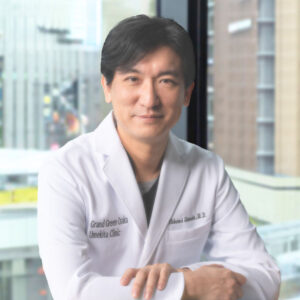
Director, Medical Corporation Shimada Clinic
Head of Clinical Practice, Grand Green Osaka Umekita Clinic
Hidenori Shimada
Graduated from the University of Tokushima Faculty of Medicine in 2005. After his initial residency, he obtained U.S. medical certification (ECFMG) and trained as a sub-intern in general surgery at the University of Washington. After completing the doctoral program at Kyoto University Graduate School of Medicine and working as a researcher at the Center for iPS Cell Research and Application (CiRA), Kyoto University, he founded Shimada Clinic in 2013. At Grand Green Osaka Umekita Clinic (https://umekitaclinic.org), he is engaged in a wide range of care, from internal medicine and pediatrics to cell therapy and aesthetic medicine.
* The physician supervision of this article covers its academic content only and does not constitute a recommendation of any specific treatment or product.