
Hello, I am Dr. Hidenori Shimada of Grand Green Osaka Umekita Clinic in Osaka, Japan.
Regenerative medicine, particularly treatments using stem cells, is gaining attention worldwide as a potential option for addressing various health concerns. When considering adipose-derived stem cell therapy, the focus is often on the potential outcomes. However, the journey your cells take from collection to administration is a critical factor that underpins the entire process. The quality and viability of the cells administered are paramount, and this is determined by the rigorous procedures that happen behind the scenes in a specialized laboratory.
Why the Quality of Cell Processing is Crucial
The effectiveness of stem cell therapy is closely linked to the quality of the cells being used. Simply put, cells that are not handled, cultured, and processed under strict, controlled conditions may not perform as expected. High-quality cell processing aims to ensure that the cells are pure, potent, and free from contamination. This meticulous process is what transforms a small sample of your tissue into a potential therapeutic product. In Japan, this process is governed by stringent regulations to maintain high standards of safety and quality for patients.
Inside Japan’s Cell Processing Facilities (CPFs)
In Japan, the cultivation of cells for regenerative medicine takes place in a highly specialized environment known as a Cell Processing Facility (CPF). These are not ordinary laboratories. CPFs are designed and operated under strict guidelines to minimize the risk of contamination and ensure consistent cell quality. To operate, these facilities must comply with Japan’s Act on the Safety of Regenerative Medicine, which requires that treatment plans and cell processing procedures be submitted to and accepted by the Ministry of Health, Labour and Welfare.
Key features of a Japanese CPF include:
- Cleanrooms: Air quality is strictly controlled to remove dust, microbes, and other particles. Staff wear specialized gear to prevent contamination.
- Controlled Environments: Temperature, humidity, and other conditions are constantly monitored to create the optimal environment for cell growth.
- Standardized Procedures: Every step, from receiving the tissue sample to shipping the final cell product, follows a detailed, standardized protocol to ensure reproducibility and safety.
The Journey of Your Stem Cells: From Lab to IV
The process of preparing your adipose-derived stem cells is a carefully orchestrated journey. Understanding these steps can provide insight into the quality control involved in stem cell processing in Japan.
- 1. Collection: A small amount of your own fat tissue, often just a few rice-grain-sized pieces, is collected at the clinic under local anesthesia. This is a minimally invasive outpatient procedure.
- 2. Isolation and Culture: The tissue sample is sent to a CPF. There, technicians isolate the mesenchymal stem cells (MSCs) from the fat tissue and place them in a sterile culture medium, which contains nutrients to help them grow.
- 3. Expansion: Over several weeks, the cells multiply in a controlled incubator. The goal is to grow a sufficient number of healthy, viable cells for the treatment.
- 4. Quality Control: Before the cells are approved for use, they undergo a series of rigorous quality control tests. These tests check for bacterial or viral contamination, confirm the number and viability of the cells, and ensure they meet all required specifications. This is a critical step for quality control stem cells.
- 5. Administration: Once the cultured cells pass all quality checks, they are carefully packaged and transported back to the clinic. They are then administered back to your body, typically through an intravenous (IV) infusion.
Key Standards for Regenerative Medicine Safety
The safety of regenerative medicine in Japan is upheld by a multi-layered approach. The Act on the Safety of Regenerative Medicine provides the legal framework, ensuring that treatments are provided based on scientifically sound plans and that cell processing is conducted in a certified facility. This commitment to regenerative medicine safety is a cornerstone of the field in Japan.
Within the CPF, specific measures are taken to protect cell quality. For example, research has explored the effects of various decontamination agents on MSCs to establish safe and effective cleaning protocols for equipment and environments. The management of cell morphology and growth patterns is also monitored to maintain consistency throughout the culture period. These scientific efforts contribute to the reliability of the final cell product, which is essential for patients, including those visiting for medical tourism Japan.
What to Consider Before Your Consultation
Adipose-derived stem cell therapy is a promising field, but it’s important to approach it with a clear understanding. Here are some key points to consider:
- Elective, Uninsured Treatment: This therapy is considered an elective treatment and is not covered by Japanese public health insurance. Patients are responsible for the full cost.
- Individual Results Vary: The outcome of the treatment can differ from person to person. It is not a guaranteed cure for any disease or condition.
- Physician’s Assessment is Essential: Eligibility for this treatment is determined by a physician after a thorough consultation, which may include reviewing your medical history and conducting necessary tests. The potential benefits, risks, and side effects must be discussed and understood before proceeding.
- Not a Replacement for Standard Care: This therapy should not be considered a replacement for conventional, established treatments for specific diseases. It may be considered as a complementary option in consultation with your doctor.
Learn More at Grand Green Osaka Umekita Clinic
At Grand Green Osaka Umekita Clinic, we provide adipose-derived stem cell therapy in accordance with Japanese law. The cells are processed at a licensed cell processing facility in Japan that adheres to the strict quality and safety standards discussed here. We believe that an informed patient is an empowered patient. Understanding the meticulous process behind your treatment can provide confidence and clarity.
If you are in Osaka and wish to learn more about whether this therapy might be an option for you, we invite you to consult with our physicians. For detailed information on the treatment flow, costs, potential risks, and side effects, please see our dedicated page on Adipose-Derived Stem Cell Therapy.
Conclusion: A Commitment to Quality in Regenerative Medicine
The journey of stem cells from the lab to the IV is a complex and highly regulated process in Japan. The stringent standards applied in cell processing facilities are designed to ensure the safety and quality of the final cell product. This commitment to excellence is fundamental to the responsible practice of regenerative medicine. By understanding the science and regulation behind the therapy, you can make a more informed decision in consultation with a qualified medical professional.
References
- PubMed: Predicting quality decay in continuously passaged mesenchymal stem cells by detecting morphological anomalies. (2021)
- PubMed: Effects of residual H2O2 on the growth of MSCs after decontamination. (2018)
- PubMed: Scalable production of anti-inflammatory exosomes from three-dimensional cultures of canine adipose-derived mesenchymal stem cells: production, stability, bioactivity, and safety assessment. (2025)
- PubMed: Effects of continuous exposure to low concentration of ClO2 gas on the growth, viability, and maintenance of undifferentiated MSCs in long-term cultures. (2020)
- PMC: Effects of residual H(2)O(2) on the growth of MSCs after decontamination. (2018)
- PMC: Processing and Ex Vivo Expansion of Adipose Tissue-Derived Mesenchymal Stem/Stromal Cells for the Development of an Advanced Therapy Medicinal Product for use in Humans. (2021)
- PMC: Off-the-Shelf Cord-Blood Mesenchymal Stromal Cells: Production, Quality Control, and Clinical Use. (2024)
- PMC: Autologous concentrated bone marrow injection for precollapse osteonecrosis of the femoral head concurrent with contralateral total hip arthroplasty: protocol for a clinical trial. (2024)
- MHLW (Japan): Regenerative Medicine — Ministry of Health, Labour and Welfare, Japan
Supervising Physician
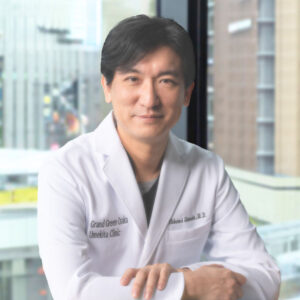
Director, Medical Corporation Shimada Clinic
Head of Clinical Practice, Grand Green Osaka Umekita Clinic
Hidenori Shimada
Graduated from the University of Tokushima Faculty of Medicine in 2005. After his initial residency, he obtained U.S. medical certification (ECFMG) and trained as a sub-intern in general surgery at the University of Washington. After completing the doctoral program at Kyoto University Graduate School of Medicine and working as a researcher at the Center for iPS Cell Research and Application (CiRA), Kyoto University, he founded Shimada Clinic in 2013. At Grand Green Osaka Umekita Clinic (https://umekitaclinic.org), he is engaged in a wide range of care, from internal medicine and pediatrics to cell therapy and aesthetic medicine.
* The physician supervision of this article covers its academic content only and does not constitute a recommendation of any specific treatment or product.