
Hello, I am Dr. Hidenori Shimada of Grand Green Osaka Umekita Clinic in Osaka, Japan.
As life expectancy increases, the focus of healthcare is shifting from simply treating diseases to promoting 'healthy aging'—maintaining physical and cognitive function for as long as possible. In this context, regenerative medicine is emerging as a promising field. This article explores adipose-derived stem cell therapy not just as a treatment for specific conditions, but as a proactive investment in your future health, aiming to support the body’s resilience against age-related changes.
Understanding Adipose-Derived Stem Cell Therapy
Adipose-derived stem cell therapy is a form of regenerative medicine that utilizes your body's own repair resources. The process involves collecting a small amount of fat tissue, from which mesenchymal stem cells (MSCs) are isolated. These cells are then cultured and expanded in a specialized facility before being returned to your body, typically through an intravenous (IV) infusion. The core idea is to supplement the body's declining pool of stem cells, potentially supporting its innate capacity to manage inflammation and repair tissue.
Common Concerns Associated with Aging
Aging is a natural process accompanied by various changes that can affect our quality of life. Many people experience a gradual decline in stamina, slower recovery from exercise or injury, and persistent joint discomfort. These are often linked to a state of low-grade, chronic inflammation and a reduced ability of tissues to repair themselves. While these changes are a common part of aging, they are fundamentally tied to cellular-level processes. As we age, the number and function of our native stem cells decrease, which can compromise the body's ability to maintain and restore tissues effectively.
The Scientific Basis: How Stem Cells Influence Aging
Mesenchymal stem cells (MSCs) are crucial for tissue maintenance. They possess two key abilities: they can differentiate into various cell types (like bone, cartilage, and fat cells) and they can self-renew. Importantly, MSCs also exert powerful signaling effects. They are known to secrete a wide range of substances, including growth factors and anti-inflammatory molecules. These substances can help modulate the immune system, calm excessive inflammation, and support the repair of damaged tissues—a process sometimes called a 'trophic effect'.
- Anti-inflammatory Action: Research suggests MSCs can help counteract pro-inflammatory signals, which are a hallmark of many age-related conditions.
- Tissue Repair Support: By secreting growth factors, MSCs may encourage surrounding cells to function more effectively and contribute to tissue repair.
- Immunomodulation: MSCs appear to help balance the immune system, preventing it from becoming overactive.
Adipose (fat) tissue is considered an abundant source of MSCs, and it can be harvested with a minimally invasive procedure under local anesthesia. This makes it a practical source compared to other options like bone marrow.
A Proactive Investment in Your Long-Term Wellness
Viewing stem cell therapy as an 'investment' reframes it from a reactive treatment to a proactive strategy for health maintenance. Instead of waiting for a significant health issue to arise, this approach focuses on supporting the body's foundational systems to maintain function and resilience over time. By potentially addressing the low-grade inflammation and reduced repair capacity associated with aging, the therapy aims to moderate the pace of functional decline. This is not about reversing the aging process, but rather about promoting a longer 'healthspan'—the period of life spent in good health.
This treatment is provided as a private medical service (not covered by public health insurance). In Japan, it is offered under a treatment plan that complies with the Act on the Safety of Regenerative Medicine. The suitability, potential outcomes, and limitations of the therapy must be carefully evaluated by a physician.
What to Consider Before a Consultation
Adipose stem cell therapy is not a one-size-fits-all solution, and its effects can vary between individuals. A thorough medical evaluation by a physician is essential to determine if you are a suitable candidate. Important points to discuss during a consultation include:
- Your Health Goals: What are you hoping to achieve? It is important to have realistic expectations.
- Your Medical History: A comprehensive review of your current and past health conditions is necessary.
- The Treatment Process: Understand the steps involved, from cell collection to infusion.
- Risks and Side Effects: As with any medical procedure, there are potential risks and side effects that your doctor will explain.
- Costs and Treatment Plan: This is a private therapy, and you should receive clear information on the costs, number of sessions, and treatment duration.
A physician's diagnosis is required to proceed with this treatment. It is not intended to replace or interfere with standard medical care for existing diseases.
Learn More About Your Options in Osaka
If you are interested in exploring how regenerative medicine could fit into your long-term health strategy, we invite you to consult with our specialists. At Grand Green Osaka Umekita Clinic, we provide detailed information and personalized assessments based on your individual health status. Our goal is to help you make an informed decision about your health. For more details on our adipose-derived stem cell therapy, including the process and considerations, please visit our dedicated information page.
→ Learn more about Adipose-Derived Stem Cell Therapy
Summary
Adipose-derived stem cell therapy represents a forward-thinking approach to health, focusing on wellness and resilience as we age. By using the body's own stem cells, it aims to support natural repair and anti-inflammatory mechanisms. While research is ongoing, it offers a potential option for those looking to invest proactively in their long-term health. The decision to pursue such a therapy should always be made in close consultation with a qualified physician who can assess your specific needs and provide a comprehensive overview of the treatment.
References
- PubMed: Safety and efficacy of umbilical cord tissue-derived mesenchymal stem cells in the treatment of patients with aging frailty: a phase I/II randomized, double-blind, placebo-controlled study. (2024)
- PubMed: Aged bone matrix-derived extracellular vesicles as a messenger for calcification paradox. (2022)
- PubMed: Extracellular vesicles from antler blastema progenitor cells reverse bone loss and mitigate aging-related phenotypes in mice and macaques. (2025)
- PubMed: Mitochondrial transplantation exhibits neuroprotective effects and improves behavioral deficits in an animal model of Parkinson's disease. (2024)
- PubMed: ROS-responsive nanoparticle delivery of obeticholic acid mitigate primary sclerosing cholangitis. (2024)
- PMC: Recent clinical trials with stem cells to slow or reverse normal aging processes. (2023)
- PMC: Rationale and design of the allogeneiC human mesenchymal stem cells (hMSC) in patients with aging fRAilTy via intravenoUS delivery (CRATUS) study: A phase I/II, randomized, blinded and placebo controlled trial to evaluate the safety and potential efficacy of allogeneic human mesenchymal stem cell infusion in patients with aging frailty. (2016)
- PMC: Frailty and Rejuvenation with Stem Cells: Therapeutic Opportunities and Clinical Challenges. (2019)
- MHLW (Japan): Regenerative Medicine — Ministry of Health, Labour and Welfare, Japan
Supervising Physician
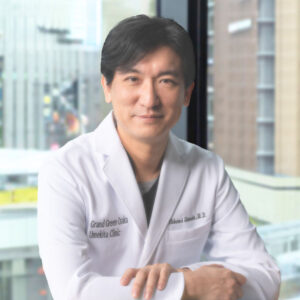
Director, Medical Corporation Shimada Clinic
Head of Clinical Practice, Grand Green Osaka Umekita Clinic
Hidenori Shimada
Graduated from the University of Tokushima Faculty of Medicine in 2005. After his initial residency, he obtained U.S. medical certification (ECFMG) and trained as a sub-intern in general surgery at the University of Washington. After completing the doctoral program at Kyoto University Graduate School of Medicine and working as a researcher at the Center for iPS Cell Research and Application (CiRA), Kyoto University, he founded Shimada Clinic in 2013. At Grand Green Osaka Umekita Clinic (https://umekitaclinic.org), he is engaged in a wide range of care, from internal medicine and pediatrics to cell therapy and aesthetic medicine.
* The physician supervision of this article covers its academic content only and does not constitute a recommendation of any specific treatment or product.