Hello, I am Dr. Hidenori Shimada of Grand Green Osaka Umekita Clinic in Osaka, Japan.
Regenerative medicine is a rapidly advancing field offering new avenues for health and wellness, and Japan is at the forefront of its research and clinical application. For those exploring treatments like stem cell therapy, a fundamental question often arises: where do the cells come from? The answer to this question defines two primary approaches: autologous (using your own cells) and allogeneic (using cells from a donor). In Japan, where safety and regulatory oversight are paramount, the autologous approach is often prioritized.
This article explores why using your own adipose-derived stem cells is a cornerstone of many regenerative therapies in Japan. We will compare the autologous and allogeneic methods, discuss the robust regulatory framework that guides these treatments, and explain what you should consider before a consultation. The goal is to provide a clear perspective for those considering medical tourism in Japan for advanced cellular therapies.
Autologous vs. Allogeneic: Understanding the Source of Stem Cells
The distinction between autologous and allogeneic therapies is crucial for understanding their respective profiles regarding safety and application. Both approaches utilize the powerful potential of stem cells, but the origin of these cells fundamentally changes the treatment’s characteristics.
- Autologous Therapy: Using Your Own Cells
In autologous therapy, stem cells are harvested from your own body, typically from a source like adipose (fat) tissue. These cells are then processed and cultured in a specialized facility to increase their number before being administered back to you, often through an IV infusion. Because the cells are your own, the body recognizes them, which significantly reduces the likelihood of an immune rejection or allergic reaction. - Allogeneic Therapy: Using Donor Cells
Allogeneic therapy uses stem cells sourced from a compatible donor. This approach has the potential to create “off-the-shelf” treatments that don’t require harvesting cells from the patient. However, it introduces a major challenge: immunogenicity. The recipient’s immune system may identify the donor cells as foreign and mount an attack, a risk that necessitates careful donor matching (similar to organ transplants) and sometimes immunosuppressive drugs.
Japan’s Regulatory Framework: Prioritizing Patient Safety
Japan has one of the world’s most well-defined regulatory systems for regenerative medicine. The “Act on the Safety of Regenerative Medicine” was established to ensure that cellular therapies are provided under strict safety standards. This law requires medical institutions to submit detailed treatment plans to the Ministry of Health, Labour and Welfare (MHLW) for review and approval before offering them to patients.
This safety-first culture naturally favors treatment modalities with a lower and more predictable risk profile. Autologous stem cell therapy fits well within this philosophy. By using the patient’s own biological material, the risk of immune rejection—one of the most significant variables in cell therapy—is minimized. This cautious, evidence-based approach is a hallmark of Japan’s healthcare system and a key reason why international patients seek treatment here.
Key Advantages of Autologous Adipose-Derived Stem Cell Therapy
Choosing to use your own stem cells, particularly those derived from adipose tissue, offers several distinct advantages that align with the goals of safe and personalized medicine.
Minimized Immunological Risk
This is the most significant benefit. Since the cells originate from your own body, your immune system does not perceive them as a threat. This avoids the potential for graft-versus-host disease or other adverse immune reactions that can be a concern with allogeneic cells. Research continues to explore ways to reduce the immunogenicity of donor cells, but the autologous method inherently bypasses this complex issue.
High Cell Abundance and Accessibility
Adipose tissue is an abundant source of mesenchymal stem cells (MSCs). Compared to other sources like bone marrow, fat tissue contains a higher concentration of these cells. Furthermore, the collection process is typically less invasive. At our clinic, a very small amount of fat is collected under local anesthesia in an outpatient procedure, minimizing discomfort and downtime.
Ethical and Traceable
Using your own cells eliminates the ethical considerations and logistical complexities associated with third-party donors. The entire process, from collection to administration, is contained within a single individual, ensuring full traceability and quality control.
What to Consider Before Pursuing Stem Cell Therapy
While autologous stem cell therapy presents a promising option for supporting the body’s natural repair mechanisms and promoting healthy aging, it is a medical treatment that requires careful consideration and professional guidance. It is not a guaranteed cure for any condition, and its effectiveness can vary between individuals.
First and foremost, a comprehensive consultation with a physician is essential. A doctor will assess your overall health, review your medical history, and discuss your goals to determine if you are a suitable candidate. This is also the time to discuss any existing treatments you are undergoing, as a coordinated approach is often best.
It is also important to understand that this treatment is provided as a private medical service and is not covered by Japan’s national health insurance. All costs, potential risks, side effects, and the expected number and frequency of treatments must be clearly explained and understood before you proceed. The final decision on eligibility rests with the physician based on a thorough medical evaluation.
Learn More at Grand Green Osaka Umekita Clinic
If you are exploring regenerative medicine and are interested in the safety-focused autologous approach common in Japan, taking the next step involves gathering detailed information. At Grand Green Osaka Umekita Clinic, located in the heart of Osaka, we provide adipose-derived stem cell therapy in accordance with Japan’s strict safety regulations.
Our approach is centered on harnessing the power already within you. We believe in empowering our patients with clear, accurate information to help them make informed decisions about their long-term health. For detailed information regarding our Adipose-Derived Stem Cell Therapy, including the treatment flow, fees, and potential risks and side effects, we encourage you to visit our dedicated information page. We are equipped to assist international patients and provide materials in multiple languages.
Learn more about Adipose-Derived Stem Cell Therapy at our clinic.
Conclusion: A Personalized and Cautious Approach
The preference for autologous stem cell therapy in Japan is rooted in a deep-seated commitment to patient safety. By using your own cells, the treatment minimizes immunological risks and aligns with the country’s rigorous regulatory standards. While research into allogeneic therapies continues to advance, the autologous method currently offers a reliable and personalized option for individuals seeking to leverage regenerative medicine for their health.
Making an informed choice begins with education and a direct conversation with a medical professional. We invite you to explore the possibilities and understand how this advanced therapy might fit into your personal health strategy.
References
- PubMed: Immunogenicity of autologous and allogeneic human primary cholangiocyte organoid cellular therapies. (2025)
- PubMed: Unveiling the immunogenicity of allogeneic mesenchymal stromal cells: Challenges and strategies for enhanced therapeutic efficacy. (2024)
- PubMed: Universal protection of allogeneic T-cell therapies from natural killer cells via CD300a agonism. (2025)
- PubMed: Autologous and Allogeneic Equine Mesenchymal Stem Cells Exhibit Equivalent Immunomodulatory Properties In Vitro. (2017)
- PubMed: The challenges and promises of allogeneic mesenchymal stem cells for use as a cell-based therapy. (2015)
- PMC: Safety of Allogeneic Mesenchymal Stem Cell Seeding of NeuraGen Nerve Guides in a Rabbit Model. (2023)
- PMC: Comparison of Mesenchymal Stem Cell Efficacy in Ischemic Versus Nonischemic Dilated Cardiomyopathy. (2018)
- PMC: Randomized Comparison of Allogeneic Versus Autologous Mesenchymal Stem Cells for Nonischemic Dilated Cardiomyopathy: POSEIDON-DCM Trial. (2017)
- MHLW (Japan): Regenerative Medicine — Ministry of Health, Labour and Welfare, Japan
Supervising Physician
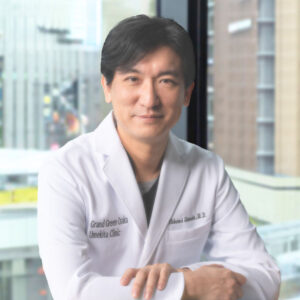
Director, Medical Corporation Shimada Clinic
Head of Clinical Practice, Grand Green Osaka Umekita Clinic
Hidenori Shimada
Graduated from the University of Tokushima Faculty of Medicine in 2005. After his initial residency, he obtained U.S. medical certification (ECFMG) and trained as a sub-intern in general surgery at the University of Washington. After completing the doctoral program at Kyoto University Graduate School of Medicine and working as a researcher at the Center for iPS Cell Research and Application (CiRA), Kyoto University, he founded Shimada Clinic in 2013. At Grand Green Osaka Umekita Clinic (https://umekitaclinic.org), he is engaged in a wide range of care, from internal medicine and pediatrics to cell therapy and aesthetic medicine.
* The physician supervision of this article covers its academic content only and does not constitute a recommendation of any specific treatment or product.