
Hello, I am Dr. Hidenori Shimada of Grand Green Osaka Umekita Clinic in Osaka, Japan.
Regenerative medicine, particularly stem cell therapy, holds significant promise for addressing various health concerns. However, it is often surrounded by questions regarding safety, ethics, and regulatory oversight. This article aims to clear up common misconceptions by focusing on a specific approach: autologous adipose-derived stem cell therapy. We will explore how using your own body’s cells within Japan’s robust legal framework addresses many of these concerns, offering a transparent and safety-focused option for those exploring their health choices.
Understanding Common Concerns About Stem Cell Therapy
When people hear “stem cell therapy,” several questions often come to mind. Are the cells sourced ethically? Is the procedure safe? What are the risks of rejection or unforeseen side effects? These are valid concerns, often stemming from news about controversial or unregulated treatments. Common worries include:
- Ethical Issues: Concerns are often linked to the use of embryonic or donor cells, which raise complex ethical questions.
- Safety and Rejection: The fear of the body rejecting foreign cells or developing adverse reactions is a significant barrier for many.
- Lack of Regulation: Stories of unproven treatments offered by unregulated clinics worldwide can create distrust in the entire field.
- Uncertainty of Effects: Without clear information, it’s difficult to distinguish between scientifically-grounded approaches and exaggerated claims.
This article specifically addresses how autologous adipose-derived stem cell therapy in Japan is structured to mitigate these very issues.
What is Autologous Adipose-Derived Stem Cell Therapy?
To understand the safety and ethical profile of this treatment, it’s crucial to break down its name. Each part signifies a key aspect that distinguishes it from other forms of stem cell therapy.
“Autologous” means the cells are sourced from your own body. In this therapy, a small amount of fat tissue is collected from you, for you. This is a fundamental point because it eliminates the risk of rejection or allergic reactions associated with donor cells (allogeneic therapy). It also sidesteps the ethical debates surrounding embryonic stem cells.
“Adipose-Derived” indicates that the source of the cells is fat tissue. Fat is considered an abundant and accessible source of mesenchymal stem cells (MSCs). The collection process is typically less invasive than other methods, such as bone marrow aspiration, and can often be performed under local anesthesia as an outpatient procedure.
Mesenchymal Stem Cells (MSCs) are a type of adult stem cell known for their potential to support tissue repair. Research reports that MSCs can secrete various substances, such as anti-inflammatory factors and growth factors, that help modulate the environment of damaged or inflamed tissues. Their function is not just about replacing old cells, but about supporting the body’s own healing mechanisms.
The Regulatory Landscape in Japan: Ensuring Safety
Japan has one of the most well-defined regulatory frameworks for regenerative medicine in the world. The “Act on the Safety of Regenerative Medicine,” enforced by the Ministry of Health, Labour and Welfare (MHLW), provides a clear legal structure for offering treatments like adipose stem cell therapy. This is a key factor in ensuring adipose stem cell therapy safety.
Under this act, medical institutions must submit a detailed treatment plan to the MHLW for review. This plan must cover every aspect of the procedure, including:
- The method of cell collection, processing, and administration.
- The safety management system at the clinic.
- The standards of the cell processing facility where the cells are cultured and expanded.
- The process for obtaining informed consent from patients.
This system ensures that treatments are not provided in an ad-hoc manner. It requires clinics to adhere to strict national standards for quality control and patient safety. Choosing a clinic that operates under a government-accepted plan is a critical step for anyone considering stem cell therapy in Japan.
Ethical Considerations: Why Using Your Own Cells Matters
The use of autologous cells is a cornerstone of the ethical framework for this therapy. Because the cells originate from and are returned to the same individual, the treatment avoids the complex ethical dilemmas associated with third-party donors or embryonic sources. There is no destruction of embryos and no need to procure cells from another person.
This personal, or “autologous,” approach simplifies the ethical landscape, allowing the focus to remain on the patient’s own health and well-being. The principle is to harness the body’s inherent regenerative capacity, not to introduce external biological materials that could carry unforeseen complications or ethical baggage.
What to Know Before Considering Treatment
While autologous adipose stem cell therapy offers a promising and regulated option, it is important for patients to have realistic expectations and a clear understanding of the process. This treatment is a choice that requires careful consideration and a thorough discussion with a physician.
First, it’s important to understand that this is a form of private medical care, meaning it is not covered by Japanese public health insurance. The potential outcomes, number of treatments, and total duration can vary significantly between individuals. No treatment can guarantee a specific result, and effects are not promised. A physician’s assessment is essential to determine if you are a suitable candidate.
Second, as with any medical procedure, there are potential risks and side effects. These may include issues related to the fat collection site (such as pain, bruising, or infection) or the IV infusion. A detailed explanation of all potential risks and benefits should be a non-negotiable part of your consultation.
Finally, this therapy should not be seen as a replacement for standard medical treatments for diagnosed diseases. It is often considered as a complementary option or for conditions where standard treatments have limitations. Always discuss how it might fit with your current healthcare plan with your doctors.
Our Commitment to Safe Regenerative Medicine in Osaka
At Grand Green Osaka Umekita Clinic, we provide adipose-derived stem cell therapy in strict compliance with Japan’s Act on the Safety of Regenerative Medicine. Our treatment plan has been submitted to and accepted by the Ministry of Health, Labour and Welfare. We believe that patient education and transparency are paramount.
We are committed to helping patients make informed decisions. Our approach is grounded in using your own cells to support your body’s wellness in a safe and regulated environment. If you are exploring options for your long-term health and are interested in learning more about the specifics of this therapy, we encourage you to review our detailed information page. It provides further insight into the treatment flow, features, and the principles we follow.
For more details on our Adipose-Derived Stem Cell Therapy, including the process and what to expect, please visit our regenerative medicine page. A consultation with our physicians is the best way to understand if this treatment is an appropriate option for your individual health situation. We welcome inquiries from both domestic and international visitors interested in medical tourism in Japan.
References
- PubMed: Clinical Efficacy and Safety of the Intra-articular Injection of Autologous Adipose-Derived Mesenchymal Stem Cells for Knee Osteoarthritis: A Phase III, Randomized, Double-Blind, Placebo-Controlled Trial. (2023)
- PubMed: Intra-Articular Injection of Autologous Adipose Tissue-Derived Mesenchymal Stem Cells for the Treatment of Knee Osteoarthritis: A Phase IIb, Randomized, Placebo-Controlled Clinical Trial. (2019)
- PubMed: Periadventitial delivery of mesenchymal stem cells improves vascular remodeling and maturation in arteriovenous fistulas. (2025)
- PubMed: Safety and efficacy of autologous, adipose-derived mesenchymal stem cells in patients with rheumatoid arthritis: a phase I/IIa, open-label, non-randomized pilot trial. (2022)
- PubMed: Cartilage Regeneration Potential in Early Osteoarthritis of the Knee: A Prospective, Randomized, Open, and Blinded Endpoint Study Comparing Adipose-Derived Mesenchymal Stem Cell (ADSC) Therapy Versus Hyaluronic Acid. (2025)
- PMC: Untested, unproven, and unethical: the promotion and provision of autologous stem cell therapies in Australia. (2015)
- PMC: Transcriptomics of tissue exosomes to investigate miR-195-5p's amelioration of endometrial fibrosis via the YAP-Smad7 pathway: an animal study. (2024)
- PMC: Safety and efficacy of autologous, adipose-derived mesenchymal stem cells in patients with rheumatoid arthritis: a phase I/IIa, open-label, non-randomized pilot trial. (2022)
- MHLW (Japan): Regenerative Medicine — Ministry of Health, Labour and Welfare, Japan
Supervising Physician
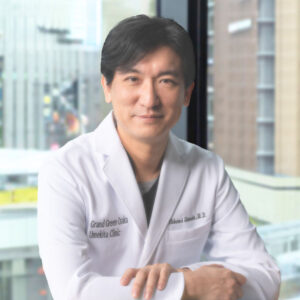
Director, Medical Corporation Shimada Clinic
Head of Clinical Practice, Grand Green Osaka Umekita Clinic
Hidenori Shimada
Graduated from the University of Tokushima Faculty of Medicine in 2005. After his initial residency, he obtained U.S. medical certification (ECFMG) and trained as a sub-intern in general surgery at the University of Washington. After completing the doctoral program at Kyoto University Graduate School of Medicine and working as a researcher at the Center for iPS Cell Research and Application (CiRA), Kyoto University, he founded Shimada Clinic in 2013. At Grand Green Osaka Umekita Clinic (https://umekitaclinic.org), he is engaged in a wide range of care, from internal medicine and pediatrics to cell therapy and aesthetic medicine.
* The physician supervision of this article covers its academic content only and does not constitute a recommendation of any specific treatment or product.