
Hello, I am Dr. Hidenori Shimada of Grand Green Osaka Umekita Clinic in Osaka, Japan.
Regenerative medicine, particularly adipose-derived stem cell therapy, is gaining attention as an approach to support the body’s natural healing capabilities. If you are exploring this option in Japan, you likely have questions not just about its potential, but also about the practical aspects of the procedure. Concerns about pain, downtime, and the recovery period are common and valid. This article provides a clear overview of what to expect during the fat collection and stem cell infusion stages, helping you approach your consultation with confidence.
What to Expect: A Summary of the Procedure and Recovery
Adipose-derived stem cell therapy involves two primary steps: collecting a small amount of your own fat tissue and, after a specialized culturing process, returning the expanded stem cells to your body via an intravenous (IV) infusion. Both of these steps are performed on an outpatient basis, meaning no hospital stay is required. For most individuals, the process is generally well-tolerated with minimal downtime, allowing a return to daily activities shortly after each procedure. The key is to have a realistic understanding of the physical sensations and recovery timeline involved.
Common Concerns: Pain, Downtime, and Side Effects
Understanding each phase of the treatment can help alleviate concerns. The experience is managed to maximize comfort, but it’s important to be aware of what the process entails.
The Fat Collection ProcedureThis is a minor procedure performed under local anesthesia. A very small amount of fat, often from the abdomen or buttocks, is collected through a tiny incision. You will be awake during the process but the area will be numb. Patients typically report feeling pressure or a dull sensation rather than sharp pain. After the procedure, you may experience mild soreness, bruising, or swelling at the collection site. This discomfort is usually comparable to that of a minor muscle strain and typically subsides within a few days. Strenuous physical activity may need to be avoided for a short period as advised by your physician. The Stem Cell IV Infusion
After your collected stem cells are cultured and expanded over several weeks at a specialized facility, they are returned to your body. This part of the process is similar to receiving any standard IV drip. A small needle is inserted into a vein in your arm, and the cell solution is infused slowly over a period of time, often around 60 minutes. The infusion itself is generally not painful. You can relax comfortably during the procedure. Recovery and Potential Side Effects
Following the IV infusion, most people can resume their normal daily routine immediately. Some individuals may experience temporary, mild side effects such as fatigue, a slight headache, or a feeling of warmth as their body responds to the infused cells. These reactions are typically short-lived. As the treatment uses your own (autologous) cells, the risk of rejection or severe allergic reactions is considered low. However, as with any medical procedure, there are potential risks that a physician will discuss with you in detail during your consultation.
The Science Behind Adipose-Derived Stem Cell Therapy
Why is fat tissue used? Adipose tissue is a rich source of mesenchymal stem cells (MSCs). These are multipotent cells, meaning they have the ability to develop into various cell types. More importantly, research suggests MSCs release anti-inflammatory substances and growth factors that can help calm inflammation and support the repair of damaged tissues. Compared to other sources like bone marrow, fat tissue contains a higher concentration of MSCs and can be collected through a much less invasive procedure, making it a preferred source for many applications in regenerative medicine.
Navigating Your Treatment Journey in Japan
In Japan, regenerative medicine treatments like this are provided under a regulatory framework, specifically the Act on the Safety of Regenerative Medicine. This ensures that clinics offering these therapies adhere to strict standards for cell processing, safety management, and patient care. It is important to understand that adipose-derived stem cell therapy is considered a private-pay (non-insured) treatment. It is not intended to be a cure for diseases or a replacement for standard medical care. Instead, it is often considered as an option for managing chronic inflammation, supporting tissue repair, or for long-term health maintenance. The suitability of this therapy depends entirely on an individual’s health condition and must be determined by a physician.
Key Questions to Ask Before Your Consultation
To make an informed decision, it’s helpful to prepare for your medical consultation. Consider asking the following questions:
- Based on my medical history, am I a suitable candidate for this therapy?
- What are the specific potential risks and side effects I should be aware of?
- What does the entire treatment timeline look like, from the first visit to post-infusion follow-up?
- What are the estimated costs, and what services are included in that fee?
Learn More at Grand Green Osaka Umekita Clinic
Deciding on a medical treatment is a significant step. At Grand Green Osaka Umekita Clinic, located in the heart of Osaka, our physicians provide thorough consultations to help you understand the potential and limitations of adipose-derived stem cell therapy. We can assess your individual condition and discuss whether this treatment aligns with your health goals. For more detailed information about our approach, the treatment flow, and associated considerations such as fees and risks, please visit our comprehensive multilingual information page.
For more details, please see our Adipose-Derived Stem Cell Therapy information page.
Summary: A Realistic View on Stem Cell Therapy Recovery
The journey through adipose-derived stem cell therapy is a carefully managed process designed to be as comfortable as possible. The fat collection is a minor outpatient procedure with localized, temporary discomfort, and the IV infusion is similar to a standard drip. While downtime is typically minimal, the most crucial step is a comprehensive consultation with a qualified physician. This ensures you have a clear, personalized understanding of the procedure, potential outcomes, and all associated risks, enabling you to make a well-informed decision about your health.
References
- PubMed: Adipose-derived stem cells. (2008)
- PubMed: Undifferentiated and differentiated adipose-derived stem cells improve nerve regeneration in a rat model of facial nerve defect. (2017)
- PubMed: Human adipose-derived mesenchymal stem cells in vitro: evaluation of an optimal expansion medium preserving stemness. (2010)
- PubMed: A clinical trial of autologous adipose-derived regenerative cell transplantation for a postoperative enterocutaneous fistula. (2016)
- PubMed: Short-term results of adipose-derived stem cell therapy for the treatment of complex perianal fistula A single center experience. (2019)
- PMC: From liposuction to adipose-derived stem cells: indications and technique. (2019)
- PMC: Cryopreservation of Autologous Adipose Tissue From Liposuction: A Review. (2025)
- PMC: Implications for human adipose-derived stem cells in plastic surgery. (2015)
- MHLW (Japan): Regenerative Medicine — Ministry of Health, Labour and Welfare, Japan
Supervising Physician
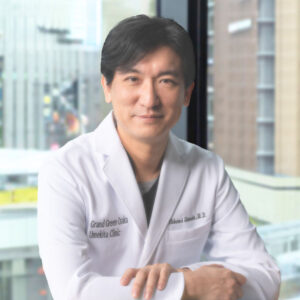
Director, Medical Corporation Shimada Clinic
Head of Clinical Practice, Grand Green Osaka Umekita Clinic
Hidenori Shimada
Graduated from the University of Tokushima Faculty of Medicine in 2005. After his initial residency, he obtained U.S. medical certification (ECFMG) and trained as a sub-intern in general surgery at the University of Washington. After completing the doctoral program at Kyoto University Graduate School of Medicine and working as a researcher at the Center for iPS Cell Research and Application (CiRA), Kyoto University, he founded Shimada Clinic in 2013. At Grand Green Osaka Umekita Clinic (https://umekitaclinic.org), he is engaged in a wide range of care, from internal medicine and pediatrics to cell therapy and aesthetic medicine.
* The physician supervision of this article covers its academic content only and does not constitute a recommendation of any specific treatment or product.