
Hello, I am Dr. Hidenori Shimada of Grand Green Osaka Umekita Clinic in Osaka, Japan.
Adipose-derived stem cell therapy is a field of regenerative medicine attracting global attention. It utilizes mesenchymal stem cells (MSCs) collected from your own fat tissue. However, the term “fat collection” can often create a sense of unease, conjuring images of extensive surgical procedures. Many people wonder if the process is painful, if it requires a long recovery, or how much fat is actually needed.
This article aims to clarify the fat collection process for stem cell therapy, explaining that it is a minimally invasive procedure that requires a surprisingly small amount of fat. Understanding the facts can help alleviate concerns and provide a clearer perspective before a consultation.
A Surprisingly Small Amount Is All That’s Needed
One of the most common misconceptions about adipose-derived stem cell therapy is the quantity of fat required. Unlike cosmetic liposuction, which removes large volumes of fat for body contouring, the goal here is to harvest a small but rich source of stem cells. In fact, the procedure typically requires only a few rice-grain-sized pieces of adipose tissue. This small sample is sufficient for isolating, culturing, and expanding the necessary number of mesenchymal stem cells at a specialized facility. The collection is performed as an outpatient procedure under local anesthesia, meaning no hospitalization is required, and patients can typically return to their daily activities with minimal downtime.
Addressing Common Concerns About Fat Harvesting
The idea of any procedure involving tissue removal can be daunting. Let’s address some frequent questions and concerns associated with fat collection for stem cell therapy:
- Is it a major surgery? No. The process is considered minimally invasive. It is performed through a very small incision, often just a few millimeters long, which is typically closed without prominent scarring.
- Is it painful? The procedure is performed under local anesthesia, which numbs the collection area. While some minor discomfort, bruising, or swelling may occur afterward, it is generally reported to be well-tolerated and manageable.
- What is the recovery like? Since it is an outpatient procedure, recovery is usually swift. Most individuals can resume their normal work and daily routines shortly after. Strenuous physical activity may need to be avoided for a short period as advised by the physician.
- Where is the fat taken from? Fat is typically collected from areas where it is naturally abundant, such as the abdomen or buttocks. The specific site is determined by the physician during the consultation.
Why Is Adipose Tissue a Preferred Source for Stem Cells?
Mesenchymal stem cells can be found in various parts of the body, including bone marrow. However, adipose tissue has emerged as a preferred source for several key reasons. Scientific literature suggests that fat tissue contains a higher concentration of MSCs compared to bone marrow. Furthermore, collecting fat is a less invasive and more straightforward process than a bone marrow aspiration, which can be more burdensome for the patient. The accessibility and abundance of adipose tissue make it an ideal resource for regenerative therapies, allowing for a sufficient number of cells to be harvested with minimal impact on the body.
The Fat Collection Procedure: A Step-by-Step Overview
While the exact protocol is determined by a physician, the fat collection process for stem cell therapy generally follows these steps:
- Consultation and Assessment: The first step is always a thorough consultation with a physician. They will assess your medical history and overall health to determine if you are a suitable candidate for the therapy.
- Preparation and Local Anesthesia: On the day of the procedure, the selected collection site (e.g., the abdomen) is cleaned and sterilized. A local anesthetic is injected to ensure the area is completely numb.
- Minimally Invasive Collection: A tiny incision is made, and a special instrument called a cannula is used to gently aspirate a very small amount of fat tissue. The entire process is brief.
- Processing and Culturing: The collected tissue is immediately sent to a licensed cell processing facility. There, the mesenchymal stem cells are isolated, purified, and cultured over several weeks to expand their numbers under strict quality and safety controls.
- Administration: Once the target number of cells is reached, they are returned to the body, typically through an intravenous (IV) infusion.
- PubMed: Fat Processing Techniques. (2020)
- PubMed: Undifferentiated and differentiated adipose-derived stem cells improve nerve regeneration in a rat model of facial nerve defect. (2017)
- PubMed: Autologous fat grafting: Latest insights. (2019)
- PubMed: Does the Harvesting Technique Affect the Properties of Adipose-Derived Stem Cells?-The Comparative Biological Characterization. (2017)
- PubMed: Adipose-Derived Stem Cells for Facial Rejuvenation. (2022)
- PMC: Adipose-derived stem cell collection and characterization in bottlenose dolphins (Tursiops truncatus). (2012)
- PMC: Suction assisted liposuction does not impair the regenerative potential of adipose derived stem cells. (2016)
- PMC: Ultrasound-Guided Abdominal Lipoaspiration for Orthopaedic Applications: A Minimally Invasive Outpatient Technique. (2025)
- MHLW (Japan): Regenerative Medicine — Ministry of Health, Labour and Welfare, Japan
Important Considerations for Regenerative Medicine in Japan
It is important for patients to have accurate information before considering any medical treatment. Adipose-derived stem cell therapy is provided as a private medical service (not covered by public health insurance). In Japan, such treatments are regulated under the Act on the Safety of Regenerative Medicine, which requires clinics to submit a treatment plan to the Ministry of Health, Labour and Welfare. The suitability of this therapy, potential outcomes, risks, side effects, and costs must be discussed in detail with a physician. This treatment is not a guaranteed cure for any disease and should not be seen as a replacement for standard medical care. A doctor’s diagnosis is essential to determine eligibility and create an appropriate treatment plan.
Learn More at Grand Green Osaka Umekita Clinic
The fat collection process for adipose-derived stem cell therapy is designed to be minimally invasive, prioritizing patient comfort and safety. It requires only a tiny amount of tissue, collected in a simple outpatient procedure. If you have concerns about the process or wish to learn more about how regenerative medicine might fit into your long-term health plan, consulting with a medical professional is the best next step.
At Grand Green Osaka Umekita Clinic, we provide consultations to help you understand the details of this therapy. For a comprehensive overview of the treatment, including its features, process flow, and frequently asked questions, please visit our Adipose-Derived Stem Cell Therapy page.
References
Supervising Physician
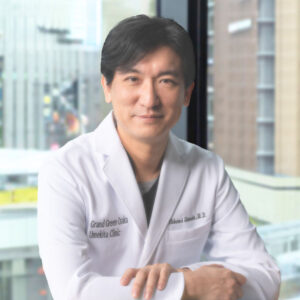
Director, Medical Corporation Shimada Clinic
Head of Clinical Practice, Grand Green Osaka Umekita Clinic
Hidenori Shimada
Graduated from the University of Tokushima Faculty of Medicine in 2005. After his initial residency, he obtained U.S. medical certification (ECFMG) and trained as a sub-intern in general surgery at the University of Washington. After completing the doctoral program at Kyoto University Graduate School of Medicine and working as a researcher at the Center for iPS Cell Research and Application (CiRA), Kyoto University, he founded Shimada Clinic in 2013. At Grand Green Osaka Umekita Clinic (https://umekitaclinic.org), he is engaged in a wide range of care, from internal medicine and pediatrics to cell therapy and aesthetic medicine.
* The physician supervision of this article covers its academic content only and does not constitute a recommendation of any specific treatment or product.