Hello, I am Dr. Hidenori Shimada of Grand Green Osaka Umekita Clinic in Osaka, Japan.
As interest in regenerative medicine grows globally, Japan has become a key destination for advanced treatments like adipose-derived stem cell therapy. For many, including international visitors exploring medical tourism, this therapy offers a potential option for managing health concerns related to aging and inflammation. However, one of the first and most important questions is about the cost. This article provides a clear overview of the fees associated with private stem cell therapy in Japan, helping you build a realistic understanding before your medical consultation.
Understanding the Key Factors of Stem Cell Therapy Costs in Japan
Before exploring the details, it’s crucial to grasp the fundamental aspects of how this therapy is priced. Adipose-derived stem cell therapy is offered as a private medical service in Japan, meaning it is not covered by the national public health insurance system. The total cost is not a single flat fee but a sum of charges for each distinct stage of the process. This includes the initial consultation, necessary medical examinations, the procedure to collect fat tissue, the highly specialized cell culturing process, and the final administration of the cells. A precise cost estimate can only be determined after a physician conducts a thorough medical evaluation to assess your eligibility and design a personalized treatment plan.
Why Isn’t This Therapy Covered by Public Health Insurance?
A common question from patients is why advanced treatments like stem cell therapy are not covered by Japan’s public health insurance. The system primarily covers established, standard-of-care treatments for specific diseases. Regenerative medicine, while promising, is still an evolving field for many applications. For a new therapy to be covered by public insurance, it must undergo extensive clinical trials over many years to establish definitive evidence of its effectiveness and safety for a particular condition. Since many applications of stem cell therapy are still in this data-gathering phase, they are offered as “jiyu shinryo,” or non-insured private treatment. This allows patients to access innovative options that have met national safety regulations, but before they become standard practice.
A Breakdown of Treatment Fees: What’s Included?
The total cost of adipose-derived stem cell therapy reflects a comprehensive, multi-step medical process. While the exact fees can vary based on the individual’s treatment plan, the cost structure generally includes the following components:
- Initial Consultation and Medical Examinations: This first step involves a detailed discussion with a physician about your health history and goals. It also includes blood tests and other necessary screenings to confirm your overall health and suitability for the therapy.
- Fat Tissue Collection: A small amount of fat is collected in a minor procedure performed under local anesthesia. This fee covers the physician’s time, the sterile equipment, and the clinical setting for the collection.
- Cell Processing and Culturing: This is a significant part of the total cost. The collected tissue is transported to a specialized Cell Processing Center (CPC). There, technicians isolate the mesenchymal stem cells and cultivate them in a highly controlled environment for several weeks to increase their number. This requires sophisticated technology and strict quality control to ensure the safety and viability of the cells.
- Stem Cell Administration: Once the cultured cells are ready, they are administered back into your body, typically via an intravenous (IV) infusion. This fee covers the procedure, medical staff supervision during the infusion, and the final quality assurance of the cell product.
- Follow-up Appointments: Post-treatment consultations may be scheduled to monitor your condition and discuss your progress.
The Role of Regulation: Safety and Standards in Japan
While the therapy is a private treatment, it is not unregulated. Japan has a strict legal framework, the Act on the Safety of Regenerative Medicine, to govern these treatments. Any clinic providing stem cell therapy must submit a detailed treatment plan to the Ministry of Health, Labour and Welfare for approval. This ensures that the treatment, including cell processing and administration, adheres to high safety and ethical standards. The cost, therefore, also reflects this commitment to regulatory compliance and patient safety, which is a crucial consideration for anyone seeking medical care in Japan.
How to Prepare for Your Consultation
An informed discussion with your physician is the most important step. Before your appointment, it is helpful to think about your health goals and prepare questions. A thorough consultation is necessary to determine if this therapy is an appropriate option for you. Key topics to discuss include the potential outcomes, risks and side effects, the number of treatments that may be suggested, and the total estimated cost. At Grand Green Osaka Umekita Clinic, our physicians provide a detailed explanation and a personalized cost breakdown after your initial assessment. To help you prepare, we recommend reviewing the information on our Adipose-Derived Stem Cell Therapy page to understand the general flow and features of the treatment.
Making an Informed Decision About Your Health Investment
Choosing to undergo adipose-derived stem cell therapy is a significant decision and a meaningful investment in your long-term health. The cost is a reflection of the personalized care, advanced laboratory technology, and stringent safety protocols involved in this cutting-edge medical field. It is not a simple procedure but a comprehensive therapeutic process tailored to your specific needs. The essential first step is always a direct consultation with a qualified physician to get an accurate assessment and a clear understanding of all aspects of the treatment. If you are in the Osaka area or considering a visit to Japan for medical care, our team at Grand Green Osaka Umekita Clinic is here to provide the information you need to make a well-informed choice.
References
- PubMed: Regenerative medicine strategies for hair growth and regeneration: A narrative review of literature. (2022)
- PubMed: Recommendations for mitochondria transfer and transplantation nomenclature and characterization. (2025)
- PubMed: CAR-based immunotherapy for breast cancer: peculiarities, ongoing investigations, and future strategies. (2024)
- PubMed: Intranasal Administration of Mesenchymal Stem Cell-Derived Exosome Alleviates Hypoxic-Ischemic Brain Injury. (2024)
- PubMed: Acquired genetic and cell-state changes in IDH-mutant glioma progression. (2026)
- PMC: Cost-effectiveness of stem cell therapy versus standard of care for acute and subacute ischemic stroke. (2026)
- PMC: Diverse actions of cord blood cell therapy for hypoxic-ischemic encephalopathy. (2021)
- PMC: Evolving Treatment Options for Spinal Pain: Balancing Innovation and Affordability in Regenerative Medicine. (2026)
- MHLW (Japan): Regenerative Medicine — Ministry of Health, Labour and Welfare, Japan
Supervising Physician
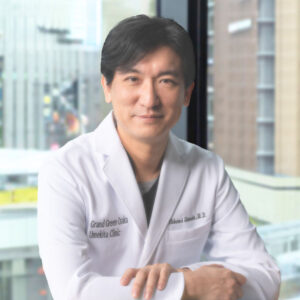
Director, Medical Corporation Shimada Clinic
Head of Clinical Practice, Grand Green Osaka Umekita Clinic
Hidenori Shimada
Graduated from the University of Tokushima Faculty of Medicine in 2005. After his initial residency, he obtained U.S. medical certification (ECFMG) and trained as a sub-intern in general surgery at the University of Washington. After completing the doctoral program at Kyoto University Graduate School of Medicine and working as a researcher at the Center for iPS Cell Research and Application (CiRA), Kyoto University, he founded Shimada Clinic in 2013. At Grand Green Osaka Umekita Clinic (https://umekitaclinic.org), he is engaged in a wide range of care, from internal medicine and pediatrics to cell therapy and aesthetic medicine.
* The physician supervision of this article covers its academic content only and does not constitute a recommendation of any specific treatment or product.