
Hello, I am Dr. Hidenori Shimada of Grand Green Osaka Umekita Clinic in Osaka, Japan.
When people research stem cell therapy abroad, one of the first questions is simple: whose cells are used? Some treatments rely on donor cells, while others use cells taken from the patient. At Grand Green Osaka Umekita Clinic in Osaka, Japan, adipose-derived stem cell therapy is built around the patient’s own cells. This article explains what that means, why it matters to many international patients, and which questions are worth raising with a doctor before deciding.
In short, an autologous approach means the cells come from you and return to you. That may reduce certain concerns, such as rejection, compared with donor cells, but it does not remove every risk and it does not guarantee any result. Whether the treatment is appropriate for you must be decided by a physician after a consultation.
What does autologous mean in stem cell therapy?
The word autologous simply means that the source and the recipient are the same person. In adipose-derived stem cell therapy, a very small amount of fat tissue is collected from the patient under local anesthesia. The mesenchymal stem cells (MSCs) contained in that tissue are then cultured and expanded at a specialized facility, and the cultured cells are returned to the patient by intravenous infusion.
By contrast, an allogeneic approach uses cells from another person, and a xenogeneic approach would use cells from another species. Each model has its own scientific questions, regulatory requirements, and practical considerations. Reading a clinic’s description carefully, and asking which model it uses, is a sensible first step for any patient comparing options.
Why do some patients prefer using their own cells?
The main reason is biological compatibility. Because the cells originate from the same person, the immune system is less likely to treat them as foreign. For this reason, the risk of rejection or an allergic-type reaction is generally considered lower than with donor cells or artificial materials. Patients who are cautious about receiving material from an unknown donor often find this point reassuring.
There are other practical reasons as well. Fat tissue is reported to contain more mesenchymal stem cells than bone marrow, and it can be collected through a small incision, whereas bone marrow collection places a greater burden on the body. Only a small piece of fat, roughly the size of a few grains of rice, is needed for the process described on the treatment page.
It is important to keep this in perspective. Using your own cells is one factor among many. Infection, reactions to anesthesia, effects related to the infusion, and variation in how individual patients respond can still occur. A responsible discussion should always include these limitations alongside the potential advantages.
What are the trade-offs of an autologous approach?
Autologous therapy involves a waiting period, because the cells must be cultured and expanded before they can be used. Treatment is therefore not a same-day procedure. Patients who travel from overseas should ask the clinic how the schedule is arranged, how many visits are expected, and what the timing means for their travel plans.
Cell quality can also differ from person to person. Factors such as age, overall health, and lifestyle may influence the cells that are collected, and published research on mesenchymal stem cells continues to evolve. Findings from studies are often limited by size, design, and the specific conditions studied, so a single report should not be taken as proof that a therapy will work for everyone. A doctor can help you interpret what the current evidence does and does not show.
- Cells must be cultured before use, so the process takes time.
- Cell characteristics may vary between individuals.
- A small collection procedure is required, with its own risks.
- Evidence is still developing and results are not guaranteed.
How does Japan’s legal framework apply?
In Japan, treatments of this kind are provided as self-pay medical care, meaning they are not covered by national health insurance. They are delivered under the Act on the Safety of Regenerative Medicine, which requires clinics to submit a treatment plan and to use designated cell processing facilities. This framework exists to manage quality and oversight, and it is one reason many international patients look to Japan for regenerative medicine.
However, operating under a legal framework does not mean that a treatment is risk-free or that outcomes are certain. Patients should still ask the doctor to explain the specific plan, the expected course, potential side effects, and the cost. Fees, risks, side effects, and eligibility must always be confirmed at a medical consultation.
Questions to ask before choosing a clinic in Osaka
Preparing a short list of questions can make your first consultation more productive. Whether you are living in Japan or planning medical travel, consider asking the following.
- Are the cells autologous, donor-derived, or something else?
- Which regulatory category does the treatment fall under in Japan?
- Where are the cells cultured, and how is quality managed?
- What are the possible risks and side effects, and how are they handled?
- What is the full cost, and what does it include?
- Is this approach suitable for my condition, and how does it relate to standard treatment?
Stem cell therapy is not a replacement for standard medical care. If you are receiving treatment for a chronic condition, your regular physician should stay informed, and any decision should be made together with a qualified doctor.
Getting information in your language
Grand Green Osaka Umekita Clinic is located in the Umeda area of Osaka and offers an information page for international patients, so that people can review the basics in their own language before booking. Reading the treatment overview, the flow of care, and the fee information in advance can help you arrive at a consultation with clearer expectations.
Choosing between your own cells and donor cells is ultimately a medical decision, not just a preference. Use the points above as a starting framework, ask for explanations in plain language, and take the time you need. A physician can explain whether adipose-derived stem cell therapy is a reasonable option for your situation and what you should expect.
Autologous
- Cells come from you
- Cultured before use
- Lower rejection concern
Donor cells
- Cells from another person
- Different regulatory rules
- Ask which model is used
This figure is a conceptual summary of the article content
References
- PubMed: Aging Adipose-Derived Mesenchymal Stem Cells, Cultured on a Native Young Extracellular Matrix, Are Protected From Senescence and Apoptosis Along With Increased Expression of HLA-DR and CD74 Associated With PI3K Signaling. (2025)
- PubMed: Mesenchymal stem cells for recurrent miscarriage. (2026)
- PubMed: Cell therapy: achievements and perspectives. (1999)
- PubMed: Mesenchymal stem cells and their use as cell replacement therapy and disease modelling tool. (2008)
- PubMed: Complications Following Stem Cell Therapy in Inflammatory Bowel Disease. (2017)
- PMC: Allogeneic ADSCs Induce the Production of Alloreactive Memory-CD8 T Cells through HLA-ABC Antigens. (2020)
- PMC: The Importance of HLA Assessment in "Off-the-Shelf" Allogeneic Mesenchymal Stem Cells Based-Therapies. (2019)
- PMC: Immunological effects of the intraparenchymal administration of allogeneic and autologous adipose-derived mesenchymal stem cells after the acute phase of middle cerebral artery occlusion in rats. (2018)
- MHLW (Japan): Regenerative Medicine — Ministry of Health, Labour and Welfare, Japan
Supervising Physician
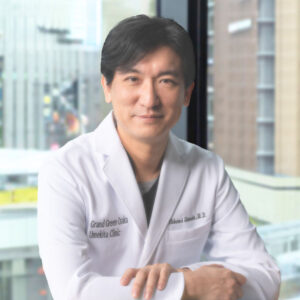
Director, Medical Corporation Shimada Clinic
Head of Clinical Practice, Grand Green Osaka Umekita Clinic
Hidenori Shimada
Graduated from the University of Tokushima Faculty of Medicine in 2005. After his initial residency, he obtained U.S. medical certification (ECFMG) and trained as a sub-intern in general surgery at the University of Washington. After completing the doctoral program at Kyoto University Graduate School of Medicine and working as a researcher at the Center for iPS Cell Research and Application (CiRA), Kyoto University, he founded Shimada Clinic in 2013. At Grand Green Osaka Umekita Clinic (https://umekitaclinic.org), he is engaged in a wide range of care, from internal medicine and pediatrics to cell therapy and aesthetic medicine.
* The physician supervision of this article covers its academic content only and does not constitute a recommendation of any specific treatment or product.