Hello, I am Dr. Hidenori Shimada of Grand Green Osaka Umekita Clinic in Osaka, Japan.
If you are considering adipose-derived stem cell therapy in Japan, one of the first practical questions is usually about the very first step: how is the fat actually collected, and what will that visit involve? Many international patients also wonder how it fits around a trip to Osaka. This article explains, in general terms, what the fat collection step is meant to achieve and what you may want to discuss with a physician before deciding.
Adipose-derived stem cell therapy is a self-pay (non-insured) regenerative treatment. Details differ between patients, so the information below is a general overview and not a substitute for a medical consultation.
The short answer: a small, outpatient collection step
In the treatment offered at Grand Green Osaka Umekita Clinic, mesenchymal stem cells are obtained from a very small amount of your own fat tissue. The clinic describes the amount as only a few rice-grain-sized pieces. The tissue is then sent to a specialized facility, where the cells are cultured and expanded before being returned to you by intravenous infusion.
Collection is described as being performed under local anesthesia on an outpatient basis, so hospitalization is not part of the plan. Whether this approach suits you, and how it should be scheduled, is something a physician needs to decide after examining you.
Why fat tissue is used as the cell source
Mesenchymal stem cells are somatic stem cells found in several tissues, including bone marrow and fat. Fat tissue is generally considered to contain a larger number of these cells than bone marrow, and it can be obtained through a small incision. Bone marrow collection, by comparison, is generally regarded as placing a greater burden on the body.
Published research on adipose-derived cells is still developing. Studies have reported that mesenchymal stem cells can release anti-inflammatory substances and growth factors, but results vary between studies, conditions and cell preparations. A single report should not be read as a promise of benefit for any individual.
What the collection visit may involve
Exact procedures are determined by the treating physician, but patients often ask about the same general points. Questions you may wish to raise include the following.
- Where on the body the tissue is taken from, and why that site is chosen.
- How local anesthesia is used, and what sensations to expect afterward.
- How long the visit is likely to take, including check-in, explanation and rest time.
- How the collection site is cared for, and what activities to avoid for a period.
- Which signs, such as persistent pain, swelling or redness, should prompt you to contact the clinic.
As with any minor procedure involving an incision, there are potential risks such as bleeding, bruising, infection or discomfort at the collection site. The physician should explain these risks to you before you consent to anything.
How your own cells are handled afterward
After collection, the tissue is transported to a cell processing facility, where the stem cells are isolated, cultured and expanded. Because the cells come from you, the treatment is described as autologous, which is generally associated with a lower risk of rejection than donor cells. This does not mean that no risk exists, and the clinic can explain how identity checks, quality control and storage are managed.
Culturing takes time, so the infusion does not happen on the same day as collection. For visitors from overseas, this gap is an important planning point. Ask the clinic how many visits are expected, how far apart they are, and whether the schedule can be arranged around a stay in Osaka.
Japan’s regulatory framework and self-pay status
In Japan, regenerative medicine of this kind is provided under the Act on the Safety of Regenerative Medicine, which requires a treatment plan to be prepared and submitted to the authorities. Treatments offered under this framework are generally self-pay and are not covered by public health insurance. Fees, number of visits, risks, side effects and eligibility should all be confirmed in writing during consultation.
Being offered under a registered plan does not mean a treatment is guaranteed to work for you. It means the provider is expected to follow defined procedures for planning, informed consent and reporting. Regenerative therapy is also not a replacement for standard medical care, and your current treatments should not be stopped without discussing it with your own doctor.
Preparing for a consultation in Osaka
It helps to arrive with a clear picture of your medical history. Consider bringing the following information.
- A list of your diagnoses, current medications and any supplements.
- Records of allergies, especially to local anesthetics.
- Any history of blood-clotting problems, blood-thinning drugs, or skin and wound-healing concerns.
- Your planned dates of stay in Japan and your flexibility to return for further visits.
Grand Green Osaka Umekita Clinic, located in the Umeda area of Osaka, offers information pages for international patients, and you can make inquiries through its multilingual guidance. Please consult the clinic’s treatment, flow and fee pages to review the current explanation of costs, risks and the overall process before booking.
Key takeaways
The fat collection step in adipose-derived stem cell therapy is intended to be small and is performed as an outpatient procedure, but it still involves an incision and carries risks that need individual assessment. The time needed for cell culture affects how you plan your travel. Above all, whether this therapy is appropriate for you can only be decided through a physician’s examination, and any decision should weigh the self-pay cost, the limits of current evidence and your existing medical care.
- 1ConsultationPhysician examines you
- 2Fat collectionSmall outpatient step
- 3Cell cultureAt a specialized facility
- 4IV infusionYour own cells returned
This diagram is a conceptual summary of the article content
References
- PubMed: Intra-Articular Administration of Autologous Purified Adipose Tissue Associated with Arthroscopy Ameliorates Knee Osteoarthritis Symptoms. (2021)
- PubMed: Stemness and clinical performance of water-jet technology: A translational study in breast reconstruction. (2025)
- PubMed: Transurethral Injection of Autologous Micronized Adipose Tissue for Refractory Interstitial Cystitis/Bladder Pain Syndrome: A Retrospective Pilot Study. (2026)
- PMC: Impact of the Different Preparation Methods to Obtain Human Adipose-Derived Stromal Vascular Fraction Cells (AD-SVFs) and Human Adipose-Derived Mesenchymal Stem Cells (AD-MSCs): Enzymatic Digestion Versus Mechanical Centrifugation. (2019)
- PMC: Adipose Tissue-Derived Stem Cell Yield Depends on Isolation Protocol and Cell Counting Method. (2021)
- PMC: Adipose-derived mesenchymal stem cells (AdMSC) for the treatment of secondary-progressive multiple sclerosis: A triple blinded, placebo controlled, randomized phase I/II safety and feasibility study. (2018)
- PMC: Revisiting Fat Graft Harvesting and Processing Technique to Optimize Its Regenerative Potential. (2025)
- MHLW (Japan): Regenerative Medicine — Ministry of Health, Labour and Welfare, Japan
Supervising Physician
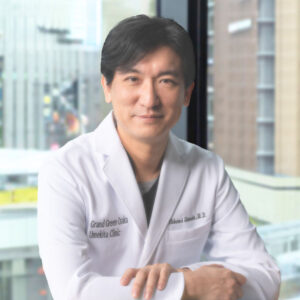
Director, Medical Corporation Shimada Clinic
Head of Clinical Practice, Grand Green Osaka Umekita Clinic
Hidenori Shimada
Graduated from the University of Tokushima Faculty of Medicine in 2005. After his initial residency, he obtained U.S. medical certification (ECFMG) and trained as a sub-intern in general surgery at the University of Washington. After completing the doctoral program at Kyoto University Graduate School of Medicine and working as a researcher at the Center for iPS Cell Research and Application (CiRA), Kyoto University, he founded Shimada Clinic in 2013. At Grand Green Osaka Umekita Clinic (https://umekitaclinic.org), he is engaged in a wide range of care, from internal medicine and pediatrics to cell therapy and aesthetic medicine.
* The physician supervision of this article covers its academic content only and does not constitute a recommendation of any specific treatment or product.