
Hello, I am Dr. Hidenori Shimada of Grand Green Osaka Umekita Clinic in Osaka, Japan.
If you are researching regenerative medicine, you may have noticed that some clinics use cells from bone marrow while others use cells from fat tissue. For international patients thinking about treatment in Japan, a natural question follows: why would a clinic collect stem cells from fat? This article explains the reasoning in plain language, describes what is and is not known, and lists questions worth bringing to a consultation at Grand Green Osaka Umekita Clinic in Osaka.
The short answer
Mesenchymal stem cells can be found in several tissues, including bone marrow and fat. Fat tissue is generally considered to contain a larger number of these cells than bone marrow, and it can be collected through a small incision under local anesthesia. Bone marrow collection, by comparison, usually places a greater burden on the body. These general trends are one reason adipose-derived stem cells are widely studied. However, which source is appropriate for a given person is a medical decision that has to be made together with a doctor after an examination.
It is also important to keep expectations realistic. Research on mesenchymal stem cells is active worldwide, but results differ by condition, by cell preparation method, and by individual. Nothing in this article should be read as a promise of any outcome.
What are mesenchymal stem cells?
The human body is made of roughly 37 trillion cells, and old cells are constantly replaced by new ones. Stem cells are part of this renewal process. They have two defining abilities: they can replicate themselves, and they can differentiate into other cell types.
Mesenchymal stem cells (MSCs) are somatic stem cells found in fat tissue, bone marrow, and other places. In laboratory settings they can differentiate into fat, bone, and cartilage cells. They have also been reported to release anti-inflammatory substances and growth factors that may support the repair of damaged tissue. The number and activity of stem cells tend to decline with age, which is one reason regenerative medicine has attracted interest as a field.
Fat tissue and bone marrow: how do the sources compare?
Two practical differences are often discussed. The first is the amount of stem cells available from a given sample. Fat tissue is considered to contain more mesenchymal stem cells than bone marrow, so a comparatively small sample can be enough as a starting point for culture. At Grand Green Osaka Umekita Clinic, only a few rice-grain-sized pieces of fat are needed.
The second difference is the burden of collection. Bone marrow collection typically places a greater burden on the body. Fat can be collected through a small incision under local anesthesia, and collection is done on an outpatient basis without hospitalization. Because the cells are your own, the treatment is described as autologous, which is generally regarded as carrying a lower risk of rejection or allergic reaction than donor cells or artificial materials. Lower does not mean absent, and individual risks still need to be reviewed with a doctor.
These points describe general trends rather than a ranking that applies to every person. Age, health status, medications, and medical history can all influence what is suitable.
From fat collection to infusion
In adipose-derived stem cell therapy, a very small amount of your fat tissue is collected, and the mesenchymal stem cells it contains are cultured and expanded at a specialized facility. The cultured cells are then returned to your body by intravenous infusion. Infused mesenchymal stem cells have been reported to travel through the bloodstream and gather at sites of inflammation or damage, a phenomenon often called homing. How much this matters in actual patients is still being studied, so it is best treated as a reported finding and not as an established guarantee.
Because culture takes time, the process involves more than one visit, with a gap between collection and infusion. If you live overseas, this timing is worth discussing early so that your plans are realistic.
How the treatment is regulated in Japan
In Japan, regenerative medicine that uses cultured cells is provided under the Act on the Safety of Regenerative Medicine, which requires a treatment plan to be submitted and reviewed. This framework is intended to support appropriate management of cell collection, culture, and administration. It is different from the approval process for standard medicines, and this therapy is offered as a self-pay (non-insured) treatment, meaning national health insurance does not cover it.
For international patients, the practical consequence is that costs, treatment schedule, risks, side effects, and whether you are a suitable candidate all need to be confirmed directly with the clinic. Fees and details should be checked on the clinic’s official pages and during your consultation rather than assumed from general information.
Questions to ask before you decide
A consultation is the right place to turn general information into a decision that fits your situation. You may find the following questions helpful:
- Is fat-derived cell therapy appropriate for my condition, age, and medical history, and are there reasons it might not be?
- What are the possible risks and side effects of fat collection and of intravenous infusion?
- What does the full schedule look like, including the culture period between visits?
- What is the total cost, and what is included?
- How does this option relate to my current care, and how should I coordinate with my regular doctor at home?
Regenerative therapy is not a replacement for standard medical care, and you should not stop or change any current treatment without speaking to your own doctor. Bringing recent medical records, a medication list, and your questions in writing can make the consultation more productive.
Summary and next steps
Fat tissue is used as a source of mesenchymal stem cells because it is generally considered to contain more of these cells than bone marrow and can be collected with a smaller burden under local anesthesia. That is a practical rationale, not evidence that the therapy will work for any individual. Because the treatment is self-pay, provided under Japan’s regenerative medicine framework, and involves real risks to discuss, the decision belongs in a conversation with a physician.
If you are considering care in Osaka, Grand Green Osaka Umekita Clinic offers consultations in the Umeda area and provides an information page for international patients. Please review the adipose-derived stem cell therapy page for details on the flow, fees, and frequently asked questions, and use the contact options to arrange a consultation.
Fat tissue
- More stem cells reported
- Small incision
- Local anesthesia
Bone marrow
- Fewer stem cells reported
- Greater burden on the body
- Collection is more invasive
This figure is a conceptual summary of the article. Suitability is decided with a doctor
References
- PubMed: Same or not the same? Comparison of adipose tissue-derived versus bone marrow-derived mesenchymal stem and stromal cells. (2012)
- PubMed: Comparison of Immunomodulation Properties of Porcine Mesenchymal Stromal/Stem Cells Derived from the Bone Marrow, Adipose Tissue, and Dermal Skin Tissue. (2016)
- PubMed: Comparative capability of menstrual blood versus bone marrow derived stem cells in neural differentiation. (2017)
- PubMed: Stem cell-based interventions for the treatment of stroke in newborn infants. (2023)
- PubMed: Comparative Efficacy and Safety of Intra-Articular Adipose-Derived, Bone Marrow-Derived, and Peripheral Blood-Derived Stem Cell Injections for Knee Osteoarthritis: A Systematic Review. (2026)
- PMC: Adipose-derived mesenchymal cells for bone regereneration: state of the art. (2013)
- PMC: Adipose-Derived Mesenchymal Stem Cells Prevent Systemic Bone Loss in Collagen-Induced Arthritis. (2015)
- PMC: Delayed Double Treatment with Adult-Sourced Adipose-Derived Mesenchymal Stem Cells Increases Striatal Medium-Spiny Neuronal Number, Decreases Striatal Microglial Number, and Has No Subventricular Proliferative Effect, after Acute Neonatal Hypoxia-Ischemia in Male Rats. (2021)
- MHLW (Japan): Regenerative Medicine — Ministry of Health, Labour and Welfare, Japan
Supervising Physician
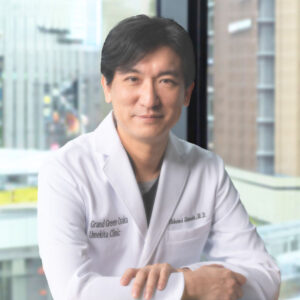
Director, Medical Corporation Shimada Clinic
Head of Clinical Practice, Grand Green Osaka Umekita Clinic
Hidenori Shimada
Graduated from the University of Tokushima Faculty of Medicine in 2005. After his initial residency, he obtained U.S. medical certification (ECFMG) and trained as a sub-intern in general surgery at the University of Washington. After completing the doctoral program at Kyoto University Graduate School of Medicine and working as a researcher at the Center for iPS Cell Research and Application (CiRA), Kyoto University, he founded Shimada Clinic in 2013. At Grand Green Osaka Umekita Clinic (https://umekitaclinic.org), he is engaged in a wide range of care, from internal medicine and pediatrics to cell therapy and aesthetic medicine.
* The physician supervision of this article covers its academic content only and does not constitute a recommendation of any specific treatment or product.