
Hello, I am Dr. Hidenori Shimada of Grand Green Osaka Umekita Clinic in Osaka, Japan.
If you are researching regenerative medicine abroad, one of the first questions you may encounter is simple: where do the stem cells come from? Mesenchymal stem cells (MSCs) can be found in several tissues, and the two most discussed sources are bone marrow and fat. This article explains, in general terms, why fat tissue is used in adipose-derived stem cell therapy, what the evidence does and does not tell us, and which questions are worth bringing to a doctor. It is written for international patients and residents who are considering a consultation at Grand Green Osaka Umekita Clinic in Osaka, Japan.
The short answer
Fat tissue is generally considered to contain a larger number of mesenchymal stem cells than bone marrow, and it can be collected through a small incision under local anesthesia. Bone marrow collection is usually regarded as a greater burden on the body. These two practical points are the main reasons adipose tissue is chosen as the cell source in this treatment. They are not a promise of any particular result, and whether the approach is suitable for you can only be judged by a physician after a consultation.
What mesenchymal stem cells are
The human body contains roughly 37 trillion cells, and old cells are constantly replaced by new ones. Stem cells are part of that renewal system. They can replicate themselves and can differentiate into other cell types. Mesenchymal stem cells are somatic stem cells found in fat, bone marrow, and other tissues. In laboratory and clinical research they have been reported to turn into fat, bone, and cartilage cells, and to release anti-inflammatory substances and growth factors that may support the repair of damaged tissue.
Research on these cells is active worldwide, but many findings come from small studies or early-stage trials. It is wise to treat any single study as one piece of a larger picture rather than a final conclusion.
How fat and bone marrow are generally compared
Scientific reviews that compare MSCs from different tissues often discuss two practical themes: how many cells can be obtained, and how demanding the collection procedure is. In general terms, adipose tissue is described as a richer source of MSCs per amount of tissue, while bone marrow collection involves a more invasive procedure. Researchers also note that cells from different tissues may behave differently in the laboratory, so the choice of source is not purely a matter of convenience.
It is important to keep these points in proportion. A source that is easier to collect is not automatically more effective in a patient, and the cell count at collection is only the starting point. Culture methods, the number of cell passages, quality testing, and the condition being addressed all influence what happens next.
What the collection step involves
In adipose-derived stem cell therapy as described on the clinic’s treatment page, a very small amount of your own fat tissue is collected, roughly a few rice-grain-sized pieces, through a small incision under local anesthesia. The tissue is then sent to a specialized facility where the mesenchymal stem cells are cultured and expanded. Later, the cultured cells are returned to your body by intravenous infusion. Collection and infusion are both performed on an outpatient basis, so hospitalization is not required.
Because the cells come from you, the treatment is described as autologous. This is generally associated with a lower risk of rejection than donor cells, but it does not remove all risk. Infection, bleeding, or reactions related to the procedure or infusion can still occur, and your doctor should explain these clearly.
Questions to ask before you decide
A good consultation helps you understand your options, including the option of not proceeding. The following questions can make the conversation more productive:
- Why is fat tissue the cell source used here, and would any health condition of mine make collection unsuitable?
- Which medical conditions is this treatment intended to support, and what is known and not yet known about it?
- How are the cells cultured and checked for quality, and where is this done?
- What are the possible risks and side effects of both the collection and the infusion?
- How do standard treatments in my home country compare, and could I continue them alongside this therapy?
- What is the full cost, including consultation, collection, culture, and infusion, and what is not included?
Please do not read stem cell therapy as a replacement for standard medical care. Regenerative medicine is an additional option to discuss with a physician, not a substitute for treatment that has established evidence for your condition.
Japan’s framework and practical points for international patients
In Japan, regenerative medicine provided as a private service is carried out under the Act on the Safety of Regenerative Medicine, which requires a treatment plan to be reviewed and submitted before it is offered. Adipose-derived stem cell therapy is a self-pay treatment, which means it is not covered by national health insurance. Fees, treatment schedule, risks, side effects, and eligibility should all be confirmed with a doctor during a consultation rather than assumed from general information online.
Grand Green Osaka Umekita Clinic is located in the Umeda area of Osaka and offers information pages for international patients in multiple languages. Because the process involves a collection visit and a later infusion visit, it helps to ask early how the schedule works if you are traveling from overseas, and what follow-up is possible after you return home. Bringing recent medical records and a list of your current medications, translated into English or Japanese where possible, can also make the first consultation more useful.
Key takeaways
Fat is used as a source of mesenchymal stem cells mainly because it is generally considered to contain more of them than bone marrow and can be collected with a smaller burden on the body. That is a practical rationale, not evidence that the treatment will work for any individual. Before deciding, ask your doctor about the evidence for your specific situation, the risks, the total cost, and how the care fits with your existing treatment. If you would like to discuss whether a consultation makes sense for you, you can contact Grand Green Osaka Umekita Clinic and speak with a physician who can review your circumstances.
Fat tissue
- Generally more MSCs
- Small incision, local anesthesia
- Outpatient collection
Bone marrow
- Generally fewer MSCs
- Greater burden on the body
- More invasive collection
This figure is a conceptual summary of the article, not a guarantee of results
References
- PubMed: Same or not the same? Comparison of adipose tissue-derived versus bone marrow-derived mesenchymal stem and stromal cells. (2012)
- PubMed: Adipose-derived stromal cells for osteoarticular repair: trophic function versus stem cell activity. (2014)
- PubMed: Equine bone marrow-derived mesenchymal stromal cells reduce established S. aureus and E. coli biofilm matrix in vitro. (2024)
- PubMed: Comparison of Immunomodulation Properties of Porcine Mesenchymal Stromal/Stem Cells Derived from the Bone Marrow, Adipose Tissue, and Dermal Skin Tissue. (2016)
- PubMed: Tendon-to-Bone Healing in a Rat Extra-articular Bone Tunnel Model: A Comparison of Fresh Autologous Bone Marrow and Bone Marrow-Derived Mesenchymal Stem Cells. (2019)
- PMC: Adipose-Derived Mesenchymal Stem Cells Prevent Systemic Bone Loss in Collagen-Induced Arthritis. (2015)
- PMC: Mesenchymal stem cells can participate in ischemic neovascularization. (2009)
- PMC: Adipose-Derived Mesenchymal Stem Cells: A Promising Tool in the Treatment of Musculoskeletal Diseases. (2019)
- MHLW (Japan): Regenerative Medicine — Ministry of Health, Labour and Welfare, Japan
Supervising Physician
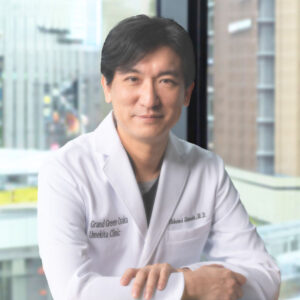
Director, Medical Corporation Shimada Clinic
Head of Clinical Practice, Grand Green Osaka Umekita Clinic
Hidenori Shimada
Graduated from the University of Tokushima Faculty of Medicine in 2005. After his initial residency, he obtained U.S. medical certification (ECFMG) and trained as a sub-intern in general surgery at the University of Washington. After completing the doctoral program at Kyoto University Graduate School of Medicine and working as a researcher at the Center for iPS Cell Research and Application (CiRA), Kyoto University, he founded Shimada Clinic in 2013. At Grand Green Osaka Umekita Clinic (https://umekitaclinic.org), he is engaged in a wide range of care, from internal medicine and pediatrics to cell therapy and aesthetic medicine.
* The physician supervision of this article covers its academic content only and does not constitute a recommendation of any specific treatment or product.