Hello, I am Dr. Hidenori Shimada of Grand Green Osaka Umekita Clinic in Osaka, Japan.
As interest in immune cell therapies like NK cell therapy grows, many people have questions about the process. Beyond its potential, a critical question arises: How is the quality and safety of the cells ensured? This is a vital consideration for anyone exploring advanced medical treatments. The effectiveness and safety of NK cell therapy depend heavily on the viability, purity, and activity of the cells being administered.
In Japan, NK cell therapy is provided under a robust regulatory framework. The quality and safety of the cells are managed through stringent standards at specialized, government-certified facilities known as Cell Processing Facilities (CPFs). This article provides an inside look at the meticulous processes that safeguard the quality of NK cells, from the moment they are collected to when they are ready to be returned to the body.
Why Quality Control is Crucial for NK Cell Therapy
NK (Natural Killer) cell therapy is a form of immunotherapy that aims to enhance the body’s natural defense mechanisms. The process involves collecting a patient’s own NK cells, activating and expanding them in a lab, and then reinfusing them. The therapeutic potential of this treatment is directly linked to the quality of the cultured cells. Poor quality control could lead to a product with a low number of active cells, contamination, or other issues that could diminish its intended effect or pose safety risks. Therefore, rigorous quality control is not just a procedural step; it is the foundation of the therapy’s reliability.
Japan’s Regulatory Framework: Ensuring Safety in Regenerative Medicine
Japan has established a specific legal framework to govern regenerative medicine, including cell therapies. The “Act on the Safety of Regenerative Medicine” requires that any facility engaged in processing cells for therapeutic use must obtain certification from the Ministry of Health, Labour and Welfare (MHLW). These certified Cell Processing Facilities (CPFs) must adhere to strict operational and quality management standards, often based on principles of Good Manufacturing Practice (GMP).
This legal oversight ensures that all cell processing is conducted in a highly controlled environment, minimizing risks such as contamination and ensuring a consistent, high-quality final cell product. It provides a standardized benchmark for safety and quality across all providers in the country.
The Journey of Your Cells: Inside a Certified Processing Facility
The process of preparing NK cells is a carefully orchestrated journey that takes place entirely within the sterile environment of a CPF. Here’s a general overview of the key stages:
- 1. Blood Collection: The process begins with a simple blood draw from the patient at the clinic. This sample is then transported to the CPF under strict temperature-controlled conditions.
- 2. Cell Isolation: At the facility, highly skilled technicians use specialized equipment to isolate mononuclear cells, which include NK cells, from the blood sample.
- 3. Activation and Expansion (Culturing): The isolated NK cells are placed in a sterile culture medium containing nutrients and cytokines that stimulate them to activate and multiply. This culturing process, which can take several weeks, is performed in incubators that maintain optimal conditions for cell growth. The goal is to significantly increase the number and activity of the NK cells.
- 4. Quality and Safety Testing: Throughout and after the culturing process, rigorous tests are conducted to ensure the cells meet all required specifications. This is the most critical phase of quality assurance.
- 5. Final Preparation: Once the cells have passed all quality checks, they are suspended in a solution suitable for intravenous (IV) infusion and packaged in a sterile manner. The final product is then transported back to the clinic for administration to the patient.
Key Standards for Quality and Safety in Cell Culturing
To ensure the final cell product is safe and potent, CPFs conduct a battery of tests. While specific protocols may vary, the core principles of quality assurance remain the same. Key checks typically include:
- Sterility Test: To confirm that the cell culture is free from bacterial or fungal contamination.
- Mycoplasma Test: A specific test to detect mycoplasma, a type of bacteria that can be difficult to identify and can negatively affect cell function.
- Endotoxin Test: To ensure the absence of endotoxins, which are toxic substances from bacteria that can cause fever and other adverse reactions.
- Cell Viability and Count: To verify that a sufficient number of living, healthy cells are present in the final product.
- Purity Analysis: To confirm that the cell population consists primarily of NK cells and that other cell types are within acceptable limits.
- Activity Assay: A functional test to measure the cytotoxic (cell-killing) ability of the cultured NK cells against target cells, ensuring they are potent enough for therapeutic use.
Only when a batch of cells passes all these stringent tests is it released for patient use. This multi-layered approach to quality control is fundamental to the practice of regenerative medicine in Japan.
What to Ask Before Starting NK Cell Therapy
If you are considering NK cell therapy, it is important to be well-informed. A medical consultation is essential to determine if this treatment is a suitable option for your individual health condition. This therapy is provided as private, non-insured medical care. During your consultation, a physician will explain the entire process, including the expected timeline, potential risks, and side effects, such as temporary fever or fatigue. It is also important to understand that this therapy is not a replacement for standard cancer treatments like surgery, chemotherapy, or radiation, but may be used alongside them.
Be sure to ask questions about where and how your cells will be processed. Understanding that the cell culturing is performed at a facility certified under Japanese law can provide confidence in the quality and safety management behind the treatment.
Considering NK Cell Therapy in Osaka, Japan
The commitment to quality and safety is a cornerstone of advanced medical care in Japan. At Grand Green Osaka Umekita Clinic, we provide NK cell therapy in accordance with the national regulatory framework. Our treatments are based on a regenerative medicine provision plan accepted by the Ministry of Health, Labour and Welfare, and cell processing is outsourced to a certified CPF.
If you would like to learn more about the specifics of NK cell therapy, including the process, costs, and whether it might be appropriate for you, we encourage you to consult with our physicians. For more detailed information, please visit our NK Cell Therapy page, which is available in multiple languages.
Learn more about NK Cell Therapy at Grand Green Osaka Umekita Clinic
Disclaimer: The effects and outcomes of this therapy can vary among individuals. A physician’s consultation is required to determine suitability. This treatment is a form of private, non-insured medical care.
References
- PubMed: Shaping the glioblastoma microenvironment to enhance CAR-NK immunotherapy. (2025)
- PubMed: Advances in NK cell production. (2022)
- PubMed: Natural killer cell-derived exosome-based cancer therapy: from biological roles to clinical significance and implications. (2024)
- PubMed: NK cell-based cancer immunotherapy: from basic biology to clinical development. (2021)
- PubMed: CAR-NK cells for cancer immunotherapy: recent advances and future directions. (2024)
- PMC: Advances in natural killer cell immunotherapy for hematologic malignancies. (2026)
- PMC: Potential therapeutic roles of natural killer cells in acute myeloid leukemia: a systematic review study. (2025)
- PMC: CAR-NK cell therapy: promise and challenges in solid tumors. (2025)
- MHLW (Japan): Regenerative Medicine — Ministry of Health, Labour and Welfare, Japan
Supervising Physician
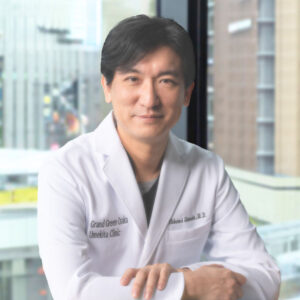
Director, Medical Corporation Shimada Clinic
Head of Clinical Practice, Grand Green Osaka Umekita Clinic
Hidenori Shimada
Graduated from the University of Tokushima Faculty of Medicine in 2005. After his initial residency, he obtained U.S. medical certification (ECFMG) and trained as a sub-intern in general surgery at the University of Washington. After completing the doctoral program at Kyoto University Graduate School of Medicine and working as a researcher at the Center for iPS Cell Research and Application (CiRA), Kyoto University, he founded Shimada Clinic in 2013. At Grand Green Osaka Umekita Clinic (https://umekitaclinic.org), he is engaged in a wide range of care, from internal medicine and pediatrics to cell therapy and aesthetic medicine.
* The physician supervision of this article covers its academic content only and does not constitute a recommendation of any specific treatment or product.