Hello, I am Dr. Hidenori Shimada of Grand Green Osaka Umekita Clinic in Osaka, Japan.
Exploring advanced cancer treatment options can lead patients and their families to look beyond their home countries. Japan, known for its innovation in medical technology, offers specialized treatments like NKT cell-targeted therapy. For international patients, navigating the process of accessing care abroad can seem complex. This guide provides a clear, step-by-step overview for those considering NKT cell-targeted therapy at Grand Green Osaka Umekita Clinic, helping you understand the pathway from initial inquiry to potential treatment.
What is NKT Cell-Targeted Therapy? A Brief Overview
NKT cell-targeted therapy is a form of immunotherapy, a treatment that utilizes the body’s own immune system to fight cancer. Unlike some earlier immunotherapies, this approach focuses on activating Natural Killer T (NKT) cells, which are considered ‘commander’ cells of the immune system. When activated, NKT cells can orchestrate a broad and sustained attack against cancer cells. This therapy was developed based on research from esteemed institutions like Chiba University and RIKEN. It is important to understand that immunotherapy is not a replacement for standard cancer treatments such as surgery, chemotherapy, or radiation therapy. Instead, it may be considered as an option depending on the patient’s specific condition, cancer type, and treatment history, all of which must be carefully evaluated by a physician.
The Process for International Patients: A Step-by-Step Guide
Accessing NKT cell therapy in Japan involves a structured process designed to ensure that the treatment is appropriate for each individual. The journey typically follows these key stages:
- Step 1: Initial Inquiry and Information Gathering
The first step is to contact the clinic. You can reach out through our official website to express your interest. At this stage, our team can provide general information about the therapy and the process for international patients. This is an opportunity to ask preliminary questions before sharing any medical details. - Step 2: Remote Medical Information Review
Before any travel plans are made, our medical team needs to conduct a preliminary review of your medical records. This typically includes your diagnosis, cancer stage, past and current treatments, and recent imaging or pathology reports. This remote assessment helps our physicians determine if you might be a potential candidate for NKT cell-targeted therapy. This step is crucial for avoiding unnecessary travel if the treatment is not deemed suitable. - Step 3: Visiting Japan for In-Person Consultation
If the preliminary review suggests that you may be a candidate, the next step is to schedule an in-person consultation at Grand Green Osaka Umekita Clinic. This visit allows for a comprehensive examination and a direct discussion with our physicians. You will have the chance to discuss the treatment in detail, including the potential benefits, risks, side effects, and expected treatment schedule. - Step 4: Final Assessment and Treatment Plan
Based on the in-person consultation and any necessary local examinations, the physician will make a final determination of your eligibility. If the therapy is deemed appropriate for your condition, a personalized treatment plan will be developed. The decision to proceed with treatment is made jointly between you and your doctor after you have received all the necessary information.
Key Considerations Before You Travel
Planning for medical treatment abroad requires careful consideration of several important factors. Being well-prepared can help make the process smoother and ensure you are making a fully informed decision.
- Medical Eligibility: It is essential to remember that NKT cell-targeted therapy is not suitable for all patients or all types of cancer. Eligibility depends on a variety of factors, including your specific diagnosis and overall health. A thorough medical evaluation by a qualified physician is the only way to determine if this treatment is an appropriate option for you.
- Regulatory Framework in Japan: This therapy is provided under Japan’s Act on the Safety of Regenerative Medicine. This legal framework ensures that cell therapies are offered according to strict safety and quality standards, but it is a different system from drug approvals in other countries.
- Financial Aspects: NKT cell-targeted therapy is a private medical service and is not covered by Japanese public health insurance or most international insurance plans. Patients are responsible for the full cost of treatment. It is important to review the associated fees and plan accordingly.
- Understanding Risks and Side Effects: As with any medical intervention, NKT cell-targeted therapy has potential risks and side effects. These can vary from person to person. A detailed discussion with your physician during the consultation is necessary to understand the full scope of what to expect.
How Grand Green Osaka Umekita Clinic Can Assist
Located in the heart of Osaka, Grand Green Osaka Umekita Clinic is experienced in assisting international patients. Our team is prepared to guide you through each step of the process, from your first inquiry to your consultation and treatment planning. We aim to provide clear and transparent communication to help you navigate your healthcare journey in Japan. For a comprehensive overview of the therapy itself, including its features, the treatment flow, and answers to frequently asked questions, we encourage you to visit our detailed NKT Cell-Targeted Therapy page.
Summary: Making an Informed Decision for Your Health
Choosing to pursue medical treatment abroad is a significant decision. The goal of this guide is to demystify the process of accessing NKT cell-targeted therapy in Japan. The most critical step is a thorough consultation with a medical expert to determine if this advanced immunotherapy is a suitable option for your individual circumstances. By following a structured process of evaluation and communication, international patients can explore their treatment options in a responsible and well-informed manner.
References
- PubMed: Modern Radiation Therapy for Extranodal Nasal-Type NK/T-cell Lymphoma: Risk-Adapted Therapy, Target Volume, and Dose Guidelines from the International Lymphoma Radiation Oncology Group. (2021)
- PubMed: Development of Innate-Immune-Cell-Based Immunotherapy for Adult T-Cell Leukemia-Lymphoma. (2024)
- PubMed: Phase II study of SMILE chemotherapy for newly diagnosed stage IV, relapsed, or refractory extranodal natural killer (NK)/T-cell lymphoma, nasal type: the NK-Cell Tumor Study Group study. (2011)
- PubMed: Dietary sulfur amino acids enhance anti-tumor immunity in colon cancer via an NKT cell-XCL1-cDC1 circuit. (2026)
- PubMed: Trastuzumab, a monoclonal anti-HER2 antibody modulates cytotoxicity against cholangiocarcinoma via multiple mechanisms. (2024)
- PMC: Unravelling the role of intratumoral bacteria in digestive system cancers: current insights and future perspectives. (2024)
- PMC: Advances in NK cell therapy for brain tumors. (2023)
- PMC: Analyses of repeated failures in cancer therapy for solid tumors: poor tumor-selective drug delivery, low therapeutic efficacy and unsustainable costs. (2018)
- MHLW (Japan): Regenerative Medicine — Ministry of Health, Labour and Welfare, Japan
Supervising Physician
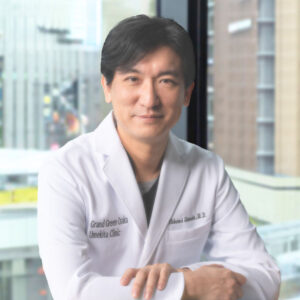
Director, Medical Corporation Shimada Clinic
Head of Clinical Practice, Grand Green Osaka Umekita Clinic
Hidenori Shimada
Graduated from the University of Tokushima Faculty of Medicine in 2005. After his initial residency, he obtained U.S. medical certification (ECFMG) and trained as a sub-intern in general surgery at the University of Washington. After completing the doctoral program at Kyoto University Graduate School of Medicine and working as a researcher at the Center for iPS Cell Research and Application (CiRA), Kyoto University, he founded Shimada Clinic in 2013. At Grand Green Osaka Umekita Clinic (https://umekitaclinic.org), he is engaged in a wide range of care, from internal medicine and pediatrics to cell therapy and aesthetic medicine.
* The physician supervision of this article covers its academic content only and does not constitute a recommendation of any specific treatment or product.