A new cancer immunotherapy whose safety and efficacy were demonstrated in clinical trials conducted jointly by Chiba University Hospital and RIKEN.
A new cancer immunotherapy whose safety and efficacy were demonstrated in clinical trials conducted jointly by Chiba University Hospital and RIKEN.
In cancer care today, the "three major therapies" — surgery, chemotherapy, and radiation — are the standard and most powerful options. Yet even when these treatments have been exhausted, sufficient results are not always achieved, and the physical burden can make it difficult to continue treatment.
Please — never give up.Cancer immunotherapy: a "fourth option" in cancer treatmentoffers new hope.
First-generation cancer immunotherapy
In the 1970s and 1980s, immunostimulants — what could be called first-generation immunotherapy — were approved under Japan's pharmaceutical law. They aimed for an anti-cancer effect by activating the immune system as a whole. However, they were born of the simplistic idea that activating a patient's immune system might treat cancer, without knowing which immune cells to target — and, unsurprisingly, no therapeutic effect could be expected.
Second-generation cancer immunotherapy
From the 1990s, second-generation cancer immunotherapy focused research on immune cells that attack cancer directly. Clinical trials were conducted on LAK therapy, which activates and returns NK cells, and adoptive immunotherapy, which activates and returns killer T cells. However, even when tumors shrank with these treatments, recurrence was observed in most cases. Most cancer immunotherapies offered privately today fall under this second generation.
Third-generation cancer immunotherapy
NKT cell-targeted therapy — what might be called third-generation cancer treatment — is expected to overcome the weaknesses of the second generation. By activating the entire immune system, NKT cells mobilize both innate and adaptive immune cells to attack cancer cells continuously. It delivers a powerful anti-cancer effect while simultaneously eliminating both types of cancer cells: those that have lost HLA expression and those that retain it.
Clinical trials of NKT cell-targeted therapy
The world's first clinical trial of NKT cell-targeted therapy, conducted at Chiba University Hospital in 17 patients with advanced lung cancer for whom surgery, radiation, and chemotherapy had all failed, produced remarkable results. While the mean survival of advanced lung cancer patients is a poor 4.6 months, the mean survival in the NKT therapy group was about 20 months with initial treatment alone — more than four times longer — and twice that of the roughly 10 months seen with molecular-targeted chemotherapy. Moreover, 60% of patients who received the therapy had a mean survival of about 30 months, a significant threefold extension compared with molecular-targeted therapy.
Expanding indications
In head and neck cancers — esophageal, maxillary, pharyngeal, laryngeal, and oral cancers — NKT cell-targeted therapy was judged effective (stable disease or partial response) in all cases treated (11 of 11). Based on these results, in 2011/2012 Chiba University Hospital applied for and received national approval for Advanced Medical Care B for advanced lung cancer and maxillary cancer. RIKEN has also been conducting joint clinical research on NKT cell therapy for operable post-surgical lung cancer with the National Hospital Organization (Nagoya Medical Center and Kyushu Cancer Center) since 2012.
What is NKT cell-targeted therapy?
By artificially activating NKT cells — the commanders of the immune system — the therapy transforms the immune environment within cancer tissue and attacks cancer cells continuously. Its safety and efficacy were demonstrated in joint clinical trials by Chiba University Hospital and RIKEN, and it has been approved by the national government as Advanced Medical Care B. More than 500 patients in Japan have already received NKT cell-targeted therapy.
Read more
NKT cells function as the "commanders" of the immune system. They were discovered in 1986 by the group of Dr. Masaru Taniguchi. Later research revealed that they exert a powerful anti-tumor effect by strengthening and expanding various immune cells; in 2004, Chiba University Hospital and RIKEN began joint clinical trials that demonstrated safety and efficacy. Research continues around the world today.
Features of NKT Cell-Targeted Therapy
Feature1
Applicable to almost all cancers, at every stage
The therapy is applicable to almost all cancers at every stage. By powerfully and simultaneously activating both innate and adaptive immunity, it attacks both types of cancer cells that are always present — those with HLA molecules and those without — shrinking the cancer while preventing recurrence. This dual effect is a defining feature of NKT cell-targeted therapy.
Feature2
Few side effects
Because NKT cell-targeted therapy uses your own cells, side effects are minimal and the treatment can be received with confidence. Treatment is given by IV drip or subcutaneous injection on an outpatient basis, so there is no burden of hospitalization. Home-visit care is available for those who have difficulty attending the clinic.
Feature3
Recovery from cancer-induced immune suppression
Cancer suppresses the immune system through various mechanisms, but activated NKT cells control this cancer-induced immunosuppression and restore the immune environment. They also form immunological memory that enables a long-lasting attack on cancer cells, delivering a durable anti-tumor effect.
Feature4
Can be combined with standard treatment
Because NKT cell-targeted therapy harnesses the workings of your own immune cells, it does not interfere with standard cancer treatments (surgery, radiation, chemotherapy) and can be used alongside them. By enhancing immunity, it can also be expected to play a supporting role for standard treatment.
Feature5
Cells cultured at a facility licensed by the Ministry of Health, Labour and Welfare
Culturing for NKT cell-targeted therapy is performed at a cell culturing facility approved by Japan's Ministry of Health, Labour and Welfare. The facility is managed in compliance with the Act on the Safety of Regenerative Medicine, with a rigorous safety management system in place.
Please feel free to contact us about treatment details, fees, or any concerns.
NKT cell-targeted therapy is applicable to almost all cancers at every stage. Two courses are available: a treatment plan and a prevention plan.
The treatment plan offers two courses: (1) combined with standard treatment, or (2) NKT cell-targeted therapy alone. With course (1), combining the therapy with standard treatment maximizes the therapeutic effect on the cancer; this requires coordination with the medical institution providing your standard treatment.
Course (2) is proposed for those who cannot receive standard treatment due to severe side effects, or those in terminal-stage cancer for whom only palliative care remains. Improvements in quality of life (QOL) and tumor shrinkage can be expected.
The prevention plan targets cancer cells remaining in the body after cancer treatment, to prevent recurrence. It is recommended for those for whom insufficient time has passed since completing standard treatment. For those who have difficulty visiting the clinic, treatment at your home or care facility is also possible.
First visit
Outpatient first-visit fee: ¥11,000 (tax incl.) Infectious disease screening (first visit only): ¥33,000 (tax incl.)(The total of ¥44,000 for the first visit and screening is payable at the consultation.)
Fees
Treatment fee: ¥3,386,900 (tax incl.) Total: ¥3,430,900 (tax incl.)* Transport to the culturing facility is charged separately. * For home-visit care, travel expenses plus a medical fee of ¥33,000 (tax incl.) per hour apply. * No refund can be made after cell culturing has begun, regardless of withdrawal of consent or any other reason. * This is a self-funded treatment not covered by health insurance.
Duration
Four treatments, once every two weeks
Hours
Weekdays at your convenience — please consult us (by appointment only)
Treatment Flow
NKT cells inherently have a powerful anti-cancer effect, but they are held in check by cancer cells and cannot exert their true strength as they are. In NKT cell-targeted therapy, dendritic cells collected from your blood are loaded with the NKT-cell-activating substance (alpha-GalCer) and returned to your body, activating your NKT cells.
01
First visit & blood tests
We conduct a medical interview, preliminary blood tests, and immune function tests to determine whether you can receive the treatment. Results take about one week.
02
Apheresis
Apheresis (component blood collection) is performed to collect white blood cells (monocytes). It takes about two to five hours.
The collected monocytes are transported to a cell culturing facility, where dendritic cells are cultured.
04
Activation of dendritic cells
The immune-activating substance (alpha-GalCer) is added to the dendritic cells, which continue to be cultured in preparation for activating your NKT cells.
05
Outpatient administration
The dendritic cells are returned to your body, where they present alpha-GalCer to your NKT cells and activate them. As standard, dendritic cells are returned four times, once every two weeks.
Frequently Asked Questions
A
Very few cancer immunotherapies offered as private (non-insured) care are backed by scientific evidence. Before receiving any cancer immunotherapy, please confirm whether the treatment is scientifically valid and pharmacologically grounded. It is important to choose therapies that have been validated by public or academic institutions, including those overseas.
A
Most solid cancers are eligible for treatment, but some blood cancers are not. It is effective regardless of stage, including in combination for recurrence prevention.
A
No serious side effects have been reported to date. Some people experience a mild fever of around 37°C or fatigue, but in most cases this resolves naturally.
A
Suppression of cancer progression, recurrence, and metastasis can be expected, because activated NKT cells form immunological memory that enables a long-term attack on cancer cells.
A
Yes. NKT cell-targeted therapy does not interfere with other treatments.
A
It is currently a self-funded treatment (not covered by insurance). The full cost of treatment is borne by the patient.
A
Administration is four times, once every two weeks — about two months in total. We adjust the schedule to suit you.
Please feel free to contact us about treatment details, fees, or any concerns.
A completely different approach from conventional immunotherapy.
Conventional immunotherapy targeted the cancer itself, increasing the number of immune cells that attack it. NK cells and T cells — the attacking force — were cultured outside the body, expanded, and returned. However, this approach failed to achieve sufficient results, for reasons including the following:
Cancer cells survive or mutate, and cannot all be eliminated
Immune cells returned to the body have a limited lifespan, so the effect does not last
Immune cells often cannot reach the cancer tissue
The cancer tissue is in an immunosuppressed state, preventing immune cells from exerting their true strength
With NKT cell-targeted therapy…
The entire immune system is reinforced, attacking cancer with the full force of your immunity.
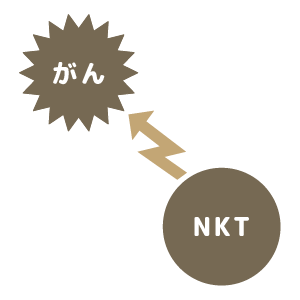
In NKT cell-targeted therapy, the target is the NKT cell. Activated NKT cells perform critically important roles: activating and expanding the attacking immune cells and acquiring long-term immunological memory. Against cancer, however, NKT cells are not activated and cannot exert their strength on their own — so NKT cell-targeted therapy activates them artificially.
POINT
It transforms the immune environment and attacks the cancer.
Through six actions unique to artificially activated NKT cells, the immune environment within cancer tissue is transformed, enabling immune cells to attack the cancer.
The Six Actions of NKT Cells
Action 1
Maturing dendritic cells
They lift the cancer's interference so dendritic cells can present cancer antigens.
Read more
Dendritic cells are the control tower of immunity. Activated NKT cells promote their maturation, enabling them to present cancer antigens efficiently.
Action 2
Adjuvant effect
They raise the activity of immune cells and molecules, unlocking their attacking power.
Read more
They promote the production of cytokines such as IFN-γ, activating killer T cells, NK cells, macrophages, and more.
Action 3
Direct attack on cancer cells
Activated NKT cells can also attack cancer cells directly themselves.
Read more
Drawing on the traits of both innate and adaptive immunity, NKT cells act on cancer cells from multiple angles.
Action 4
Lifting immune suppression
They suppress the immunosuppressive factors produced by cancer cells, restoring immune effectiveness.
Read more
They improve the immunosuppressive environment, working to release the brakes on anti-tumor immunity.
Action 5
Inhibiting angiogenesis
They suppress the formation of new blood vessels that supply nutrients and oxygen to cancer tissue.
Read more
Immune activation works to suppress pro-angiogenic factors, hindering tumor growth.
Action 6
Long-term immunological memory
They form immunological memory against recurrence, building long-lasting protection.
Read more
They help induce memory T cells and other components, supporting immune surveillance after treatment.
POINT
Immunological memory suppresses cancer progression, recurrence, and metastasis.
Even if attacking immune cells such as NK cells and T cells are expanded and returned to the body, they attack only once and are spent. NKT cells, by contrast, can build an army of immune cells and leave behind immunological memory. As a result, if the cancer grows, reinforcements can be resupplied at any time — suppressing cancer progression, recurrence, and metastasis alike.
Cancers Eligible for NKT Cell-Targeted Therapy
Head & neck
Pharyngeal cancer
Esophageal cancer
Oral cancer
Nasal cavity cancer
Thyroid cancer
Salivary gland cancer
Gastrointestinal
Stomach cancer
Pancreatic cancer
Liver cancer
Gallbladder cancer
Bile duct cancer
Small intestine cancer
Colon cancer
Colorectal cancer
Rectal cancer
Breast
Breast cancer
Mammary gland cancer
Ductal carcinoma
Respiratory
Lung cancer
Squamous cell carcinoma
Small cell lung cancer
Lung adenocarcinoma
Urological
Kidney cancer
Ureteral cancer
Bladder cancer
Prostate cancer
Testicular cancer
Gynecological
Endometrial cancer
Cervical cancer
Uterine fibroids
Ovarian cancer
Fallopian tube cancer
Other
Malignant melanoma
Brain tumor
Osteosarcoma
Scientific Background of NKT Cell-Targeted Therapy
1. The discovery of NKT cells and their activating substance
NKT cells are immune cells discovered in 1986 by the group of Dr. Masaru Taniguchi (former professor of immunology at Chiba University). For some time after their discovery their essential role remained unknown, but after the discovery in 1997 of a glycolipid that activates NKT cells (alpha-galactosylceramide, or alpha-GalCer), research into their function advanced rapidly. NKT cells were found to command a wide range of immune cells while also attacking pathogens and cancer cells themselves — functioning as the "commander" of the immune system. It also became clear that NKT cells can be activated far more powerfully when the substance is presented via dendritic cells.
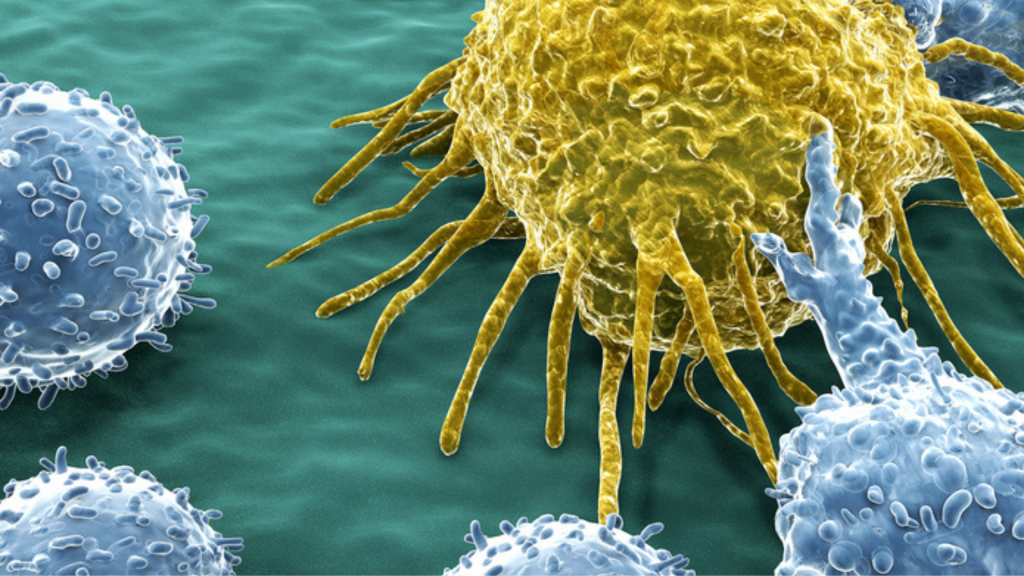
NKT cells (blue) attacking cancer cells (yellow)
2. How NKT cells act against cancer
NKT cells circulate in the blood, but when cancer appears they gather at the site and attack cancer cells by mobilizing a wide range of immune cells. Acting as "commander," NKT cells have six major actions:
(1) Maturing dendritic cells Dendritic cells are rendered immature by cancer, and as they are, they cannot issue attack orders (antigen presentation) to killer T cells.
(2) Strengthening and expanding the cancer-attacking cell force They strengthen and expand various immune cells (killer T cells, NK cells, macrophages), launching an all-out attack on the cancer.
(3) Direct attack on cancer cells They puncture cancer cells and induce cell death.
(4) Lifting cancer-induced immune suppression Cancer cells suppress immune cells to protect themselves from immune attack.
(5) Suppressing cancer-induced angiogenesis Cancer builds new blood vessels around itself to take in nutrients and oxygen. By preventing this, the cancer is starved out.
(6) Long-term immunological memory They generate memory cells that remember the cancer, building a system that can attack it over the long term and suppressing recurrence.
Activation pathway and functions of NKT cells
Source: "What is NKT cell-targeted cancer therapy" — Gan Plus (labels translated from the Japanese original)
3. Devising a cancer therapy targeting NKT cells
Because cancer arises from the body's own cells, it carries no molecule that activates NKT cells. To harness NKT cells for cancer treatment, they must therefore be activated artificially. This led to the concept of "NKT cell-targeted cancer therapy" using alpha-GalCer. Specifically, NKT cells are activated with alpha-GalCer via dendritic cells, drawing out their adjuvant effect. The word "adjuvant" derives from the Latin adjuvare, "to help"; here it means strengthening and expanding the immune cell force that attacks cancer. The procedure of NKT cell-targeted therapy is as follows:
(1) Blood is drawn from the patient. (2) Dendritic cells in the blood are expanded and loaded with alpha-GalCer, the NKT-cell-activating substance. (3) The dendritic cells loaded with alpha-GalCer are returned to the patient by IV drip.
Mechanism of NKT cell-targeted therapy
Source: Ketsueki Frontier vol. 23, No. 7, 2013 (labels translated from the Japanese original)
4. Preclinical studies of NKT cell-targeted therapy
To verify whether NKT cell-targeted therapy is effective against cancer as theorized, experiments were conducted in mice. The first experiments tested whether activating NKT cells in mice would activate NK cells and killer T cells through the adjuvant effect, and whether immature dendritic cells would react with NKT cells and mature. As predicted, activation and expansion of a wide range of immune cells — killer T cells, NK cells, macrophages — was confirmed. Effectiveness was then confirmed in a mouse cancer model before human trials. When mice are injected with melanoma, a type of skin cancer, countless metastatic tumors develop in the liver and lungs by day seven. When dendritic cells loaded with alpha-GalCer were administered intravenously at this point, liver and lung metastases had almost disappeared by day seven after administration. This showed that NKT cell-targeted therapy is effective even after cancer has appeared.
Animal study results for NKT cell-targeted therapy
Source: adapted from Toura I, et al.: J. Immunol. 1999 (labels translated from the Japanese original)
5. Clinical trials of NKT cell-targeted therapy
Chiba University Hospital and RIKEN jointly began clinical trials of NKT cell-targeted therapy in patients with advanced lung cancer (17 patients for whom surgery, radiation, and chemotherapy had all failed, with a predicted mean survival of 4.6 months). Mean survival across all patients in the NKT therapy group was about 20 months — an extension of more than fourfold. Moreover, 60% of patients who received the therapy — despite receiving only the initial treatment and then being observed for three years with no additional therapy — showed no change in primary tumor size and no metastasis, with a mean survival of about 30 months: a significant threefold extension even compared with the molecular-targeted therapy group. NKT cell-targeted cancer therapy was subsequently confirmed effective against head and neck cancers such as esophageal, maxillary, pharyngeal, and oral cancers, and Chiba University Hospital applied for and received national approval for Advanced Medical Care B.
Phase II clinical trial of NKT cell-targeted therapy
Source: Ketsueki Frontier vol. 23, No. 7, 2013 (labels translated from the Japanese original)
Publications from the Discovery of NKT Cells to the Development of Targeted Cancer Therapy
A 1999 preclinical study of NKT cell-targeted therapy in mice, showing a marked reduction in liver metastasis of malignant melanoma, a type of skin cancer.
A 2005 phase I trial of NKT cell-targeted therapy in advanced lung cancer at Chiba University School of Medicine. No serious adverse events were observed.
A 2006 phase I clinical trial of ex vivo activated NKT cell transfer in advanced lung cancer at Chiba University School of Medicine. No serious adverse events were observed.
A 2009 phase II clinical trial of NKT cell-targeted therapy in advanced lung cancer at Chiba University School of Medicine. Mean survival with initial treatment alone was about 20 months — more than four times the usual survival.
Web booking is not available for cell therapies. Please contact us first — via the online inquiry form or by phone — about treatment details, fees, or any concerns.