Hello, I am Dr. Hidenori Shimada of Grand Green Osaka Umekita Clinic in Osaka, Japan.
Exploring advanced cancer treatment options can feel complex, especially when considering care in another country. NKT cell-targeted therapy represents a significant area of research in immunotherapy, and understanding the practical steps involved can provide clarity. This guide outlines the typical process, from the first conversation with a physician to the administration of the therapy, to help you know what to expect on your journey.
The primary goal is to demystify the treatment flow. By breaking down each stage, we aim to answer common questions and address concerns you may have about the logistics and timeline. It is important to remember that this therapy is a highly personalized process, and the first step is always a thorough discussion with a medical professional.
Understanding NKT Cell-Targeted Therapy
Before diving into the process, let’s briefly touch upon what NKT cell-targeted therapy is. It is a type of cancer immunotherapy designed to harness the patient’s own immune system. NKT cells are considered “commander” cells within the immune system. The therapy aims to activate these cells, which in turn may stimulate a broader, more sustained immune response against cancer cells. This approach is sometimes referred to as a third-generation immunotherapy, building on earlier concepts that targeted the immune system in different ways.
Unlike treatments that directly attack cancer cells, such as chemotherapy, this therapy works by modulating your body’s natural defenses. The process involves collecting a patient’s immune cells, preparing them in a specialized facility, and then reintroducing them to the body.
The Step-by-Step NKT Cell Therapy Process
The journey through NKT cell therapy follows a structured pathway. While the specifics can be adjusted based on individual health conditions, the core stages remain consistent. Here is a general overview of the cancer treatment flow in Japan for this specific therapy.
- Step 1: Initial Consultation and Medical Assessment
The process begins with a comprehensive consultation with a physician. During this meeting, the doctor will review your complete medical history, previous treatments, and current health status. This is a crucial step to determine if NKT cell therapy may be a suitable option for your specific situation. It is an opportunity for you to ask questions and for the medical team to gather the necessary information to make an informed recommendation. A thorough evaluation is essential, as not every patient is a candidate for this therapy. - Step 2: Apheresis (Blood Collection)
If you and your doctor decide to proceed, the next step is to collect your immune cells. This is done through a process called apheresis. It is similar to a blood donation, where blood is drawn from one arm, passed through a machine that separates and collects specific white blood cells (peripheral blood mononuclear cells, or PBMCs), and the remaining blood components are returned to your body through the other arm. This procedure allows for the collection of a large number of the necessary cells for the therapy. - Step 3: Cell Processing and Culturing
Once collected, your cells are sent to a specialized cell processing center. Here, a critical part of the immunotherapy procedure takes place. Antigen-presenting cells (APCs), such as dendritic cells, are isolated from the collected sample. These cells are then processed and activated outside the body using a specific compound (α-galactosylceramide) that enables them to stimulate NKT cells upon reintroduction. This preparation phase is highly controlled and typically takes several weeks to complete. - Step 4: NKT Cell Infusion
After the cell processing is complete, you will return to the clinic for the infusion. The prepared cells are administered back into your body, usually through a simple intravenous (IV) drip. The NKT cell infusion process itself is generally straightforward and takes a relatively short amount of time, during which you will be monitored by the medical staff. - Step 5: Follow-up and Monitoring
The treatment does not end with the infusion. Following the administration, a schedule of follow-up appointments will be established. These appointments are vital for monitoring your health, assessing your body’s response to the therapy, and managing any potential side effects. Consistent monitoring allows the medical team to track progress and make any necessary adjustments to your overall care plan.
Key Considerations Before Starting Treatment
It is essential to approach NKT cell therapy with a clear understanding of what it entails. This therapy is not a replacement for standard cancer treatments like surgery, chemotherapy, or radiation therapy. It may be considered as an option alongside or after these conventional treatments, based on a physician’s judgment.
In Japan, advanced treatments like this are provided under specific regulatory frameworks, such as the Act on the Safety of Regenerative Medicine. This therapy is offered as a private medical service, which means it is not covered by Japanese public health insurance. The response to any medical treatment can vary significantly from person to person, and no specific outcome can be guaranteed. A detailed discussion with your doctor is necessary to understand the potential benefits, risks, and side effects associated with the therapy.
Navigating Your Care at Grand Green Osaka Umekita Clinic
For international patients considering medical tourism for cancer treatment, clear communication and logistical support are paramount. At Grand Green Osaka Umekita Clinic, located in the heart of Osaka, we are equipped to assist patients from around the world. Understanding the NKT cell therapy process is the first step, and our team is here to guide you through the subsequent stages.
We encourage you to review the detailed information available on our website. This can help you prepare for your consultation and formulate questions for your doctor. A well-informed patient is better equipped to participate in their own healthcare decisions.
For more comprehensive details on NKT Cell-Targeted Therapy, including information on potential risks, side effects, treatment duration, and fees, please consult with a physician and review our main treatment page: NKT Cell-Targeted Therapy at Grand Green Osaka Umekita Clinic.Summary: A Patient-Centered Process
The NKT cell therapy process is a multi-stage journey that begins with a thorough medical consultation and proceeds through cell collection, laboratory processing, and infusion, followed by careful monitoring. Each step is designed with the patient’s condition and safety in mind. While it represents an advanced approach in immunotherapy, the decision to pursue this treatment must be made in close partnership with a medical expert who can evaluate your unique health circumstances. Understanding this flow is a key part of making an informed decision about your cancer care options.
References
- PubMed: Engineered CAR-NKT Extracellular Vesicles Suppress Tumor Progression and Enhance Antitumor Immunity. (2026)
- PubMed: [Cancer Immunotherapy Using Allogeneic NKT Cells]. (2023)
- PubMed: [Application of iPS Cell-Derived NKT Cells to Cancer Immunotherapy]. (2020)
- PMC: Unconventional guardians of the brain: MAIT cells as emerging players in glioblastoma immunity. (2026)
- PMC: Comparative evaluation of CAR-expressing T-, NK-, NKT-cells, and macrophages in an immunocompetent mouse glioma model. (2025)
- PMC: Combining the induced pluripotent stem cell (iPSC) technology with chimeric antigen receptor (CAR)-based immunotherapy: recent advances, challenges, and future prospects. (2024)
- PMC: Rapid control of pandemic H1N1 influenza by targeting NKT-cells. (2016)
- MHLW (Japan): Regenerative Medicine — Ministry of Health, Labour and Welfare, Japan
Supervising Physician
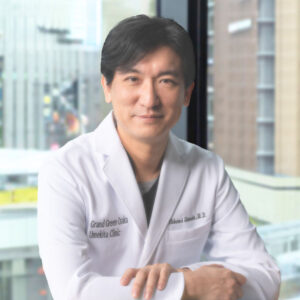
Director, Medical Corporation Shimada Clinic
Head of Clinical Practice, Grand Green Osaka Umekita Clinic
Hidenori Shimada
Graduated from the University of Tokushima Faculty of Medicine in 2005. After his initial residency, he obtained U.S. medical certification (ECFMG) and trained as a sub-intern in general surgery at the University of Washington. After completing the doctoral program at Kyoto University Graduate School of Medicine and working as a researcher at the Center for iPS Cell Research and Application (CiRA), Kyoto University, he founded Shimada Clinic in 2013. At Grand Green Osaka Umekita Clinic (https://umekitaclinic.org), he is engaged in a wide range of care, from internal medicine and pediatrics to cell therapy and aesthetic medicine.
* The physician supervision of this article covers its academic content only and does not constitute a recommendation of any specific treatment or product.