Hello, I am Dr. Hidenori Shimada of Grand Green Osaka Umekita Clinic in Osaka, Japan.
Choosing to undergo advanced medical treatment like NKT Cell-Targeted Therapy in Japan is a significant decision for international patients. While much focus is placed on the treatment itself, a common and important question arises: “What happens after I return to my home country?” The period following treatment is crucial for monitoring progress and managing your health, and navigating this long-distance care can feel uncertain.
This article provides a clear guide to post-treatment care and follow-up for international patients who have received NKT cell therapy in Japan. Our goal is to address your concerns and help you understand the available options, ensuring you feel supported and informed throughout your entire treatment journey.
Key to Post-Treatment Success: Collaborative Follow-Up
The cornerstone of effective post-NKT cell therapy care is a well-coordinated follow-up plan. This plan is not one-size-fits-all; it is personalized based on your specific medical condition, your response to the therapy, and your logistical circumstances. The primary objective is to monitor the long-term effects of the therapy, manage any potential side effects, and watch for signs of disease recurrence or progression. This typically involves a collaborative effort between your medical team at Grand Green Osaka Umekita Clinic and your primary oncologist or physician in your home country. Continuous communication and a clear plan are essential for your long-term well-being.
Common Concerns for International Patients After Therapy
After completing treatment in Japan and returning home, it’s natural to have questions about the path forward. Many patients share similar concerns, which often include:
- Communication: How will my local doctor understand the treatment I received and collaborate with the clinic in Japan?
- Monitoring: What specific tests or scans will I need, and how often should they be performed?
- Progress Tracking: How will the effectiveness of the NKT cell therapy be evaluated from afar?
- Managing Side Effects: Who should I contact if I experience new or delayed side effects?
- Logistics: Is it necessary to travel back to Japan for follow-up appointments?
Acknowledging these questions is the first step toward creating a comprehensive and reassuring follow-up strategy. A proactive approach, where these points are discussed before treatment concludes, can greatly reduce post-treatment anxiety.
The Fundamentals of NKT Therapy Monitoring
Follow-up care after immunotherapy like NKT cell therapy serves several vital purposes. It allows physicians to assess your body’s response, detect any changes in your condition at an early stage, and provide supportive care as needed. While your specific plan will be determined by your physician, monitoring generally involves a combination of methods.
Typical monitoring may include periodic blood tests to check tumor markers and immune cell activity, as well as imaging studies such as CT, MRI, or PET scans to visualize the status of the disease. Clinical evaluation of your overall health, energy levels, and any new symptoms is also a critical component. The frequency and type of these evaluations depend heavily on the type of cancer, its stage, and your individual response to the treatment. This structured monitoring provides valuable data for both your Japanese and local medical teams to make informed decisions about your ongoing care.
Follow-Up Pathways for Patients Abroad
For international patients, a flexible approach to follow-up is necessary. There are several effective models for managing long-term care after you return home.
1. Collaboration with Your Local Oncologist: This is the most common and practical approach. Grand Green Osaka Umekita Clinic will provide a detailed treatment summary, including the therapy administered, your response, and a recommended follow-up schedule. You can share this report with your local physician, who can then oversee the necessary tests and clinical assessments. Our team can remain available for consultation with your doctor to ensure continuity of care and help interpret results in the context of the NKT therapy.
2. Periodic Return Visits to Japan: Depending on your condition and personal preference, you may choose to travel back to Osaka for key follow-up appointments. This allows the team that administered the therapy to conduct in-person evaluations. While this involves travel, it offers the benefit of direct assessment by specialists familiar with your specific NKT cell therapy protocol.
3. A Hybrid Model: Many patients opt for a hybrid approach, combining local care with remote consultations. Routine monitoring is managed by your local doctor, while periodic video consultations with our physicians in Japan can be scheduled to review progress, discuss test results, and adjust the long-term care plan as needed. This model balances convenience with specialized oversight.
Planning Your Follow-Up Before Treatment Begins
The best time to plan for post-treatment care is before you even start NKT cell therapy. During your initial consultations at Grand Green Osaka Umekita Clinic, we encourage you to discuss the long-term follow-up process. It is also important to understand the context of this treatment.
NKT Cell-Targeted Therapy is a form of immunotherapy provided as a private medical treatment, meaning it is not covered by public health insurance. In Japan, cell therapies like this are regulated under the Act on the Safety of Regenerative Medicine to ensure patient safety and proper conduct. It is essential to recognize that this therapy is not presented as a replacement for standard cancer treatments such as surgery, chemotherapy, or radiation. Instead, it may be considered as a potential option alongside or after these conventional therapies. A comprehensive medical consultation with a physician is required to determine if you are a suitable candidate and to fully understand the potential benefits, risks, side effects, costs, and expected treatment duration.
Learn More About NKT Cell-Targeted Therapy in Osaka
Navigating your treatment journey, from initial consultation to long-term follow-up, is a process we are here to support. Understanding the therapy itself is a crucial first step. For a comprehensive overview of NKT Cell-Targeted Therapy, including its mechanism, the scientific basis, and the treatment process at our clinic, we invite you to review our detailed information page. This resource can help you and your family make a more informed decision.
For more information, please visit the NKT Cell-Targeted Therapy page.
Conclusion: A Partnership in Your Long-Term Health
Your care does not end when you leave Japan. A thoughtful and collaborative follow-up plan is an integral part of your NKT cell therapy journey. By establishing clear communication channels between our clinic and your local physician, you can ensure you receive consistent, high-quality monitoring after returning home. At Grand Green Osaka Umekita Clinic, we are committed to supporting our international patients every step of the way, providing the information and coordination needed for peace of mind. If you have questions about NKT cell therapy or post-treatment care, please do not hesitate to contact us.
References
- PubMed: Therapeutic implications of CD1d expression and tumor-infiltrating macrophages in pediatric medulloblastomas. (2014)
- PMC: Immunotherapy in NK/T-Cell Lymphoma: Mechanisms, Clinical Evidence, Resistance, and Emerging Multimodal Strategies. (2026)
- PMC: Progress in cell-based immunotherapies for solid tumors. (2026)
- PMC: CAR-engineered cell therapies: current understandings and future perspectives. (2026)
- PMC: Invariant Natural Killer T Cells in Cancer Immunotherapy: Lipid-Based Modulation, Nanotechnology, and Translational Advances. (2026)
- MHLW (Japan): Regenerative Medicine — Ministry of Health, Labour and Welfare, Japan
Supervising Physician
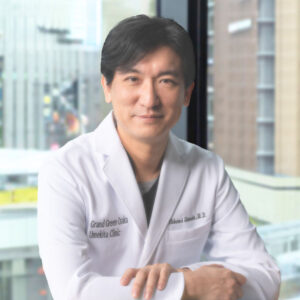
Director, Medical Corporation Shimada Clinic
Head of Clinical Practice, Grand Green Osaka Umekita Clinic
Hidenori Shimada
Graduated from the University of Tokushima Faculty of Medicine in 2005. After his initial residency, he obtained U.S. medical certification (ECFMG) and trained as a sub-intern in general surgery at the University of Washington. After completing the doctoral program at Kyoto University Graduate School of Medicine and working as a researcher at the Center for iPS Cell Research and Application (CiRA), Kyoto University, he founded Shimada Clinic in 2013. At Grand Green Osaka Umekita Clinic (https://umekitaclinic.org), he is engaged in a wide range of care, from internal medicine and pediatrics to cell therapy and aesthetic medicine.
* The physician supervision of this article covers its academic content only and does not constitute a recommendation of any specific treatment or product.