Hello, I am Dr. Hidenori Shimada of Grand Green Osaka Umekita Clinic in Osaka, Japan.
Embarking on a new treatment path for cancer, such as NKT cell-targeted therapy, can bring both hope and uncertainty. A crucial step in this journey is the consultation with your physician. To make the most of this conversation, it’s helpful to be prepared. This process, often called shared decision-making, involves you and your doctor working together to choose treatments that align with your values, preferences, and medical needs. This article provides a structured list of questions to help you have a clear and constructive dialogue about NKT cell therapy, particularly for those considering treatment in Japan.
The Importance of Shared Decision-Making in Cancer Care
When facing complex medical choices, it’s natural to have many questions and concerns. You might wonder if you’re asking the ‘right’ things or how to understand highly technical information. Shared decision-making is a collaborative approach designed to address these challenges. It ensures that the medical care you receive is not only based on the latest clinical evidence but also on what matters most to you as an individual. By actively participating in the conversation, you can gain a deeper understanding of your options, clarify your treatment goals, and feel more confident in the path you choose. An informed patient is an empowered partner in their own healthcare journey.
Understanding NKT Cell-Targeted Therapy: A Brief Overview
Before diving into specific questions, it’s useful to have a basic understanding of the treatment. NKT cell-targeted therapy is a form of cancer immunotherapy. Unlike conventional treatments like chemotherapy or radiation that directly target cancer cells, immunotherapy works by harnessing the power of your own immune system to fight the disease. NKT cells are considered ‘commander’ cells within the immune system, capable of orchestrating a broad and sustained attack against cancer cells. This therapy involves activating these NKT cells to enhance the body’s natural anti-tumor response. It is important to view this therapy as one of several options that may be considered alongside or after standard treatments such as surgery, chemotherapy, and radiation. It is not presented as a replacement for these foundational therapies, but rather as a potential additional strategy. The suitability of any treatment depends entirely on an individual’s specific medical situation, which must be evaluated by a qualified physician.
Key Questions About Eligibility and the Treatment Process
To determine if this therapy is a suitable option for you, it’s essential to discuss your specific case with your doctor. Use these questions as a starting point for your conversation.
- Regarding Your Condition and Eligibility:
- Based on my specific type and stage of cancer, am I a potential candidate for NKT cell therapy?
- What are the potential benefits and limitations of this therapy in my situation?
- How does NKT cell therapy fit with my current or past treatments (e.g., chemotherapy, radiation)? Are there potential interactions to consider?
- What tests or evaluations are needed to confirm my eligibility?
- Regarding the Treatment Process:
- Could you walk me through the entire treatment process, from the initial consultation to the final administration?
- How are the necessary cells collected from my body and how are they prepared for the therapy?
- What is the typical treatment schedule? How many sessions might be involved and over what period of time?
- Where is the treatment administered (e.g., outpatient clinic, hospital)?
Questions About Potential Outcomes, Risks, and Costs
A comprehensive discussion must also cover realistic expectations, potential side effects, and the financial aspects of care. It is vital to avoid any assumptions about guaranteed outcomes, as every patient’s response to treatment is unique.
- Regarding Outcomes and Expectations:
- What are the primary goals of this therapy for someone in my condition? (e.g., managing symptoms, slowing progression, improving quality of life)
- What kind of outcomes have been observed in clinical studies for patients with similar conditions? Please note that results from studies do not guarantee the same outcome for every individual.
- How will we monitor my body’s response to the treatment, and how often will follow-up be required?
- Regarding Risks and Side Effects:
- What are the known potential side effects or risks associated with NKT cell therapy?
- How are these side effects typically managed if they occur?
- Are there any long-term risks that have been identified?
- Regarding Costs and Logistics:
- Is this treatment covered by Japanese public health insurance or private insurance?
- Could you provide an estimate of the total cost, including consultations, the therapy itself, and any necessary follow-up care?
- For international patients, what logistical support is available for travel and accommodation in Osaka?
Navigating Your Consultation at Grand Green Osaka Umekita Clinic
At Grand Green Osaka Umekita Clinic, we believe that a thorough consultation is the foundation of quality care. Your physician will take the time to review your medical history, discuss your condition, and answer all your questions. It is important to understand that NKT cell-targeted therapy is provided as a private medical service (not covered by public health insurance). In Japan, such advanced treatments are regulated under systems like the Act on the Safety of Regenerative Medicine. This framework ensures that therapies are provided according to established safety and procedural standards. A final decision on your suitability for the therapy can only be made after a comprehensive medical assessment by a doctor. During your consultation, we will provide detailed information regarding the expected number of treatments, the total duration, costs, and a full explanation of potential risks and side effects. For more preliminary information about our approach, please visit our NKT Cell-Targeted Therapy page.
Learn more about NKT Cell-Targeted Therapy at our clinic.
Conclusion: Your Active Role in Your Treatment Plan
Preparing for your consultation is a proactive step toward taking control of your health. By arming yourself with thoughtful questions, you can transform the appointment into a productive partnership with your doctor. This dialogue is essential for making an informed decision that feels right for you and your family. Remember, the goal is not to find a ‘cure’ but to find the most appropriate and personalized treatment plan based on current medical knowledge and your individual circumstances. Any decision to proceed with NKT cell therapy, or any other cancer treatment, should be made in close consultation with a medical professional who understands your complete health profile.
References
- PubMed: A three-talk model for shared decision making: multistage consultation process. (2017)
- PubMed: [Shared decision making]. (2025)
- PubMed: Comparison of an Artificial Intelligence-Enabled Patient Decision Aid vs Educational Material on Decision Quality, Shared Decision-Making, Patient Experience, and Functional Outcomes in Adults With Knee Osteoarthritis: A Randomized Clinical Trial. (2021)
- PubMed: Shared decision-making for vitiligo. (2021)
- PubMed: Practising shared decision making in primary care. (2021)
- PMC: Informing patients on planned consultation time – a randomised controlled intervention study of consultation time in primary care. (2019)
- PMC: Patient-Centeredness during In-Depth Consultation in the Outpatient Clinic of a Tertiary Hospital in Korea: Paradigm Shift from Disease to Patient. (2019)
- PMC: Influence of E-consultation on the Intention of First-Visit Patients to Select Medical Services: Results of a Scenario Survey. (2023)
- MHLW (Japan): Regenerative Medicine — Ministry of Health, Labour and Welfare, Japan
Supervising Physician
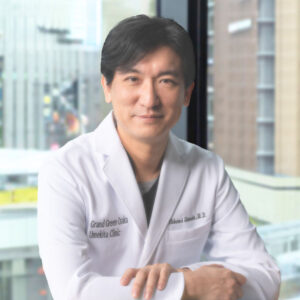
Director, Medical Corporation Shimada Clinic
Head of Clinical Practice, Grand Green Osaka Umekita Clinic
Hidenori Shimada
Graduated from the University of Tokushima Faculty of Medicine in 2005. After his initial residency, he obtained U.S. medical certification (ECFMG) and trained as a sub-intern in general surgery at the University of Washington. After completing the doctoral program at Kyoto University Graduate School of Medicine and working as a researcher at the Center for iPS Cell Research and Application (CiRA), Kyoto University, he founded Shimada Clinic in 2013. At Grand Green Osaka Umekita Clinic (https://umekitaclinic.org), he is engaged in a wide range of care, from internal medicine and pediatrics to cell therapy and aesthetic medicine.
* The physician supervision of this article covers its academic content only and does not constitute a recommendation of any specific treatment or product.