Hello, I am Dr. Hidenori Shimada of Grand Green Osaka Umekita Clinic in Osaka, Japan.
Considering advanced cancer treatment options abroad can feel overwhelming, especially when navigating a different healthcare system. For international patients exploring NKT cell-targeted therapy in Japan, one of the most crucial steps is preparing a comprehensive set of medical records. Having the right documents ready not only streamlines the consultation process but also enables our medical team to accurately assess your situation and discuss potential therapeutic approaches. This guide is designed to help you understand which records are necessary and how to prepare them for your consultation at Grand Green Osaka Umekita Clinic.
Why Your Medical Records Are Essential for Consultation
A thorough and well-organized medical history is the foundation of any medical consultation, particularly for specialized treatments like immunotherapy. These documents provide your physician in Japan with a complete picture of your diagnosis, the cancer’s characteristics, treatments you have undergone, and your overall health. This information is vital for determining if NKT cell-targeted therapy may be a suitable option to consider. It allows for a more productive initial discussion, focusing on your specific circumstances rather than spending valuable time gathering basic information. A clear record helps ensure that the medical advice you receive is tailored to your unique condition.
A Brief Overview of NKT Cell-Targeted Therapy
NKT cell-targeted therapy is a form of cancer immunotherapy that aims to activate the patient’s own immune system to fight cancer cells. It is considered a third-generation immunotherapy that works by stimulating NKT cells, which act as ‘commanders’ of the immune system, mobilizing a broad and sustained attack against cancer. It is important to understand that this therapy is not intended to replace standard cancer treatments such as surgery, chemotherapy, or radiation therapy. Instead, it may be considered as an option alongside or after standard treatments, depending on the individual’s case. The suitability and potential role of this therapy in your treatment plan must be determined through a detailed medical evaluation.
Key Medical Documents to Prepare
To facilitate a smooth and effective consultation, we recommend gathering the following medical records. Having these available in English or with an English translation is highly beneficial.
- Medical Summary or Referral Letter: A letter from your current oncologist or primary physician is invaluable. It should summarize your diagnosis (including the date and type of cancer), a timeline of all treatments received (surgery, chemotherapy, radiation, etc.), your response to those treatments, and your current health status.
- Pathology Reports: These are the official reports from any biopsies or surgeries that confirmed your cancer diagnosis. They contain critical details about the type of cancer cells, grade, and specific markers, which are essential for assessing the case.
- Imaging Studies and Reports: Please provide recent imaging results, such as CT, MRI, and PET scans. Both the written reports from the radiologist and the images themselves (often in DICOM format on a CD/DVD or via a secure link) are necessary. These help visualize the location, size, and extent of tumors.
- Recent Laboratory Results: Include copies of recent blood tests, such as a complete blood count (CBC), comprehensive metabolic panel (CMP), and any relevant tumor marker tests. These results provide insight into your overall organ function and general health.
- List of Current Medications: A detailed list of all prescription medications, over-the-counter drugs, and supplements you are currently taking, including dosages.
- Performance Status (PS): Information regarding your current physical ability and how the illness affects your daily activities is also helpful for the medical team to understand your overall condition.
Organizing and Submitting Your Documents
Once you have gathered these documents, organizing them chronologically can be very helpful. We recommend creating digital copies (e.g., PDFs) that can be easily shared with our clinic in advance of your appointment. While our team can handle English documents, providing professional translations for key reports from other languages can prevent potential misunderstandings and expedite the review process. Please be prepared to bring the original documents with you when you travel to Japan for your in-person consultation.
The Consultation Process at Grand Green Osaka Umekita Clinic
After you contact us and provide the necessary medical information, our medical team will conduct a preliminary review. Based on this review, we will schedule a formal consultation to discuss your case in detail. It is important for international patients to know that NKT cell-targeted therapy is provided as a private medical service in Japan and is not covered by Japanese public health insurance. This treatment is offered under the regulations of Japan’s Act on the Safety of Regenerative Medicine, which ensures specific standards for safety and quality.
A final determination of your eligibility for the therapy, along with a detailed discussion about the treatment plan, expected timeline, costs, and potential risks or side effects, can only be made after a comprehensive in-person consultation with one of our physicians. For more information about the therapy and our clinic in Osaka, we invite you to review our dedicated page. Learn more about NKT Cell-Targeted Therapy here.
Summary: Your First Step Towards a Consultation in Japan
Preparing your medical records is the essential first step for any international patient considering NKT cell-targeted therapy in Japan. A complete and well-organized file allows for a meaningful and efficient consultation, empowering you and our medical team to make informed decisions together. At Grand Green Osaka Umekita Clinic, we are committed to providing clear information to help you navigate your options. By taking the time to gather these documents, you are laying the groundwork for a productive discussion about your potential treatment journey.
References
- PMC: Regulatory insights on adeno-associated virus-based gene therapies, cell- and tissue-based products, and CAR-T cell therapies: report from the 8th Asia Partnership Conference of Regenerative Medicine, April 24, 2025. (2026)
- PMC: Abstracts from the 50th Congress of the International Society of Paediatric Oncology (SIOP) Kyoto, Japan November 16-19, 2018. (2018)
- PMC: Oral Free Paper Sessions. (2016)
- PMC: Anti-human-TIGIT agonistic antibody ameliorates autoimmune diseases by inhibiting Tfh and Tph cells and enhancing Treg cells. (2023)
- MHLW (Japan): Regenerative Medicine — Ministry of Health, Labour and Welfare, Japan
Supervising Physician
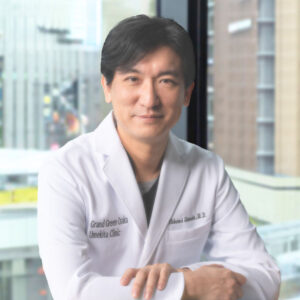
Director, Medical Corporation Shimada Clinic
Head of Clinical Practice, Grand Green Osaka Umekita Clinic
Hidenori Shimada
Graduated from the University of Tokushima Faculty of Medicine in 2005. After his initial residency, he obtained U.S. medical certification (ECFMG) and trained as a sub-intern in general surgery at the University of Washington. After completing the doctoral program at Kyoto University Graduate School of Medicine and working as a researcher at the Center for iPS Cell Research and Application (CiRA), Kyoto University, he founded Shimada Clinic in 2013. At Grand Green Osaka Umekita Clinic (https://umekitaclinic.org), he is engaged in a wide range of care, from internal medicine and pediatrics to cell therapy and aesthetic medicine.
* The physician supervision of this article covers its academic content only and does not constitute a recommendation of any specific treatment or product.