Hello, I am Dr. Hidenori Shimada of Grand Green Osaka Umekita Clinic in Osaka, Japan.
For international patients navigating an advanced cancer diagnosis, the journey can present many challenges, especially when standard treatments like surgery, chemotherapy, or radiation therapy are no longer providing the expected results or are causing difficult side effects. This situation often leads patients and their families to search for other cancer treatment options. In Japan, a country known for its medical innovation, advanced cancer therapy approaches are being explored. This article provides information on NKT Cell-Targeted Therapy, a form of immunotherapy that may be considered in such circumstances.
What is NKT Cell-Targeted Therapy? A Potential Next Step
NKT Cell-Targeted Therapy is a type of cancer immunotherapy that utilizes the body’s own immune system to fight cancer. It is sometimes referred to as a “fourth-line cancer treatment,” considered after primary treatments have been exhausted. Unlike conventional therapies that directly target cancer cells, this approach focuses on activating a specific type of immune cell called the NKT cell. These cells act as commanders of the immune system, orchestrating a broad and sustained attack against cancer cells. This therapy represents a different strategy, aiming to enhance the body’s natural defenses and may be an option for those seeking continued care for refractory cancer.
Why Consider New Options After Standard Treatments?
Patients with advanced cancer often face a point where standard treatments become less effective or the cumulative side effects impact their quality of life. This can be a distressing and uncertain time. The reasons for exploring further options, such as refractory cancer immunotherapy in Japan, often include:
- Treatment Resistance: Cancer cells can develop resistance to chemotherapy or other targeted drugs, causing the treatment to lose its effectiveness.
- Accumulated Side Effects: The physical burden of long-term chemotherapy or radiation can make it difficult to continue treatment, prompting a search for alternatives with a different side effect profile.
- Limited Standard Options: In some cases of advanced or metastatic cancer, the available standard therapeutic options may have been fully utilized.
- Desire for a Different Approach: Immunotherapy offers a fundamentally different mechanism of action by empowering the patient’s immune system, which can be an appealing avenue when other methods have not succeeded.
It is in this context that innovative treatments like NKT Cell-Targeted Therapy are considered, not as a replacement for standard care, but as a potential subsequent step in the treatment journey.
The Science Behind NKT Cell-Targeted Therapy
The foundation of NKT Cell-Targeted Therapy lies in the unique role of NKT cells. Discovered in Japan, these specialized lymphocytes function as a bridge between the innate and adaptive immune systems. When activated, they can trigger a powerful, multi-pronged anti-tumor response. The therapy involves collecting a patient’s own immune cells, activating the NKT cells outside the body, and then reinfusing them. The goal is to create a more robust and sustained immune response against the cancer.
This approach is sometimes categorized as a third-generation immunotherapy. Early research and clinical trials, including those conducted at Chiba University and RIKEN in Japan, have explored its safety and efficacy in certain types of cancer, such as advanced lung cancer and head and neck cancers, particularly for patients who had exhausted standard treatment options. These studies form the scientific basis for its use, though it is important to understand that results can vary significantly among individuals.
NKT Cell Therapy’s Role in Advanced Cancer Care
It is crucial to position NKT Cell-Targeted Therapy correctly. It is not presented as a cure for cancer. Instead, it is an advanced cancer therapy option that may help manage the disease and potentially extend survival or improve quality of life for some patients with refractory cancer. This treatment is provided as private medical care (uninsured) and falls under Japan’s Act on the Safety of Regenerative Medicine. This legal framework ensures that such advanced therapies are provided under strict safety and ethical guidelines. The decision to pursue this therapy is a significant one and must be based on a thorough medical evaluation and a clear understanding of its potential role in an individual’s overall treatment plan.
What International Patients Should Know Before Consultation
For international patients considering advanced cancer therapy in Japan, being well-informed is key. Before proceeding with a consultation, it is important to understand several points:
- Medical Consultation is Essential: The suitability of NKT cell therapy after standard treatment is not universal. A physician must carefully evaluate your specific cancer type, stage, treatment history, and overall health to determine if you are an appropriate candidate.
- Understanding It’s a Private Treatment: This therapy is not covered by public health insurance. Patients are responsible for the full cost. Detailed information on fees, the number of treatments, and the expected duration should be clearly explained and understood before making any decisions.
- Discussing Risks and Side Effects: While the therapy utilizes a patient’s own cells, it is not without potential risks or side effects. A comprehensive discussion with the medical team about what to expect is a critical part of the informed consent process.
- No Guarantees of Efficacy: The outcomes of any cancer treatment can vary widely. It is important to have realistic expectations and understand that no specific result can be guaranteed.
Taking the Next Step: Learning More About NKT Cell Therapy
Facing advanced cancer after exhausting standard treatments can be an overwhelming experience. Exploring new options like NKT Cell-Targeted Therapy provides a potential path forward for some patients. This advanced immunotherapy, available in Japan, leverages the body’s immune system in a unique way, offering a different approach when others are no longer viable.
A final decision should only be made after careful consideration and consultation with medical experts. At Grand Green Osaka Umekita Clinic, located in Osaka, we provide detailed information for international patients. To learn more about the specifics of NKT Cell-Targeted Therapy, including the process, potential considerations, and what to expect, we encourage you to review our comprehensive treatment page.
For detailed information, please visit our page on NKT Cell-Targeted Therapy.
References
- PubMed: CAR-T and CAR-NK as cellular cancer immunotherapy for solid tumors. (2024)
- PubMed: Current and future immunotherapeutic approaches in pancreatic cancer treatment. (2024)
- PubMed: CAR-cell therapy in the era of solid tumor treatment: current challenges and emerging therapeutic advances. (2023)
- PubMed: Allogeneic natural killer cell therapy. (2023)
- PubMed: Use of CAR-Transduced Natural Killer Cells in CD19-Positive Lymphoid Tumors. (2020)
- PMC: Promising Cellular Immunotherapy for Colorectal Cancer Using Classical Dendritic Cells and Natural Killer T Cells. (2025)
- PMC: Natural killer T cells and other innate-like T lymphocytes as emerging platforms for allogeneic cancer cell therapy. (2023)
- PMC: Targeting Natural Killer T Cells in Solid Malignancies. (2021)
- MHLW (Japan): Regenerative Medicine — Ministry of Health, Labour and Welfare, Japan
Supervising Physician
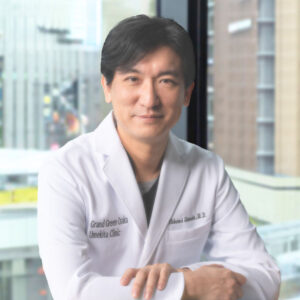
Director, Medical Corporation Shimada Clinic
Head of Clinical Practice, Grand Green Osaka Umekita Clinic
Hidenori Shimada
Graduated from the University of Tokushima Faculty of Medicine in 2005. After his initial residency, he obtained U.S. medical certification (ECFMG) and trained as a sub-intern in general surgery at the University of Washington. After completing the doctoral program at Kyoto University Graduate School of Medicine and working as a researcher at the Center for iPS Cell Research and Application (CiRA), Kyoto University, he founded Shimada Clinic in 2013. At Grand Green Osaka Umekita Clinic (https://umekitaclinic.org), he is engaged in a wide range of care, from internal medicine and pediatrics to cell therapy and aesthetic medicine.
* The physician supervision of this article covers its academic content only and does not constitute a recommendation of any specific treatment or product.