Hello, I am Dr. Hidenori Shimada of Grand Green Osaka Umekita Clinic in Osaka, Japan.
Regenerative medicine is a rapidly advancing field that explores the body’s own ability to heal and repair. At the heart of this field are mesenchymal stem cells (MSCs), which have garnered significant attention for their potential therapeutic applications. While these powerful cells can be obtained from various sources, bone marrow and adipose (fat) tissue are the most common. This article explores why adipose tissue is increasingly considered a preferred source for MSCs, particularly in the context of stem cell therapy in Japan.
Understanding the Sources: Adipose Tissue vs. Bone Marrow
Mesenchymal stem cells are multipotent stromal cells that can differentiate into a variety of cell types, including bone cells, cartilage, muscle cells, and fat cells. They also secrete various factors that can help reduce inflammation and support tissue repair. For many years, bone marrow was the primary source for harvesting MSCs. The process typically involves aspirating marrow from the iliac crest (hip bone), a procedure that can be uncomfortable and requires anesthesia.
In contrast, adipose-derived stem cells (ASCs) are obtained from subcutaneous fat tissue. This fat can be easily collected through a minimally invasive procedure similar to liposuction, often performed under local anesthesia. This accessibility and relative ease of collection have made adipose tissue an attractive alternative to bone marrow.
Key Advantages of Adipose-Derived Stem Cells
Several factors contribute to the preference for adipose tissue as an MSC source. Scientific research has highlighted key differences between adipose-derived and bone marrow-derived stem cells, pointing to practical benefits for therapeutic applications.
- Higher Cell Yield: Adipose tissue is a significantly richer source of MSCs than bone marrow. Studies have reported that fat tissue can contain a much higher concentration of MSCs per volume compared to bone marrow aspirate. This abundance means that a sufficient number of cells for therapy can often be obtained from a small amount of tissue, potentially reducing the need for extensive cell culture expansion.
- Less Invasive Collection: The fat stem cell collection process is generally considered less burdensome for the patient. It involves a small incision and the removal of a few grams of fat tissue under local anesthesia, which can be done in an outpatient setting. This contrasts with bone marrow aspiration, which is often perceived as a more invasive and painful procedure.
- Lower Donor Site Morbidity: Because the collection procedure is less invasive, there is typically less post-procedural discomfort and a lower risk of complications at the collection site. Patients can usually resume their daily activities shortly after the procedure.
- Favorable Cell Characteristics: While both ASCs and bone marrow-derived MSCs (BMSCs) share fundamental properties, some research suggests that ASCs may have a higher proliferative capacity and stable characteristics even with donor age. These properties are valuable for preparing cells for therapeutic use.
Stem Cell Therapy Regulation in Japan
Japan has a well-defined regulatory framework for regenerative medicine. Treatments like adipose-derived stem cell therapy are provided under the Act on the Safety of Regenerative Medicine. This legislation requires medical institutions to submit their treatment plans to the Ministry of Health, Labour and Welfare for review and approval, ensuring that procedures are conducted with a high standard of safety management. At Grand Green Osaka Umekita Clinic, our stem cell therapies are provided in compliance with this national law, and cell processing is outsourced to a licensed facility.
What to Consider Before Treatment
While the potential of stem cell therapy is promising, it is important for patients to have a clear understanding of what it entails. Adipose-derived stem cell therapy is an elective treatment and is not covered by public health insurance. The suitability of this therapy, its expected outcomes, and any potential risks or side effects must be carefully evaluated by a physician based on an individual’s health condition.
It is crucial to understand that this therapy is not a guaranteed cure for any disease or condition. Its purpose is to support the body’s natural repair mechanisms. A thorough consultation with a medical professional is essential to discuss your specific circumstances, the treatment process, the number and frequency of sessions, and the associated costs.
Learn More at Our Clinic in Osaka
Choosing a source for mesenchymal stem cells is a significant consideration in regenerative therapy. The high yield, ease of collection, and lower physical burden associated with adipose tissue make it a compelling choice. At Grand Green Osaka Umekita Clinic, located in the heart of Umeda, Osaka, we provide adipose-derived stem cell therapy based on current medical knowledge and in accordance with Japanese regulations.
If you are interested in learning more about the benefits of adipose stem cells and whether this treatment might be an option for you, we encourage you to consult with our medical team. For more detailed information about our Adipose-Derived Stem Cell Therapy, including the process and what to expect, please visit our dedicated information page.
Learn about Adipose-Derived Stem Cell Therapy at Grand Green Osaka Umekita Clinic
Summary
When comparing adipose derived stem cells vs bone marrow, adipose tissue presents several key advantages as a source for mesenchymal stem cells. Its abundance of cells and the minimally invasive nature of the collection procedure make it a preferred option in many clinical settings. Any decision regarding stem cell therapy should be made after a comprehensive medical consultation to ensure it aligns with your health goals. This treatment is offered as an option to support health and well-being, based on a physician’s assessment.
References
- PubMed: Stromal cells from the adipose tissue-derived stromal vascular fraction and culture expanded adipose tissue-derived stromal/stem cells: a joint statement of the International Federation for Adipose Therapeutics and Science (IFATS) and the International Society for Cellular Therapy (ISCT). (2013)
- PubMed: Adipose-derived and bone marrow mesenchymal stem cells: a donor-matched comparison. (2018)
- PubMed: Same or not the same? Comparison of adipose tissue-derived versus bone marrow-derived mesenchymal stem and stromal cells. (2012)
- PubMed: Therapeutic Potential of Adipose Stem Cells. (2021)
- PubMed: Osteogenic potential: Comparison between bone marrow and adipose-derived mesenchymal stem cells. (2014)
- PMC: Direct comparison of different stem cell types and subpopulations reveals superior paracrine potency and myocardial repair efficacy with cardiosphere-derived cells. (2012)
- PMC: Chondrogenic Potency Analyses of Donor-Matched Chondrocytes and Mesenchymal Stem Cells Derived from Bone Marrow, Infrapatellar Fat Pad, and Subcutaneous Fat. (2016)
- PMC: Orthogonal potency analysis of mesenchymal stromal cell function during ex vivo expansion. (2018)
- MHLW (Japan): Regenerative Medicine — Ministry of Health, Labour and Welfare, Japan
Supervising Physician
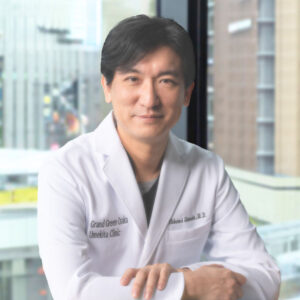
Director, Medical Corporation Shimada Clinic
Head of Clinical Practice, Grand Green Osaka Umekita Clinic
Hidenori Shimada
Graduated from the University of Tokushima Faculty of Medicine in 2005. After his initial residency, he obtained U.S. medical certification (ECFMG) and trained as a sub-intern in general surgery at the University of Washington. After completing the doctoral program at Kyoto University Graduate School of Medicine and working as a researcher at the Center for iPS Cell Research and Application (CiRA), Kyoto University, he founded Shimada Clinic in 2013. At Grand Green Osaka Umekita Clinic (https://umekitaclinic.org), he is engaged in a wide range of care, from internal medicine and pediatrics to cell therapy and aesthetic medicine.
* The physician supervision of this article covers its academic content only and does not constitute a recommendation of any specific treatment or product.