
Hello, I am Dr. Hidenori Shimada of Grand Green Osaka Umekita Clinic in Osaka, Japan.
Understanding the Importance of Safety in Regenerative Medicine
Regenerative medicine, particularly stem cell therapy, offers intriguing possibilities for supporting the body’s natural repair processes. As interest grows globally, so do important questions about safety, quality, and regulation. Patients considering these advanced treatments, including those exploring medical tourism in Japan, rightly prioritize the reliability and integrity of the therapy. The process of culturing and preparing cells is a critical step that directly impacts the potential outcomes and safety profile of the treatment. This article explores the robust systems Japan has in place to oversee this crucial aspect of care.
The Core of Safety: Japan’s Certified Cell Processing Facilities
The safety and quality of adipose-derived stem cell therapy in Japan are not left to chance. They are governed by a comprehensive legal framework, primarily the Act on the Safety of Regenerative Medicine. A central pillar of this system is the requirement that all cell culturing and expansion must take place in a specialized, government-certified laboratory known as a Cell Processing Facility (CPF). These facilities are designed and operated to meet stringent standards, providing a controlled environment essential for handling living cells intended for therapeutic use. This ensures that the process, from cell collection to administration, adheres to the highest levels of quality control.
What Happens Inside a Certified Cell Processing Facility (CPF)?
A CPF is far more than a standard laboratory. It is a highly controlled environment engineered to prevent contamination and ensure the consistency of the final cell product. The operations are guided by standards equivalent to Good Gene, Cellular, and Tissue-based Products Manufacturing Practice (GCTP). Here’s a look at the key processes:
- Aseptic Processing: Cells are handled in sterile cleanrooms with filtered air and controlled pressure to minimize the risk of contamination from bacteria, fungi, or other microorganisms. Staff follow strict gowning and hygiene protocols.
- Strict Quality Control Testing: Before the cultured cells are released for administration, they undergo a series of rigorous tests. These typically include checks for sterility (to confirm no microbial contamination), endotoxin levels, mycoplasma, and viruses. Tests are also performed to confirm the cells’ identity, purity, and viability (the percentage of living cells).
- Traceability and Documentation: Every step of the process is meticulously documented. This creates a complete record, from the moment a patient’s tissue is collected to the final cell product, ensuring that the patient receives their own (autologous) cells and that all procedures were performed correctly.
This systematic approach is designed to produce a consistent cell population while minimizing risks associated with cell culture, such as infection or receiving the wrong cells.
How This Applies to Your Adipose-Derived Stem Cell Therapy
When you undergo adipose-derived stem cell therapy at a clinic in Japan operating under a government-accepted plan, the small amount of fat tissue collected from your body is sent to one of these certified CPFs. There, the mesenchymal stem cells are isolated, cultured, and expanded in number over several weeks. This process is what allows for a sufficient quantity of cells to be prepared for administration via IV infusion.
It is important to understand that this treatment is provided as private medical care (not covered by national health insurance). The decision to proceed with therapy should always be made after a thorough consultation with a physician. This consultation is essential to determine if you are a suitable candidate and to understand the potential benefits, limitations, risks, side effects, and associated costs. The therapy is not a guaranteed cure for any condition and should not be considered a replacement for standard medical treatments.
Questions to Ask Before Starting Treatment
An informed patient is an empowered patient. When considering stem cell therapy, it is crucial to have a clear and open discussion with your medical provider. Here are some key questions you may want to ask during your consultation:
- Is the treatment provided under a plan accepted by Japan’s Ministry of Health, Labour and Welfare?
- Where will my cells be processed? Is it a certified Cell Processing Facility (CPF)?
- What specific quality control tests are performed on the cells before they are returned to me?
- What are the potential risks and side effects associated with this procedure?
- What is the estimated treatment period, number of sessions, and total cost?
Learn More About Your Options in Osaka
The stringent regulatory oversight in Japan, centered on the use of certified Cell Processing Facilities, provides a strong foundation for safety and quality in stem cell therapy. This commitment to procedural excellence is a key factor for patients seeking reliable regenerative medicine options.
At Grand Green Osaka Umekita Clinic, we provide adipose-derived stem cell therapy in compliance with Japan’s Act on the Safety of Regenerative Medicine. Our team is available to answer your questions and help you understand the process in detail. For more information about our approach, the treatment flow, and answers to frequently asked questions, please see our comprehensive page on Adipose-Derived Stem Cell Therapy. Learn more about Adipose-Derived Stem Cell Therapy at our clinic.References
- PubMed: Clinical Efficacy and Safety of the Intra-articular Injection of Autologous Adipose-Derived Mesenchymal Stem Cells for Knee Osteoarthritis: A Phase III, Randomized, Double-Blind, Placebo-Controlled Trial. (2023)
- PubMed: Challenges and prospects for popularizing cell therapy in the dentistry in Japan. (2025)
- PubMed: Isolation, cultivation, and characterization of human mesenchymal stem cells. (2018)
- PubMed: Mesenchymal Stem Cell Secretome: Toward Cell-Free Therapeutic Strategies in Regenerative Medicine. (2017)
- PubMed: The Efficacy of Stem Cells in Wound Healing: A Systematic Review. (2024)
- PMC: Identification and validation of multiple cell surface markers of clinical-grade adipose-derived mesenchymal stromal cells as novel release criteria for good manufacturing practice-compliant production. (2016)
- PMC: Characterization of 3D Organotypic Culture of Mouse Adipose-Derived Stem Cells. (2024)
- PMC: Processing and Ex Vivo Expansion of Adipose Tissue-Derived Mesenchymal Stem/Stromal Cells for the Development of an Advanced Therapy Medicinal Product for use in Humans. (2021)
- MHLW (Japan): Regenerative Medicine — Ministry of Health, Labour and Welfare, Japan
Supervising Physician
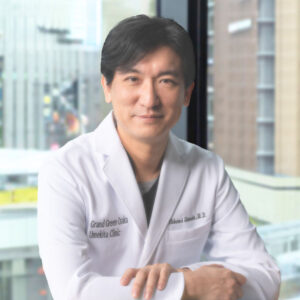
Director, Medical Corporation Shimada Clinic
Head of Clinical Practice, Grand Green Osaka Umekita Clinic
Hidenori Shimada
Graduated from the University of Tokushima Faculty of Medicine in 2005. After his initial residency, he obtained U.S. medical certification (ECFMG) and trained as a sub-intern in general surgery at the University of Washington. After completing the doctoral program at Kyoto University Graduate School of Medicine and working as a researcher at the Center for iPS Cell Research and Application (CiRA), Kyoto University, he founded Shimada Clinic in 2013. At Grand Green Osaka Umekita Clinic (https://umekitaclinic.org), he is engaged in a wide range of care, from internal medicine and pediatrics to cell therapy and aesthetic medicine.
* The physician supervision of this article covers its academic content only and does not constitute a recommendation of any specific treatment or product.